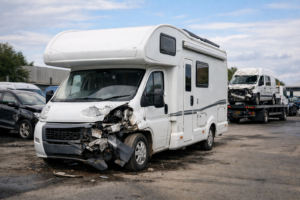
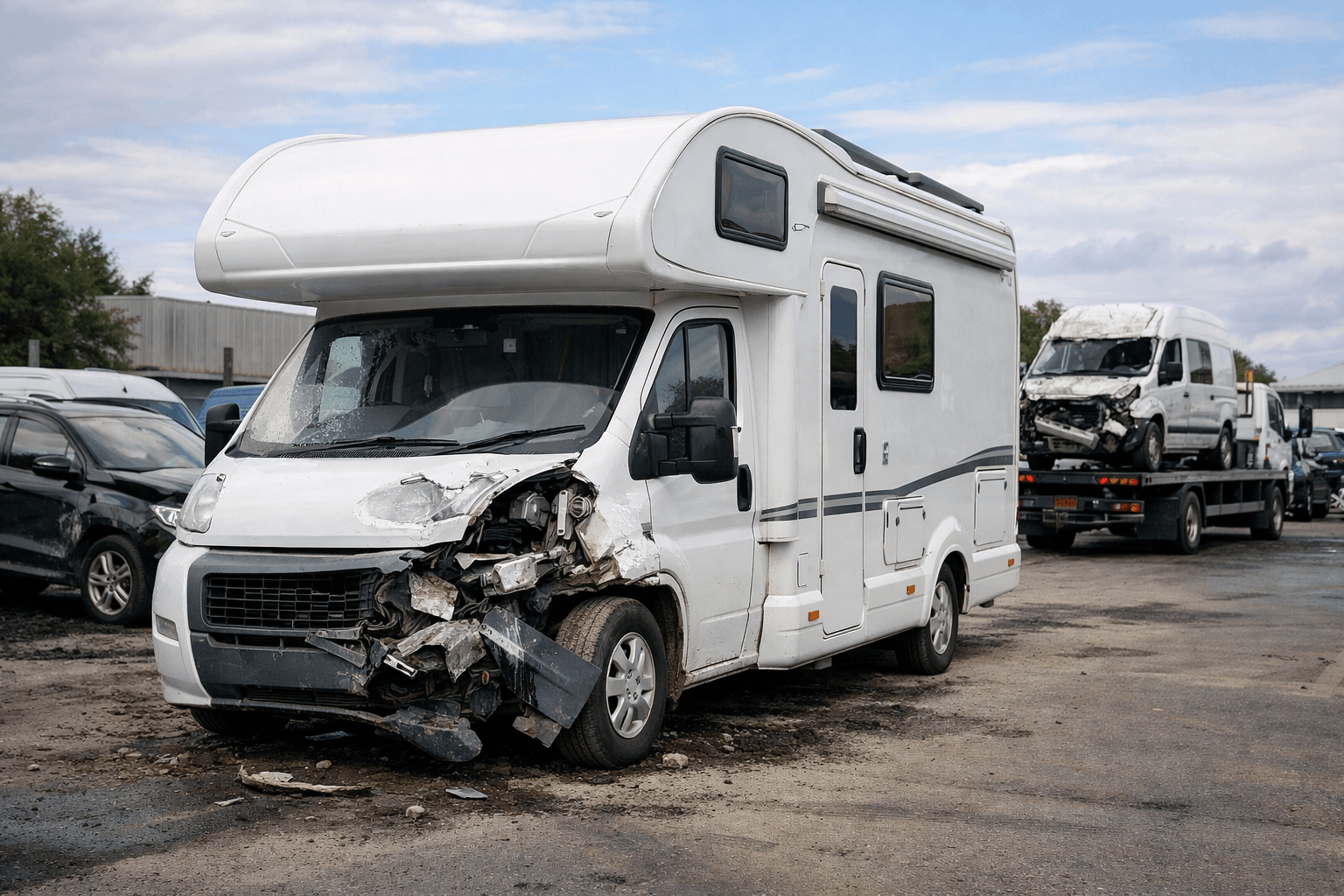
You have a damaged or written-off camper van sitting on your drive. The insurance company has made their offer. Now you want to know what your real options are — and whether you can sell damaged camper van UK buyers will actually pay a fair price for. You can. But the route you take, and what you understand about how your van was written off, will determine how much money you walk away with.
- Insurance write-off categories (N, S, A, B) affect who can buy your van and what they’ll pay — but Category N and S vans can be sold, repaired and re-registered legally
- Camper vans are frequently written off for reasons that have nothing to do with road accidents — interior fires and water ingress are common causes, and this changes buyer expectations significantly
- Private sale is possible but slow; specialist buyers move faster and don’t require you to fix anything first
- The written off camper van sale process involves notifying the DVLA and, for Category S, getting a new VIN inspection before driving again
- Accident damaged camper van value depends on the category, the extent of structural versus cosmetic damage, and the conversion quality
What Does “Written Off” Actually Mean for a Camper Van?
A vehicle is written off when an insurer decides the repair cost exceeds a threshold relative to the van’s market value. In the UK, write-offs are split into four categories under the Association of British Insurers framework:
- Category A — Scrap only. The entire vehicle must be crushed. No parts can be sold for road use.
- Category B — Body shell must be crushed, but parts can be salvaged and sold.
- Category S — Structural damage. Can be repaired and put back on the road after a new VIN plate inspection.
- Category N — Non-structural damage. Can be repaired and sold without a formal re-inspection, though the write-off marker stays on the vehicle’s history permanently.
Category N and Category S are where most sellers find themselves. Both can be sold legally. Both carry a permanent marker on the HPI record. And both have a market — if you know where to find it.
A camper van that has been written off retains its write-off marker permanently, even after full repair. Any buyer who runs an HPI check will see it. Disclose this upfront. Concealing it is fraud.
The Cause of the Write-Off Matters More Than Most Sellers Realise
Here is something almost nobody explains: camper vans are written off for reasons that have nothing to do with road accidents, and this distinction matters enormously when it comes to insurance categories and what buyers will pay.
The two most common non-accident causes are interior fire and water ingress.
A small electrical fire in the leisure battery system or the gas hob area can cause smoke and heat damage that writes off the vehicle even when the cab and chassis are structurally perfect. The insurer looks at the cost to restore the interior conversion — bespoke joinery, upholstery, appliances — and decides it is not economic. The result is often a Category N write-off on a van that drives, steers and stops exactly as it should.
Water ingress is similar. A roof seal fails. Damp gets into the insulation and plywood substructure of the conversion. By the time it is discovered, the remediation cost exceeds the van’s insured value. Again: Category N, structurally sound cab, compromised interior.
This matters for two reasons. First, a buyer who understands the cause will pay more for a fire-damaged or water-damaged Category N van with a solid chassis than for a Category S van that has had its A-pillars straightened. Second, your asking price should reflect the actual damage — not just the write-off label.
Get a written engineer’s report or insurer’s assessment that specifies the cause and extent of damage. This document increases buyer confidence and, with specialist purchasers, can directly increase the offer you receive.
What Is My Written-Off Camper Van Actually Worth?
Accident damaged camper van value is not a fixed number — it depends on four things:
- The write-off category — Category N commands more than Category S; A and B are salvage value only
- The cause and location of the damage — chassis and structural damage is worth less than cosmetic or interior damage
- The base van — a high-mileage Transit with a budget conversion is worth far less than a low-mileage Mercedes Sprinter with a professional fit-out
- The conversion specification — solar panels, lithium batteries, fixed beds, shower rooms and professional joinery all hold residual value even in a write-off
A rough guide: Category N camper vans in good mechanical condition with cosmetic or interior damage typically sell for 40–60% of their pre-damage market value. Category S vans with structural damage sell for less — often 20–40% of pre-damage value, depending on the extent of repair needed.
These are not guarantees. Get at least two offers before you accept anything.
How to Sell a Damaged Camper Van in the UK
Confirm the write-off category with your insurer
Before you do anything else, get the category in writing. This determines your legal obligations and your options. If you are retaining the vehicle (buying it back from the insurer), confirm the buyback price and what paperwork transfers to you.
Notify the DVLA
When a vehicle is written off, the V5C logbook must be updated. Your insurer will typically handle this if they are taking the vehicle. If you are retaining it, you need to notify the DVLA yourself and mark the vehicle as a write-off on the V5C. Failure to do so is a legal offence.
Decide whether to repair or sell as-is
For Category N camper vans, you have a genuine choice. If the damage is purely interior — a fire-damaged conversion on a mechanically sound Sprinter, for example — a specialist converter might restore it for less than the insurer’s repair estimate. If you sell it on as-is, you lose that upside but gain speed and certainty.
For Category S, the calculation is harder. Structural repairs must meet a standard that satisfies a DVLA VIN inspection before the van can be driven on public roads again. Factor this cost in before deciding.
Choose your selling route
You have three realistic options:
- Specialist damaged vehicle buyers — fastest route, no repair required, offer within 24–48 hours, collection arranged
- Salvage auctions — competitive if the van has desirable parts or a sought-after base vehicle, but fees apply and payment timelines vary
- Private sale — highest potential return but requires full disclosure, patience, and buyers who understand what they are purchasing
For most sellers, specialist buyers offer the best combination of speed and certainty. If you want to explore what a professional buyer will pay for your specific van, selling your camper van through a specialist gives you a no-obligation valuation without committing to anything.
Complete the paperwork correctly
Whoever buys the van, ensure the V5C transfer is completed properly. For a category n camper van sell transaction, there is no re-inspection requirement — but the write-off marker stays on the vehicle’s history and must be disclosed. Keep a copy of any sale agreement that confirms the buyer was informed of the write-off status.
Private Sale vs Specialist Buyer: Which Gets You More?
Private sale can return more money. It rarely does, for damaged vehicles, once you account for the time, the advertising costs, the tyre-kickers, and the buyers who pull out when the HPI check comes back.
The buyer pool for a written-off camper van is smaller than for a clean vehicle. The buyers who do exist are experienced — they know what they are looking at, and they will negotiate hard. Unless you have time on your side and a van with a genuinely compelling story (low mileage, premium base vehicle, minor damage), the private route is likely to frustrate you.
Specialist buyers price written-off vans every day. They know the salvage market, the repair costs, and the resale values. Their offers reflect that knowledge — which means they are rarely the highest number you will see, but they are the most reliable.
Be cautious of private buyers who offer to pay “over a few weeks” or who want to take the van before funds clear. Fraud in the damaged vehicle market is not uncommon. Cash or cleared bank transfer before the keys leave your hand.
Frequently Asked Questions
Can I sell a Category N camper van without repairing it first?
Yes. Category N write-offs — non-structural damage — can be sold in their damaged state without any repair requirement. The write-off marker will remain on the vehicle’s HPI record permanently, and you must disclose it to any buyer. You do not need a DVLA inspection before sale.
Does a camper van written off for water damage count as accident damaged?
Not necessarily. Water ingress write-offs are typically recorded as Category N and do not involve road accident damage at all. This distinction matters to buyers: a van written off for a failed roof seal on an otherwise sound chassis is a very different proposition from one that has been in a collision. Be specific about the cause when you advertise or discuss the van with buyers.
What paperwork do I need to sell a written-off camper van?
You need the V5C logbook (updated to reflect the write-off), the insurer’s write-off notification, and any engineer’s report or damage assessment you have obtained. If you bought the van back from your insurer, you will also need the salvage receipt. Keep copies of everything.
Will I get a fair price from a specialist damaged vehicle buyer?
A fair price — yes. The highest possible price — not always. Specialist buyers price in their repair or resale costs, which means their offer reflects realistic market value for a damaged vehicle rather than an optimistic private-sale figure. The trade-off is certainty and speed. Get two or three offers and compare them before deciding.
Is it legal to drive a Category S camper van after buying it back from the insurer?
No — not until it has been structurally repaired to a standard that passes a DVLA VIN inspection. Driving a Category S vehicle on public roads before that inspection is illegal. Category N vehicles do not require an inspection but should be roadworthy before being driven.
How does the write-off affect the van's future insurance premiums?
Any insurer will see the write-off marker when they run a check on the vehicle. Premiums for previously written-off vehicles are typically higher than for clean vehicles, and some insurers will decline to cover them altogether. Buyers should be made aware of this — it affects the van’s running costs and therefore its value.
If you have a damaged or written-off camper van and want a straight answer on what it is worth, get a valuation from a specialist who buys these vehicles every day. No obligation. No repair required. Just a number you can make a decision with.