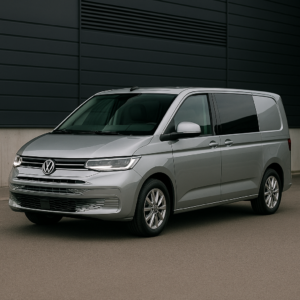

The Ford E-Series is a full-size, body-on-frame commercial van built for heavy-duty work — and it’s been doing that job reliably since 1961. If you’re hauling serious cargo, running a shuttle service, or converting a van into a mobile workshop, the E-Series deserves a long, hard look before you sign anything.
- The Ford E-Series has been in continuous production since 1961, making it one of the longest-running van nameplates in automotive history
- Three payload-rated variants — E-150, E-250, and E-350 — serve different GVWR and hauling needs
- Body-on-frame construction gives it a structural durability advantage over unibody rivals in demanding commercial roles
- The 7.3-litre V8 is the headline engine, with CNG/LPG alternative fuel options available for fleet operators
- Despite the Ford Transit’s arrival, the E-Series retains a clear commercial case for high-payload and specialist upfit applications
What Is the Ford E-Series?
The Ford E-Series is Ford’s heavy-duty full-size van range, sitting above the Ford Transit in terms of payload capacity and structural robustness. It’s available in three core configurations: a cargo van, a passenger wagon, and a cutaway or chassis cab variant — the last of which strips away the rear body entirely so upfitters can install ambulance modules, food truck bodies, or utility platforms.
The E-Series is not a lifestyle van or a family camper in its default form. It’s a premium, reliable commercial workhorse designed for operators who need to move weight, carry people, or build something purpose-specific on top of a proven chassis.
In the UK, awareness of the E-Series is growing among importers and specialist converters. In the US, it remains an active production vehicle with a dedicated fleet following. That’s a remarkable commercial longevity that few vehicles in any category can match.
Ford E-Series Model History: From Econoline to Modern Workhorse
The E-Series started life as the Ford Econoline in 1961 — a compact, economical van designed to compete with the Volkswagen Type 2 and Chevrolet Corvair Greenbrier. Ford’s answer was a van built around a rear-engine, forward-control layout, which meant the driver sat almost directly over the front axle. It was clever packaging for its time.
First generation (1961–1967): rear-engine origins
The original Econoline was smaller than today’s E-Series by a considerable margin. Its rear-mounted inline-six engine freed up the front cab area but limited power and towing potential. It sold well as a compact delivery vehicle and light tradesman’s van, establishing Ford’s presence in the commercial van segment.
Second generation (1968–1974): the front-engine shift
Ford made a decisive engineering change in 1968: the engine moved to the front, under a conventional hood. This unlocked larger engine options, better serviceability, and greater payload ratings — exactly what commercial buyers were demanding as American businesses scaled up. Adoption by fleets accelerated through this period.
Third generation (1975–1991): body styles multiply
The third generation introduced the Club Wagon passenger variant, expanding the Econoline’s appeal beyond pure cargo work. Extended body options arrived, adding meaningful cargo volume. Regulatory changes around emissions and safety during this era pushed Ford to refine the platform repeatedly, and the van grew in both capability and complexity.
Fourth generation (1992–present): the modern E-Series
The 1992 redesign brought the most significant refresh in the van’s history. Ford retained body-on-frame construction — a deliberate choice that separates the E-Series from unibody rivals — and introduced a wider, more aerodynamic body. The Econoline name was officially retired in 2014, replaced entirely by E-Series branding, though the platform itself continued without interruption.
This fourth generation has now run for over three decades, a testament to how well the underlying architecture serves its commercial purpose.
Ford E-Series Trims and Variants: Which Model Is Right for You?
Choosing between E-Series variants comes down to one number above all others: Gross Vehicle Weight Rating (GVWR), which is the maximum a loaded vehicle can legally weigh, including the van itself.
Here’s the breakdown:
- E-150: GVWR of approximately 6,010–6,250 lb. Suited to lighter commercial work, small cargo loads, and passenger transport where payload demands are modest
- E-250: GVWR of approximately 8,500–8,600 lb. The mid-range workhorse — capable of handling most trade and delivery applications without stepping into Super Duty territory
- E-350: GVWR of approximately 9,500–10,000 lb. The heavy hauler of the range, ideal for bulk cargo, high-passenger-count wagons, and cutaway upfits
- E-350 Super Duty: Reinforced for the most demanding applications, with a GVWR that can reach 11,500 lb on cutaway variants — the choice for ambulance and utility body builds
If you’re running close to the payload limit of an E-250 regularly, step up to the E-350. Operating near the top of a GVWR rating accelerates wear on brakes, suspension, and tyres.
Beyond the number designations, you’ll choose between:
- Cargo van: Enclosed rear load area, partition wall option, upfit-ready
- Passenger wagon: Up to 15-passenger seating, windows throughout, shuttle and transport use
- Cutaway/chassis cab: Rear body removed for custom upfitting — ambulances, box trucks, food trucks
Extended body options add roughly 18–22 inches of rear cargo length compared to the standard body, which translates to a meaningful increase in usable cubic footage for delivery and trade operators.
Built for Durability: Construction and Chassis Strength

The E-Series uses body-on-frame construction — a design where the body of the van sits on a separate steel ladder frame rather than being integrated into a single welded structure (which is the unibody approach used by the Ford Transit and Mercedes Sprinter). For heavy commercial use, this matters enormously.
Body-on-frame construction means:
- The chassis can absorb and distribute heavy loads without stressing the body panels
- Damage to the body doesn’t necessarily compromise the structural integrity of the frame
- Upfitters can cut, weld, and modify the rear section without compromising the vehicle’s core engineering
High-strength steel runs throughout the frame, and Ford applies corrosion-resistant coatings at the factory. Reinforced bumpers and underbody protection are standard on commercial-spec builds. Fleet operators regularly report E-Series vans reaching 200,000 miles and beyond with routine maintenance — a track record that makes the total cost of ownership calculation very favourable over a five-to-ten-year fleet cycle.
Engine Options and Performance: Power for Every Application
The current E-Series offers two petrol V8 engines, plus alternative fuel options that matter significantly to fleet operators managing emissions targets.
7.3-litre V8 (gasoline): Ford’s flagship E-Series engine produces approximately 350 hp and 468 lb-ft of torque. It’s a naturally aspirated pushrod engine — simpler than a turbocharged unit, easier to service, and built to run hard over long mileages. This is the engine for maximum towing and payload applications.
6.2-litre V8 (gasoline): Produces around 275 hp and 290 lb-ft of torque. It’s adequate for lighter E-250 and E-350 applications where you’re not regularly near the GVWR ceiling. Lower initial cost and slightly better fuel economy make it a reasonable choice for mixed-use fleets.
CNG and LPG options: Compressed Natural Gas (CNG) and Liquefied Petroleum Gas (LPG) variants are available, primarily targeting fleet operators with emissions obligations or access to alternative fuel infrastructure. CNG in particular has strong uptake among municipal fleets and delivery operations running fixed routes.
Towing capacity varies by configuration:
- E-350 with 7.3-litre V8: up to approximately 10,000 lb towing capacity
- E-250 with 6.2-litre V8: up to approximately 6,000–7,000 lb depending on configuration
Real-world fuel economy for fleet operators typically falls in the range of 10–14 mpg (US) depending on load, route, and engine choice. This is not a van you buy for fuel efficiency — you buy it for what it can carry and tow.
Spacious Interior and Cargo Configurations
The E-Series cargo van offers one of the largest load floors in the full-size van segment. Standard body cargo vans provide approximately 238–245 cubic feet of cargo volume; extended body variants push this to approximately 265–275 cubic feet. Load floor width between the wheel arches is around 48 inches — wide enough to load standard pallets flat.
Interior height in the cargo area runs to approximately 54 inches in the standard van — not walk-in height, but workable for most loading tasks. Rear double doors open to nearly 180 degrees, and the sliding side door provides a wide, practical opening for frequent loading and unloading.
The passenger wagon seats up to 15 people across bench seating configurations, making it the go-to choice for shuttle services, hotel transfers, and group transport. Seating can be removed or reconfigured depending on the operator’s mix of passenger and cargo needs on any given day.
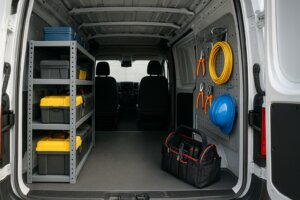
Upfit compatibility is one of the E-Series’ strongest selling points. The flat load floor, vertical side walls, and robust anchor points make it straightforward to install:
- Shelving and racking systems (from brands like Adrian Steel and Ranger Design)
- Partition walls with pass-through windows or doors
- Refrigeration units for temperature-controlled delivery
- Electrical fitouts for mobile workshops
Modern Technology and Safety Features
The current E-Series is not a bare-bones work van when it comes to cab technology. The Ford SYNC infotainment system with touchscreen display, Apple CarPlay, and Android Auto is standard, keeping drivers connected without requiring them to handle a phone.
Driver assistance features include:
- Pre-collision assist with automatic emergency braking
- Lane-keeping aid for motorway and dual-carriageway driving
- Adaptive cruise control for long-haul delivery routes
- Rear-view camera — essential when manoeuvring a full-size van in tight urban spaces
- Parking sensors front and rear
Ford Pro integration is a significant advantage for fleet operators. Ford Pro is Ford’s commercial services platform that connects vehicles to fleet management software, enabling telematics, maintenance scheduling, and driver behaviour monitoring from a single dashboard. For operators running five or more vehicles, this kind of integration reduces administrative overhead and improves vehicle uptime.
The cab ergonomics have been progressively improved through the fourth generation’s long run. The driver’s seat is adjustable for long-shift comfort, storage cubbies are well-placed for tradespeople who need tools and paperwork within reach, and the instrument layout is straightforward enough that drivers switching between vehicles in a fleet don’t need retraining.
Practical Applications: Where the E-Series Excels
The E-Series earns its place in fleets because it does specific jobs better than most alternatives.
Last-mile and bulk delivery: When payload beats van size, the E-350 cargo van carries more weight per trip than a Ford Transit or Mercedes Sprinter in most configurations. Fewer trips per day is a direct operating cost reduction.
Mobile workshops: Electricians, plumbers, HVAC engineers, and telecoms engineers regularly choose the E-Series as a base because the interior dimensions accommodate full racking systems and heavy equipment without compromise. The body-on-frame chassis also handles the weight of a fully loaded mobile workshop better than unibody alternatives over time.
Shuttle and passenger transport: The 15-passenger wagon is the default choice for hotel shuttles, airport transfers, and corporate transport. No other production van in the US market offers this passenger capacity in a single, ready-to-drive configuration.
Specialist upfits: The E-350 cutaway is the platform of choice for Type II ambulance builds, food trucks, and utility body installations. The chassis cab’s open rear section gives upfitters a clean slate, and the high GVWR means the finished vehicle can carry the weight of specialist equipment without operating illegally.
Fleet total cost of ownership: Parts are widely available, independent mechanics know the platform well, and the vehicles hold their value in the used market better than many commercial rivals. For a fleet manager, predictable maintenance costs matter as much as purchase price.
Ford E-Series vs. Key Competitors
E-Series vs. Ford Transit
The Ford Transit arrived in the US market in 2015 and quickly became Ford’s volume commercial van. It offers better fuel economy, a modern unibody structure, and a wider range of roof heights. But the Transit tops out at a lower GVWR than the E-350, and its unibody construction makes heavy upfitting and cutaway configurations less straightforward.
The E-Series retains its niche for operators who need maximum payload, a cutaway platform, or a 15-passenger wagon — none of which the Transit fully replicates.
E-Series vs. Mercedes Sprinter
The Sprinter is a premium, innovative van with excellent driver ergonomics, strong fuel economy from its diesel engines, and a sophisticated safety suite. For operators prioritising fuel costs on long routes, it’s a serious contender. But the Sprinter’s parts costs are higher, independent mechanic familiarity is lower in the US market, and its GVWR caps below the E-350 Super Duty’s ceiling.
E-Series vs. Ram ProMaster
The ProMaster offers front-wheel drive (unusual in this segment), a low load floor, and competitive cargo volume. It’s a capable van for lighter commercial work. But its payload ratings and towing capacity don’t match the E-350, and its body-on-frame equivalent doesn’t exist — the ProMaster is unibody throughout.
Body-on-frame vs. unibody — the structural argument: For operators regularly at or near maximum payload, towing trailers, or running specialist upfits, body-on-frame construction distributes stress more effectively over the vehicle’s working life. The E-Series’ chassis has a proven track record in these roles that newer unibody designs haven’t yet accumulated.
Resale value: Used E-Series vans, particularly E-350 cutaways and 15-passenger wagons, hold strong resale values because demand from fleet buyers and upfitters remains consistent. Parts availability from a 60-plus-year production run means independent buyers aren’t worried about sourcing components years down the line.
The E-Series Owner Community and Aftermarket Support
Six decades of production creates a deep ecosystem. Online forums — including dedicated E-Series and Econoline communities on platforms like Ford Truck Enthusiasts and various Facebook groups — share upfit ideas, maintenance guides, and sourcing tips for both current and older generation vans.
The aftermarket parts catalogue for the E-Series is genuinely extensive. Shelving systems, roof racks, partition walls, tow hitches, suspension upgrades, and conversion kits are all available off the shelf from major suppliers. This matters practically: when a fleet van needs a repair or modification, you’re not waiting weeks for specialist parts.
Ford Pro commercial support programmes add a layer of business-focused service on top of this, including priority service lanes at participating dealers and fleet financing options.
The Future of the Ford E-Series
Ford has confirmed continued production of the E-Series through at least the mid-2020s, with no announced discontinuation date at the time of writing. The platform continues to serve a segment that the Ford Transit doesn’t fully address.
The Ford E-Transit — an all-electric version of the Transit van — sits alongside the E-Series rather than replacing it. The E-Transit targets urban delivery operators with lower payload demands and access to charging infrastructure. The E-Series continues to serve operators who need higher GVWR, longer range, and cutaway configurations that don’t yet have a viable electric equivalent.
An electric E-Series variant has not been announced. Given the platform’s age and the engineering investment required, it’s more likely that Ford’s electrification strategy for heavy commercial vans will evolve through the Transit and E-Transit line rather than through a new E-Series electric model.
CNG variants remain the most practical near-term sustainability option for E-Series fleet operators, particularly those running fixed routes with access to CNG fuelling infrastructure. For fleet emissions planning, CNG E-Series vehicles can meaningfully reduce carbon output compared to petrol equivalents without the range or payload compromises of current electric alternatives.
Is the Ford E-Series Worth Buying?
The E-Series is worth buying if your operation genuinely needs what it delivers: high payload, a cutaway platform, 15-passenger capacity, or a body-on-frame chassis that can handle specialist upfits and heavy daily use over a long service life.
It is not the right choice if fuel economy is your primary concern, if you’re running light loads on urban routes where a Transit or Sprinter would be more efficient, or if you need modern diesel engine options (the E-Series is petrol and alternative fuel only in the US market).
Who should buy new: Fleet operators replacing ageing E-Series vehicles, businesses requiring cutaway upfits, and shuttle operators needing 12- or 15-passenger configurations.
Who should buy used: Tradespeople and small operators who want proven reliability at a lower entry price. A well-maintained E-350 with 100,000–150,000 miles still has significant working life ahead of it, and the parts ecosystem makes ownership straightforward.
What to look for on a used E-Series:
- Service history showing regular oil changes and transmission services
- Undercarriage inspection for frame rust, particularly in northern states or high-salt environments
- Brake and suspension condition — fleet vans worked hard may have deferred maintenance
- Upfit quality if buying a converted vehicle — check electrical work and structural modifications carefully
If you’re transitioning from an E-Series to a newer platform, or considering selling your current van, getting an accurate valuation before you commit to a replacement is a smart first step. Use a commercial vehicle valuation tool to understand what your current van is worth in today’s market — it could meaningfully affect which replacement option makes financial sense.
Frequently Asked Questions
What is the difference between the Ford E-150, E-250, and E-350?
The key difference is Gross Vehicle Weight Rating (GVWR) — the maximum legal weight of the loaded vehicle. The E-150 has a GVWR of approximately 6,000–6,250 lb, suited to lighter loads. The E-250 sits at around 8,500–8,600 lb for mid-range commercial work. The E-350 reaches approximately 9,500–10,000 lb, and the E-350 Super Duty cutaway can exceed 11,500 lb. Higher GVWR means greater legal payload capacity, heavier-duty brakes and suspension, and suitability for more demanding upfits.
How much can a Ford E-Series tow and carry?
The E-350 with the 7.3-litre V8 can tow up to approximately 10,000 lb. Payload capacity — the weight you can legally carry inside the van — varies by configuration but reaches approximately 3,000–4,000 lb on E-350 variants. Always check the specific vehicle’s payload placard (found on the driver’s door jamb), as final figures depend on factory options and any installed equipment.
Is the Ford E-Series still in production?
Yes. As of the time of writing, the Ford E-Series remains in active production in the United States. Ford has not announced a discontinuation date. The E-Series cargo van and cutaway variants continue to be sold new through Ford commercial dealers, with the passenger wagon also available in current production.
What engines are available in the Ford E-Series?
The current E-Series is offered with a 7.3-litre V8 petrol engine (approximately 350 hp, 468 lb-ft torque) and a 6.2-litre V8 petrol engine (approximately 275 hp, 290 lb-ft torque). CNG (Compressed Natural Gas) and LPG (Liquefied Petroleum Gas) alternative fuel configurations are also available, primarily through Ford’s fleet and commercial programmes. There is no diesel option in the current US-market E-Series.
How does the Ford E-Series compare to the Ford Transit?
The Ford Transit offers better fuel economy, a modern unibody structure, multiple roof heights, and a wider range of body lengths. The E-Series offers a higher GVWR on the E-350, body-on-frame construction better suited to heavy upfits, a 15-passenger wagon configuration, and a cutaway platform for specialist vehicle builds. For lighter commercial work, the Transit is often the more efficient choice. For maximum payload, cutaway applications, or high-passenger-count transport, the E-Series is the stronger option.
What is the cargo space of a Ford E-Series van in cubic feet?
The standard body E-Series cargo van offers approximately 238–245 cubic feet of cargo volume. The extended body variant increases this to approximately 265–275 cubic feet. Load floor width between the wheel arches is around 48 inches. These figures make the E-Series one of the most spacious cargo vans available in the US market.
Can the Ford E-Series run on alternative fuels like CNG or LPG?
Yes. Ford offers factory-built CNG and LPG configurations of the E-Series, primarily targeted at fleet operators. CNG variants are particularly popular with municipal fleets and operators running fixed routes with access to CNG fuelling infrastructure. Alternative fuel E-Series vehicles can reduce carbon emissions compared to petrol equivalents and may qualify for fleet emissions incentives depending on your jurisdiction.
What was the original name of the Ford E-Series?
The Ford E-Series was originally sold as the Ford Econoline, a name introduced when the van debuted in 1961. The Econoline name was used across all generations until 2014, when Ford retired it and adopted E-Series as the sole branding for the range.
How many passengers can a Ford E-Series wagon carry?
The Ford E-Series passenger wagon is available in configurations seating up to 15 passengers, including the driver. This makes it one of the few production vehicles in the US market capable of carrying 15 people in a single trip, which is why it’s widely used for hotel shuttles, airport transfers, and group transport operations.
Is the Ford E-Series a good van to buy used?
Yes, for the right buyer. The E-Series has a strong reputation for longevity — fleet operators regularly achieve 200,000 miles or more with proper maintenance. The extensive parts ecosystem and widespread mechanic familiarity make ownership costs predictable. When buying used, prioritise vehicles with documented service history, inspect the undercarriage for frame rust (particularly in high-salt regions), and check brake and suspension condition carefully on vans that have seen heavy fleet use.