
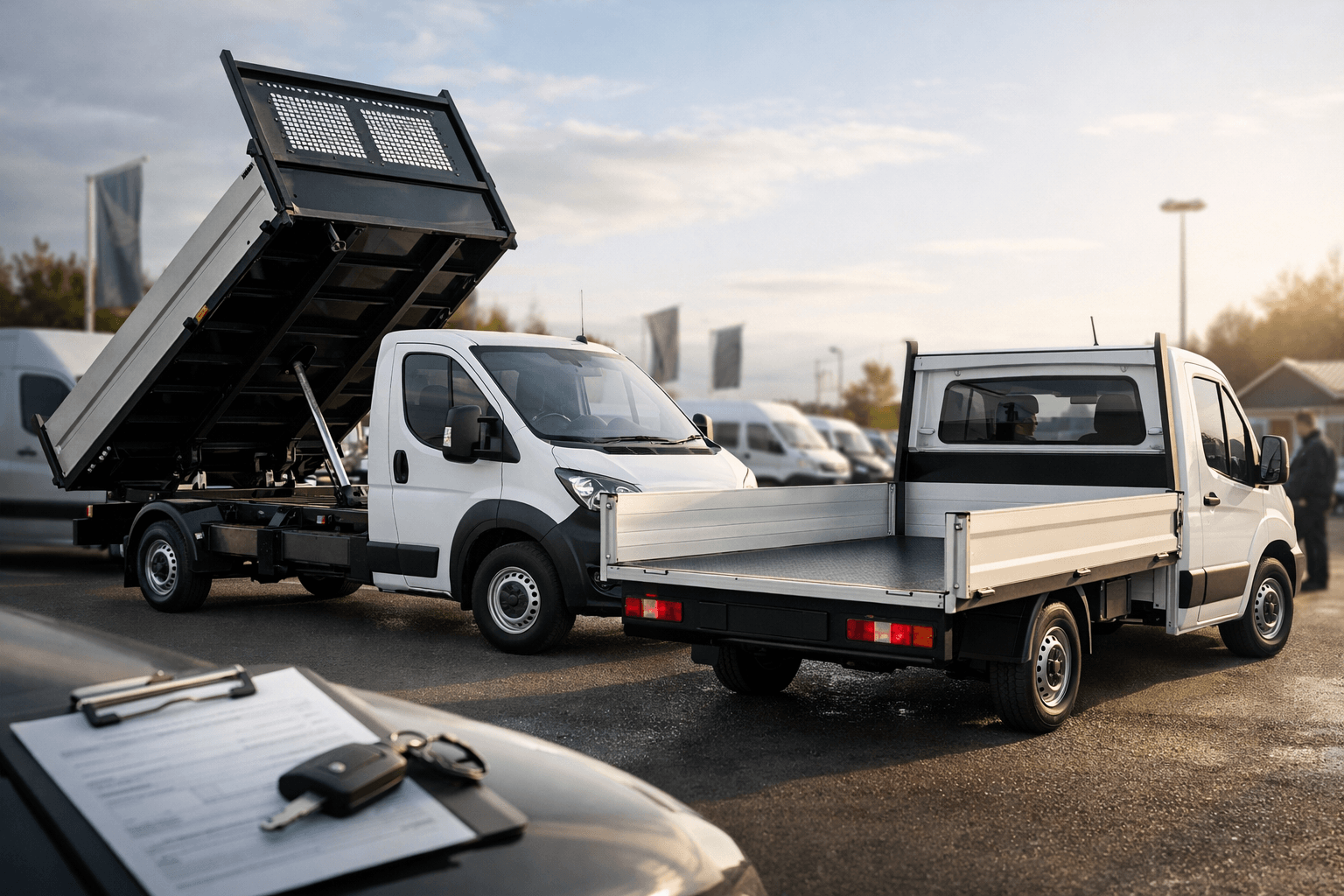
Tipper and dropside vans are genuinely specialist vehicles, and selling one well means understanding what makes them different — because a trade buyer inspecting your hydraulic ram is asking completely different questions than someone buying a Transit panel van. Here’s everything you need to know to sell your tipper van in the UK and get a fair price for it.
What Counts as a Tipper or Dropside Van?
A tipper van has a hydraulically operated load bed that tilts backward (or occasionally to the side) to unload materials. A dropside van has a flatbed body with hinged sides that fold down, giving full access to the load area from multiple angles. Both are classified as light commercial vehicles (LCVs) or, in heavier configurations, as goods vehicles — and both are valued very differently to standard panel vans because their utility is tied directly to the condition of their body and mechanism, not just the cab.
Common UK models include the Ford Transit Tipper, Volkswagen Crafter Tipper, Isuzu N35, Mitsubishi Fuso Canter, and various Renault Master and Vauxhall Movano conversions. These are workhorse vehicles used by builders, landscapers, waste carriers, and farmers — and that trade audience has very specific expectations.
Single-cab tippers carry more payload and attract buyers who prioritise load capacity. Double-cab tippers appeal to contractors who need to carry a crew as well as materials — and they typically command a premium in the right market. Know which you have, because it affects who you’re selling to.
How Much Is Your Tipper or Dropside Van Worth?
Your tipper’s value depends on age, mileage, payload rating, body condition, service history, and — critically — the condition of the tipping mechanism. That last factor is the one most sellers overlook, and it’s the first thing any experienced trade buyer will check.
The hydraulic system — the ram, pump, seals, and control valve — is expensive to repair or replace. A tipper that tips smoothly, holds position, and lowers without juddering is worth meaningfully more than one with a slow or leaking hydraulic circuit. If yours has issues here, expect buyers to price that repair into their offer, often aggressively.
For dropside vans, buyers will inspect the hinges, locking pins, and floor condition closely. Aluminium sides hold up better than steel but can crack at stress points. A floor with significant rot or damage will put buyers off, even if the cab is immaculate.
To get a baseline valuation, check Auto Trader Vans, eBay Motors, and Commercial Motor’s trade guides for comparable vehicles. Search by make, model, year, and payload rating — not just mileage. Tipper vans often hold value better than standard vans in periods of construction activity because supply is limited and demand from trades is consistent.
Modifications like toolboxes, crane attachments, or aluminium extensions can add value — but only if they’re in good condition and relevant to your likely buyer. A specialist landscaping setup appeals to landscapers; it may mean nothing to a waste carrier.
Best Ways to Sell a Tipper Van in the UK
Here’s the honest lay of the land on your selling options, and what each one actually costs you in time and money.
Online classified platforms — Auto Trader Vans, eBay Motors, Gumtree, Facebook Marketplace — give you reach, but tipper buyers on general platforms are often less qualified. Expect tyre-kickers alongside genuine trade buyers.
Commercial vehicle auction houses like BCA, Manheim, and Shoreham Vehicle Auctions are well-suited to tippers and dropsides because the buyer pool is trade-heavy. You’ll pay fees and may not control the final price, but sales are typically fast.
Specialist used tipper dealers and traders will often make a direct offer. Less admin, quicker sale, but expect a trade price rather than a private sale price.
Instant online van buying services are worth exploring — some do accept tippers and dropsides, though not all. If you want a fast, reliable offer without the hassle of listings and viewings, a specialist van buying service is worth getting a quote from as part of your research. It gives you a floor price to benchmark other offers against.
Direct sale to tradespeople — builders, landscapers, waste carriers, farmers — often gets you the best price, but requires you to reach the right audience. Facebook trade groups, local plant hire networks, and agricultural forums can be surprisingly effective.
| Method | Speed | Price achieved | Effort required |
|---|---|---|---|
| Online classifieds | Slow–medium | High (if patient) | High |
| Commercial auction | Fast | Medium | Low–medium |
| Specialist dealer | Fast | Medium–low | Low |
| Online buying service | Very fast | Medium | Very low |
| Direct to trade | Medium | High | High |
Preparing Your Tipper Van for Sale
Start with the hydraulics. Test the tipping mechanism before you list — raise and lower the body several times, check for slow operation, unusual noises, or hydraulic fluid leaks under the chassis. A buyer will do this during inspection; you want to know what they’ll find before they do.
Clean the cab thoroughly, pressure-wash the load bed and chassis, and degrease the hydraulic components so they’re visible and inspectable. A dirty mechanism makes buyers assume neglect even when there isn’t any.
Fixing minor bodywork issues is worth doing if the cost is low — a few rust spots treated and painted, a damaged hinge pin replaced. For larger repairs, it’s usually better to price them in and disclose them honestly rather than spend money you won’t fully recover.
Gather your paperwork: V5C logbook, MOT certificates, full service history, and any body conversion certificates if the tipper body was fitted as an aftermarket conversion. Some buyers — particularly those purchasing for fleet use — will want to see the body type is correctly recorded on the V5C.
When photographing your tipper, include shots of the mechanism in the raised position, the hydraulic ram, the body floor, the hinge points (for dropsides), and the cab. These are the angles that convert serious buyers from enquiries into viewings.
Writing a Listing That Attracts Serious Buyers
Trade buyers search in trade language. Use it. Your listing should lead with GVW (gross vehicle weight), payload rating, tipping height, body material, and cab configuration — not just year and mileage.
A listing that opens with “2019 Ford Transit Tipper, 3.5t GVW, 1,200kg payload, steel body, single cab, hydraulic tipping mechanism recently serviced” tells a trade buyer everything they need to know to qualify the vehicle in ten seconds.
Be transparent about wear. Stating “nearside dropside hinge shows wear but functional” saves you two hours of negotiation at viewing. Buyers who know what to expect don’t waste your time — and they don’t try to renegotiate on the doorstep.
On pricing: if you need a quick sale, price it to sell. If you can wait, start slightly above your target and leave room to negotiate. Tipper buyers are experienced commercial operators — they expect to negotiate, and a listing with no room to move can feel suspicious.
Legal and Admin Checklist When Selling a Tipper Van
Before you sell, run an HPI check to confirm there’s no outstanding finance on the vehicle. Selling a van with finance attached without settling it first is illegal and can result in the buyer having the vehicle repossessed — leaving you liable.
When the sale completes, notify the DVLA immediately using the V5C green slip (postal) or the online service at GOV.UK. Failure to do so means you remain the registered keeper and could receive parking fines, penalty charge notices, or worse.
Issue a written receipt and bill of sale for any commercial vehicle transaction. Include the date, purchase price, both parties’ details, and the vehicle’s registration and VIN. This protects both sides.
If you’re VAT-registered and selling a business asset, the sale may be subject to VAT. Speak to your accountant before completing the sale — this catches a lot of small business owners out.
Tippers over 3.5t GVW may require the buyer to hold an operator’s licence. You’re not legally obliged to police this, but flagging it in your listing attracts the right buyers and filters out those who can’t legally operate the vehicle.
How to Sell a High-Mileage or Older Tipper Van
Older tippers still sell — particularly to small traders, start-up landscapers, and farmers who need a functional workhorse rather than a nearly-new fleet vehicle. The key is honest, realistic pricing.
Check current auction results for comparable vehicles rather than relying on classified asking prices. Asking prices and achieved prices are often very different for older commercial vehicles.
If the vehicle is genuinely end-of-life, scrapping or selling for parts may net you more than a whole-vehicle sale. Hydraulic rams, dropside panels, and cab components from common models have a secondary market. Specialist dismantlers who handle commercial vehicles are your best route here.
For vehicles in between — driveable but tired — a commercial vehicle auction is often the most efficient exit. The trade buyer pool there is comfortable assessing and pricing older stock in a way that private buyers rarely are.
Avoiding Common Mistakes When Selling a Tipper Van
Underpricing is common because sellers assume tippers are harder to sell than panel vans. They’re not — they’re just niche. The right buyer will pay a fair price; the problem is usually reaching them.
Failing to demonstrate the tipping mechanism is the single biggest mistake sellers make. If a buyer arrives and you can’t show them a working hydraulic system, the negotiation starts badly. Test it. Show it. If it has a known issue, disclose it upfront.
Listing on general car sites rather than commercial vehicle platforms means your audience is wrong from the start. A tipper van listed on a general car marketplace will attract curiosity, not qualified buyers.
Accepting cash without documentation is a risk for both parties. A written receipt isn’t bureaucracy — it’s protection.
- The hydraulic mechanism condition is the single biggest price factor trade buyers assess — service or test it before listing
- Use trade language in your listing: GVW, payload, tipping height, body material, cab configuration
- Target the right buyers: builders, landscapers, waste carriers, farmers, not the general public
- Run an HPI check and notify the DVLA — the admin is simple and the consequences of skipping it aren’t
- Price realistically for your market; tipper vans hold value well when marketed to the right audience
Frequently Asked Questions
What is the best place to sell a tipper van in the UK?
Commercial vehicle auction houses (BCA, Manheim, Shoreham) and specialist van buying services are the fastest routes. For the best price, a direct sale to a trade buyer — builder, landscaper, waste carrier — via Facebook trade groups or commercial vehicle classifieds tends to achieve more, but takes longer.
How much is my tipper van worth?
It depends on age, mileage, payload rating, body condition, and — most importantly — the condition of the hydraulic tipping mechanism. Check Auto Trader Vans and eBay Motors for comparable sold listings. A tipper with a fully functioning hydraulic system and solid body is worth significantly more than one with known mechanism issues.
Can I sell a tipper van with outstanding finance?
Not legally without settling the finance first. Run an HPI check before listing. If finance is outstanding, contact your lender — many will allow a settlement figure to be paid from the sale proceeds on completion.
Do online van buying services buy tipper and dropside vans?
Some do, some don’t — it varies by service. It’s worth getting a quote from specialist services that handle commercial vehicles. Even if you don’t sell through them, the offer gives you a useful benchmark when evaluating other options.
Do I need to notify the DVLA when I sell a tipper van?
Yes. Complete the V5C green slip and send it to the DVLA, or notify them online at GOV.UK on the day of sale. Until you do, you remain the registered keeper and can be held responsible for any fines or offences incurred.
Is it worth repairing a tipper van before selling it?
For the hydraulic mechanism, yes — a working system adds more value than the typical repair cost. For bodywork, it depends on the extent of the damage. Minor rust treatment is worth doing; major structural repairs rarely pay for themselves in the sale price.
Can I part-exchange a tipper van at a dealer?
Yes, many commercial vehicle dealers will accept a tipper or dropside in part-exchange, particularly if you’re buying a replacement. Expect a trade price rather than a private sale price — but the convenience and speed often make it worthwhile.
What paperwork do I need to sell a tipper van privately?
You need the V5C logbook, current MOT certificate, service history, and any body conversion certificates. A written bill of sale is strongly recommended. If the vehicle is a business asset and you’re VAT-registered, check the VAT position with your accountant before completing the sale.
Are tipper vans harder to sell than standard panel vans?
They’re more niche, not harder. The buyer pool is smaller but more focused — trade buyers know what they want and will pay for it. The key is reaching the right audience rather than listing broadly and hoping for the best.
What is the difference between selling a tipper van and a dropside van?
The process is broadly the same, but the inspection points differ. For a tipper, buyers focus heavily on the hydraulic mechanism. For a dropside, they’ll inspect the hinge condition, locking pins, floor integrity, and side panel material. Both benefit from being presented clean, tested, and with full paperwork in order.