
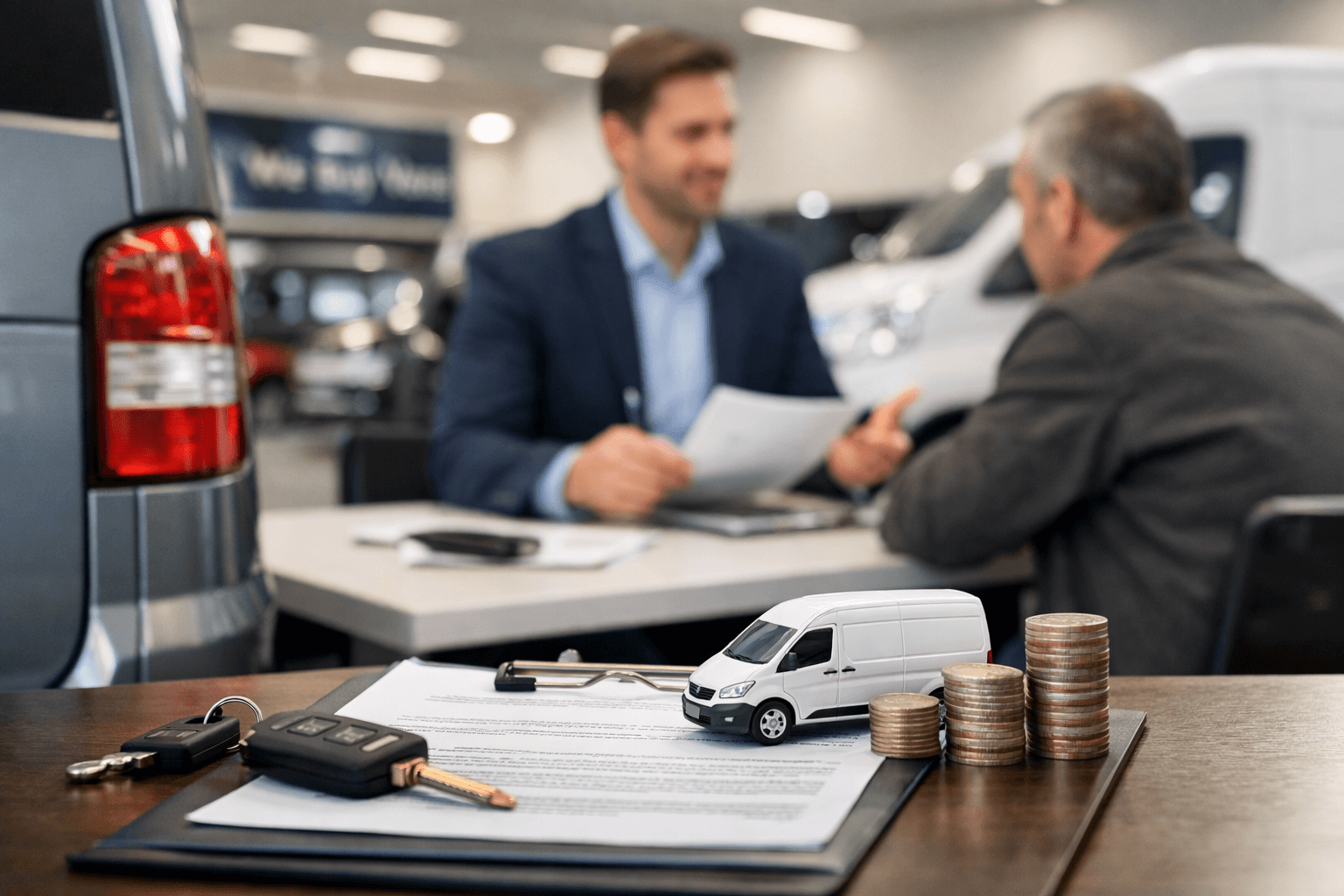
Selling a van in the UK throws up more questions than most people expect — and the answers genuinely matter, because getting them wrong can cost you money, create legal headaches, or leave you exposed to fraud. This guide covers every stage of the van selling process UK sellers commonly navigate, from understanding what your van is worth to what to do the moment the keys change hands.
How Much Is My Van Worth? Understanding Van Valuations
Your van’s value is shaped by five core factors: age, mileage, condition, service history, and specification level. A three-year-old Ford Transit Custom with a full main-dealer service history and low mileage will command a significantly higher offer than an identical-looking van with patchy paperwork and 180,000 miles on the clock. Condition isn’t just cosmetic — buyers and platforms factor in mechanical soundness, tyre wear, and the state of the load area, which takes a hammering in working vans.
Getting an accurate free online valuation is quick and useful as a starting benchmark, but treat it as a range rather than a firm number. In-person appraisals — whether from a specialist buyer or a dealer — will reflect the actual condition of your specific vehicle, which can push the figure up or down from any online estimate. The gap between the two is where sellers most often feel surprised, so go into any appraisal having already noted any damage, warning lights, or known issues.
The three main routes to sale — private sale, part-exchange, and instant buyer platforms — will each produce a different figure for the same van. Private sale typically achieves the highest price but demands the most time and effort. Part-exchange at a dealership is the most convenient option but usually returns the least. Instant buyer platforms sit in the middle: reliable, fast, and with no tyre-kickers.
Modifications are a mixed bag. A quality ply-lining in good condition, a roof rack that suits the van’s class, or a tow bar can add genuine value to the right buyer. Unusual colour wraps, heavily bespoke internal racking, or livery that hasn’t been fully removed tend to reduce appeal and, with it, your offer. Stick to what a typical trade buyer or next owner would see as useful, not what worked for your specific job.
Timing matters more than most sellers realise. Demand for vans tends to rise in spring and early autumn as businesses ramp up activity, and dip in the weeks between Christmas and New Year. If you have flexibility, selling into a period of higher demand can make a meaningful difference to the price you achieve.
What Are My Options for Selling a Van?
You have five realistic routes to market, and the right one depends on how quickly you need to sell, how much effort you’re willing to put in, and whether maximising the final price or minimising hassle is your priority.
Instant online buyers (platforms that give you a guaranteed offer and collect the van) are the fastest option. You can typically get an offer within minutes, have it confirmed after a physical inspection, and receive payment the same day or next working day. The trade-off is that the offer will sit below private sale values — these platforms need to make a margin. But there are no time-wasters, no test drives with strangers, and no waiting.
Private sale via classified sites such as Auto Trader, Facebook Marketplace, or specialist van forums gives you the best shot at the highest price. You control the listing, the negotiation, and the timing. The downside is real: you’ll field enquiries from people who never show up, manage test drives, handle payment securely, and deal with post-sale queries. For a van in strong condition with broad appeal, the premium can be worth it. For an older or higher-mileage van, the effort often outweighs the gain.
Part-exchange at a dealership is the path of least resistance. You hand over the van as part of buying another vehicle, and the dealer handles everything else. The return is usually the lowest of all options because the dealer needs to factor in reconditioning, storage, and their own margin. It works well when convenience is the priority or when the van’s condition makes other routes difficult.
Van auctions offer speed and certainty of sale but unpredictable hammer prices. A well-presented van can do well at auction; a tired one can sell for far less than expected. Reserve prices help, but auction fees eat into the return on both sides. This route suits fleet disposals or vans that are difficult to sell through other channels.
Specialist van dealers will generally offer more than a general used car dealer because they understand the market, have an established buyer base, and can move stock faster. If you’re selling a commercial vehicle, a specialist is almost always a better first call than a general forecourt.
Here’s a quick comparison to help you weigh up your options:
| Method | Speed | Effort Required | Likely Return |
|---|---|---|---|
| Instant online buyer | Same day – 48 hrs | Very low | Below market |
| Private sale | Days – several weeks | High | At or above market |
| Part-exchange | Same day | Very low | Lowest |
| Auction | 1–2 weeks | Low–medium | Unpredictable |
| Specialist van dealer | 1–5 days | Low | Fair to good |
How Do I Prepare My Van for Sale?
First impressions do a lot of heavy lifting when selling a van, and preparation is one of the few areas where a modest investment of time reliably translates into a better offer or a faster sale.
Start with a thorough clean — not just the cab, but the load area, wheel arches, and underbody if it’s accessible. Mud-caked wheel arches and a load floor covered in debris signal poor maintenance even when the van is mechanically sound. A professional valet costs relatively little and consistently improves buyer confidence. Pay particular attention to the driver’s seat area, which tends to show the most wear.
Minor repairs are often worth doing; major ones rarely are. Replacing a cracked wing mirror glass, touching up small stone chips, or fixing a broken interior handle costs little and removes easy negotiating ammunition from a buyer’s hands. Replacing a worn clutch, repainting a full panel, or fixing a complex electrical fault on a high-mileage van is unlikely to return what you spend. The rule of thumb: if a repair costs less than the discount a buyer will demand, do it.
Gather your paperwork before you start any conversation with a buyer or platform. You’ll need the V5C logbook, any MOT certificates (especially the most recent), a full service history if you have it, and any receipts for significant work. Missing paperwork doesn’t make a sale impossible, but it will cost you in the offer.
Photos are your first sales tool in any private listing. Shoot in good daylight, from multiple angles — front three-quarter, rear three-quarter, both sides, load area open, cab interior, and the odometer. Avoid cluttered backgrounds. A clean van photographed well on a bright day will attract more enquiries and faster offers than a better van photographed poorly.
Remove all personal belongings, tools, and any business branding or livery before inspection or photography. Branded livery left on a van narrows the buyer pool immediately. Check tyre tread depth (the legal minimum is 1.6mm, but buyers will negotiate hard on anything under 3mm), confirm all lights work, and check oil, coolant, and screen wash levels. These are the first things an experienced buyer checks, and arriving prepared shows you’ve maintained the van properly.
What Paperwork Do I Need to Sell My Van?
The V5C logbook — the vehicle registration document — is the single most important piece of paperwork in any van sale. It confirms you are the registered keeper and gives the buyer confidence the van isn’t stolen or subject to outstanding finance. If you’ve lost yours, apply for a replacement from the DVLA online or by post using form V62, which costs £25 and takes up to five working days. Selling without one isn’t impossible, but it will significantly reduce your pool of buyers and your offer.
When the van changes hands, you must notify the DVLA. For a private sale, complete the V5C tear-off slip (section 6) and give it to the buyer, then send the rest of the V5C to the DVLA — or do it online at gov.uk. This removes your liability for anything the new owner does with the van from the date of sale. Do not skip this step: keepers who fail to notify the DVLA have received speeding fines and parking charges months after they sold the vehicle.
If your van has outstanding finance — a hire purchase or lease agreement — you do not legally own it outright, and selling it without settling the finance first is a criminal offence. Get a settlement figure from your finance provider before agreeing any sale.
For a private sale, write a simple sale receipt that records the date, the buyer’s and seller’s full names and addresses, the vehicle’s registration number, VIN, make, model, agreed sale price, and a statement that the van is sold as seen. Both parties should sign it, and you should keep a copy. This protects you if a buyer later claims the van was misrepresented.
If your van has a telematics device, fleet management system, or any connected app — common in business-owned vans — wipe or remove it before sale. These systems can hold location history, driver behaviour data, and business account credentials. Returning a van to a leasing company or selling it to a private buyer with an active telematics account is a data protection risk under UK GDPR. Contact your telematics provider to deactivate the unit and confirm data deletion in writing.
Can I Sell a Van With Outstanding Finance?
No — not legally, without settling the finance first. If your van is on hire purchase (HP) or a conditional sale agreement, the finance company is the legal owner until the final payment is made. Selling it without their knowledge or consent is fraud, regardless of whether you intend to pay off the debt afterwards.
The first step is to contact your finance provider and request a settlement figure. This is the amount required to pay off the agreement in full on a specific date. Settlement figures include any early repayment charges and are typically valid for 10–14 days, so time your sale accordingly.
If the settlement figure is higher than the van’s current market value — a situation known as negative equity — you have a few options. You can pay the shortfall from your own funds, explore whether the finance provider will accept a voluntary termination (see below), or discuss a part-exchange where the dealer settles the finance and rolls any shortfall into a new agreement. None of these options is cost-free, but all are legal.
Some instant buyer platforms will handle the finance settlement on your behalf as part of the sale process. They pay the finance company directly from the sale proceeds and send you any remaining balance. This is a clean, efficient route if the van’s value exceeds the settlement figure — and one of the genuine advantages of using a specialist platform rather than attempting a private sale with outstanding finance.
If you’ve already paid at least 50% of the total amount payable under a regulated HP agreement, you may be entitled to voluntary termination under the Consumer Credit Act 1974. This allows you to hand the van back to the finance company with no further payments owed, provided the van is in reasonable condition. It’s not a sale — you won’t receive any money — but it’s a legitimate exit route if you’re in negative equity and can’t afford the shortfall.
How Do I Sell a Van That Doesn't Run or Is Damaged?
A non-running or heavily damaged van still has value — just not the same value as a roadworthy one, and your expectations need to reflect that from the start.
The first question is whether the van is worth repairing. For a relatively recent, low-mileage van with a single repairable fault, fixing it before sale often makes financial sense. For a high-mileage van where the repair cost approaches or exceeds the van’s running value, it usually doesn’t. Get at least one repair quote and compare it against the likely sale price of the van in its current state before committing.
If repair isn’t viable, your options are scrap or salvage. A scrap buyer will pay the metal value — calculated by weight — and issue you with a Certificate of Destruction (CoD), which you’ll need to notify the DVLA. Salvage buyers pay more because they intend to repair and resell, or strip the van for parts. To get an accurate quote from either, you’ll need the registration number, make, model, mileage, and an honest description of the damage.
Even if you scrap a van, you must notify the DVLA. The Authorised Treatment Facility (ATF) that scraps the vehicle will issue the CoD, but you’re responsible for ensuring the DVLA is informed. Failing to do so can result in continued road tax liability and fines.
Vans with a failed MOT or significant body damage can still be sold privately or to a specialist salvage dealer — they just need to be advertised accurately and priced accordingly. Misrepresenting the condition of a van you sell privately can expose you to legal action under the Consumer Rights Act 2015, so be specific about what’s wrong.
How Do I Sell a Van Privately and Stay Safe?
Selling privately gets you the best price, but it also puts you in direct contact with strangers — some of whom are not who they claim to be. A few straightforward precautions make the process significantly safer.
List on platforms with the widest relevant reach: Auto Trader and Facebook Marketplace attract the largest audiences for vans in the UK. Gumtree still generates enquiries, and specialist forums (such as those for tradespeople in specific industries) can connect you with buyers who understand the van’s value and are ready to move quickly. Write your ad with the details buyers actually search for: make, model, year, mileage, payload, engine size, gearbox type, MOT expiry, and any extras. Be honest about condition — it builds trust and reduces time-wasters.
Before allowing a test drive, verify the buyer’s identity. Ask to see their driving licence and photograph it. Confirm they hold the correct licence category for the van’s weight. Accompany them on every test drive — never hand over the keys and wait inside. Agree a route in advance and keep it local.
For payment, bank transfer (BACS or Faster Payments) is the safest option for large sums. Confirm the funds have cleared in your account before handing over the keys and V5C. A banker’s draft is acceptable if you verify it with the issuing bank before proceeding. Avoid cash for any transaction above a few hundred pounds — it’s difficult to verify, carries no paper trail, and makes you a target.
Common van-selling scams include fake PayPal payment confirmations (emails that look like payment notifications but aren’t), overpayment scams (a buyer sends more than the asking price and asks for the difference back), and buyers who claim to be sending a courier to collect — a classic way to avoid identity verification. If anything feels off, trust that instinct and walk away.
How Quickly Can I Sell My Van?
The honest answer: anywhere from the same day to several weeks, depending entirely on which route you choose.
Instant buyer platforms are the fastest option by a significant margin. You can get an indicative offer online in minutes, confirm it after a physical inspection (often at your home or workplace), and receive payment within 24–48 hours of accepting. There’s no chain, no negotiation, and no waiting for a buyer to arrange finance.
Private sales take longer — typically one to three weeks for a well-priced, well-presented van in reasonable condition, though unusual specifications or high mileage can extend that considerably. The factors that slow a private sale most are overpricing (which kills enquiries), poor photography (which kills interest), and inflexibility on viewing times (which kills momentum). Price it accurately from day one, respond to enquiries quickly, and be available for viewings at evenings and weekends.
Running your van on two or three platforms simultaneously — for example, Auto Trader and Facebook Marketplace — increases exposure without much extra effort. Competing enquiries create a sense of urgency that encourages serious buyers to act.
The trade-off between speed and price is real but not always as large as sellers assume. A well-prepared van listed at a fair price on the right platforms can sell quickly and achieve close to its full market value. The vans that sit for weeks are usually overpriced, poorly presented, or both.
If you want to understand all your options before committing to a route, starting with a free online van valuation gives you a reliable baseline to compare against private sale estimates and dealer offers.
Do I Need to Pay Tax When I Sell My Van?
For most private individuals, no — selling a van you used personally is unlikely to trigger a tax liability. Capital Gains Tax (CGT) applies to assets that have increased in value, and vans almost always depreciate. Unless you bought a rare or specialist vehicle that has appreciated, CGT is not a concern for private sellers.
The picture is more complicated — and more important — for business sellers, and this is the area that most van selling guides ignore entirely.
VAT-registered businesses must account for VAT on the sale of a van if they reclaimed VAT when they bought it. The sale price is treated as VAT-inclusive, and the VAT element must be paid to HMRC. If you originally reclaimed VAT on the purchase and then sell the van without accounting for output VAT, HMRC can and does investigate. The rate is the standard 20%, applied to the sale price.
Sole traders selling a van used in their business should report the proceeds as a business receipt and may be subject to income tax on any profit above the van’s written-down value (its tax book value after capital allowances). If you’ve claimed the Annual Investment Allowance (AIA) on the van — effectively writing off its full cost in the year of purchase — the entire sale proceeds may be treated as a taxable receipt. This catches many sole traders by surprise.
Limited companies face a similar calculation. The sale proceeds are compared against the van’s net book value in the company accounts, and any gain is subject to Corporation Tax. If the van was fully depreciated, the full sale price may be taxable.
If your business claimed a VAT reclaim on the original purchase and you later sell the van at a loss, you may still owe output VAT on the sale price — not on the profit. These rules catch business sellers who assume a loss means no tax consequence.
Fleet managers and business owners disposing of multiple vans should speak to an accountant before proceeding. The interaction between capital allowances, VAT, and business income tax is specific to each company’s circumstances, and the cost of professional advice is almost always less than the cost of getting it wrong.
What Happens After I Sell My Van?
The sale isn’t finished when the keys change hands — there are a few administrative steps that protect you legally and financially, and they’re worth completing the same day if possible.
Notify the DVLA immediately using the V5C tear-off slip (section 6 for a private sale), which you give to the buyer. Send the remainder of the V5C to the DVLA, or complete the notification online at gov.uk/sold-bought-vehicle. Once processed, you’ll receive a confirmation letter. Keep this. It is your evidence that you notified the DVLA on the correct date, which matters if the new owner incurs fines or penalties before registering the van in their name.
Cancel your road tax the same day. Vehicle Excise Duty (VED) is no longer transferable between owners. The DVLA will automatically cancel the tax and issue a refund for any full remaining months once they receive notification of the sale. Refunds are calculated in full calendar months — you won’t be refunded for a partial month — and are typically issued by cheque within four to six weeks.
Contact your insurance provider immediately to cancel or adjust your policy. Continuing to pay for insurance on a van you no longer own is a straightforward waste of money, and some insurers require notification within a specific timeframe as a policy condition.
Keep copies of all sale documentation — the sale receipt, any correspondence with the buyer, your DVLA notification confirmation, and your finance settlement letter if applicable — for at least two years. This gives you a clear paper trail if any dispute arises.
If the new owner fails to register the van in their name, you may continue to receive correspondence — including fines — addressed to you as the previous keeper. If this happens, contact the DVLA with your proof of sale and the date of notification. Your confirmation letter is what protects you here, which is exactly why you should never skip the DVLA notification step.
- Your van’s value depends on age, mileage, condition, service history, and spec — get an online valuation first, then compare it against in-person offers.
- Outstanding finance must be settled before any legal sale can take place; some instant buyer platforms will handle this on your behalf.
- Business sellers face VAT, capital allowances, and HMRC reporting obligations that private sellers do not — speak to an accountant before selling a business-owned van.
- Always notify the DVLA on the day of sale and cancel road tax immediately to protect yourself from future liability.
- Remove or wipe telematics and fleet management systems before handing over any connected van — this is a data protection obligation, not just good practice.
How do I find out how much my van is worth before selling?
Use a free online van valuation tool as your starting point — you’ll need the registration number, mileage, and an honest assessment of condition. Online valuations give you a useful range, but an in-person appraisal from a specialist buyer or dealer will reflect the actual condition of your specific van and produce a more accurate figure. Compare both before committing to any route.
Can I sell my van without a V5C logbook?
Yes, but it will limit your options and reduce your offer. Apply for a replacement V5C from the DVLA using form V62 (£25, available online or by post) before you start the sale process if possible. Some instant buyer platforms will still purchase a van without a V5C, but private buyers are understandably cautious — the logbook is the primary document confirming you’re the registered keeper.
What is the fastest way to sell a van?
An instant online buyer platform is the fastest route, with payment possible within 24–48 hours of accepting an offer. You get an indicative price online, a confirmed offer after inspection, and same-day or next-day payment. It’s the go-to answer to the “how does selling a van work quickly” question — no listings, no viewings, no waiting.
Can I sell a van that still has finance outstanding?
Not without settling the finance first. Selling a van on hire purchase without the finance company’s knowledge is a criminal offence because the finance company, not you, is the legal owner. Get a settlement figure from your provider, check whether the van’s value covers it, and either settle before sale or use a platform that handles settlement on your behalf from the proceeds.
Do I need an MOT to sell my van privately?
There is no legal requirement for a van to have a valid MOT at the point of private sale, but you must disclose that it doesn’t have one. Most buyers will factor the cost of an MOT — and any work needed to pass — into their offer or use it as a reason to walk away. A van with a fresh MOT is easier to sell and commands a higher price.
How do I avoid scams when selling my van?
Verify every buyer’s identity before allowing a test drive, and never hand over keys without confirmed cleared funds in your account. Treat any overpayment offer, PayPal “confirmation” email, or request for courier collection as an immediate red flag — these are the most common van-selling scams in the UK. Bank transfer is the safest payment method; cash for large sums is the riskiest.
Will I have to pay tax on the money I make from selling my van?
Private individuals selling a personal-use van are unlikely to face any tax liability, as vans depreciate. Business sellers are a different matter: VAT-registered businesses must account for output VAT on the sale price, and sole traders or limited companies may face income tax or Corporation Tax on proceeds above the van’s tax book value. Consult an accountant before selling any business-owned van.
Can I sell a high-mileage or older van, and what should I expect?
Yes — high-mileage and older vans sell regularly, but realistic pricing is essential. These are among the most common we buy vans questions, and the honest answer is that buyers will price in higher mechanical risk and shorter remaining service life. A clean, well-documented high-mileage van will always achieve more than a similar one with no service history, so gather every receipt and record you have.
What is the best website to sell a van privately in the UK?
Auto Trader consistently attracts the largest audience of serious van buyers in the UK and is the strongest single platform for private van sales. Facebook Marketplace generates high volumes of enquiries, particularly for lower-value vans, and costs nothing to list. Using both simultaneously maximises your exposure without significant extra effort.
How do I cancel road tax after selling my van?
You don’t need to cancel it directly — the DVLA cancels it automatically once they receive notification of the sale, either via the V5C tear-off slip or your online notification. A refund for any full remaining months is issued by cheque, typically within four to six weeks. You cannot transfer road tax to a new owner; it stays with the registered keeper.
Should I sell my van privately or use an instant buyer platform?
If maximising the sale price is your priority and you’re willing to invest time in listing, fielding enquiries, and managing viewings, private sale is the better route. If speed, certainty, and convenience matter more — or if your van has issues that make private sale difficult — an instant buyer platform is the smarter choice. Many sellers check both options and let the numbers decide.
What paperwork do I need to complete a private van sale legally?
You need the V5C logbook (or a replacement application if it’s lost), the most recent MOT certificate, a service history if available, a written sale receipt signed by both parties, and a finance settlement letter if the van was on finance. Notify the DVLA on the day of sale and keep copies of everything. These are the van sale common queries that catch sellers out most often — the paperwork step feels bureaucratic until something goes wrong.
Still have questions? Every van and every seller’s situation is a little different — that’s exactly why a one-size-fits-all answer rarely cuts it. Whether you’re a sole trader navigating a VAT disposal, a fleet manager clearing multiple vehicles, or simply someone who wants to know their van is in safe hands, the right conversation starts with an honest valuation. Get yours today and take the first step with confidence.
—SEO_DATA_START—
SEO_TITLE: Sell My Van FAQ: Your Top Questions Answered
SEO_DESCRIPTION: Got sell my van questions answered here — valuations, finance, tax, scams, paperwork and more. The UK’s most complete van selling FAQ.
SEO_FOCUS_KEYWORD: sell my van questions answered
SEO_OG_TITLE: Sell My Van FAQ: Every Question