
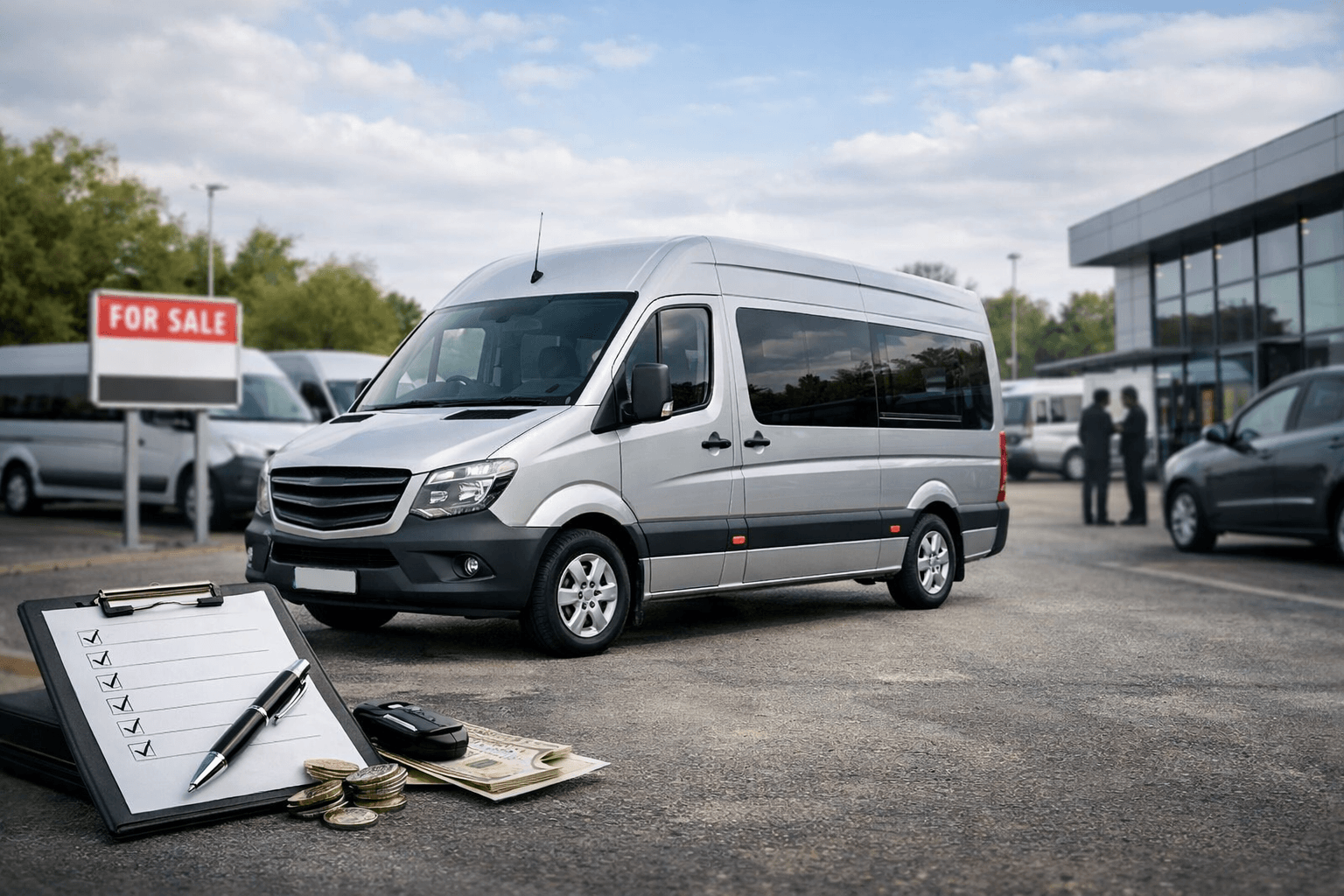
Selling a minibus in the UK is more complex than selling a car — but you have more options than you might think. Whether you’re a fleet operator, a charity winding down a vehicle, or a private owner ready to move on, the right route depends on your vehicle’s spec, its regulatory history, and how quickly you need the money. This guide walks you through every realistic option for 2025, including the specialist angles most sellers overlook entirely.
Why Selling a Minibus Is Different From Selling a Car
Minibuses occupy a genuinely specialist corner of the used vehicle market. The buyer pool is smaller, more specific, and often governed by regulations that simply don’t apply to standard cars or vans.
Seat count matters enormously. A vehicle with nine or more passenger seats is legally classified differently from a car, and buyers — whether schools, care providers, or community groups — will have firm requirements around capacity. A 16-seat minibus and a 12-seat one aren’t interchangeable in the eyes of most buyers.
Then there’s the regulatory layer that almost every other guide ignores. COIF (Certificate of Initial Fitness) — the certification confirming a vehicle meets passenger-carrying safety standards — and the history of any Section 19 or Section 22 permits (which allow community or hire-and-reward transport) can directly affect who will buy your vehicle and at what price. A minibus with a clean COIF and a documented permit history is a very different proposition from one without.
Whether your vehicle is classified as a Private Service Vehicle (PSV) or a non-PSV affects the licensing requirements for any future driver — and buyers will ask. Understanding this before you list saves awkward conversations later.
Higher mileage is generally more tolerated by minibus buyers than by car buyers. A Transit with 180,000 miles and a full service history is still a working asset to the right buyer. The question is finding that buyer.
Knowing Your Minibus: What Affects Its Value Before You Sell
Your minibus’s value is shaped by a cluster of factors that work differently from the standard car valuation model.
Seat capacity is the starting point. Eight-seat people carriers attract a broader buyer pool, including private individuals. Twelve, sixteen, and seventeen-plus seat configurations narrow the field to operators, institutions, and charities — but those buyers often pay reliably and move quickly when the spec is right.
Accessibility fitments — wheelchair ramps, tail lifts, tracking systems — create genuine niche demand. A vehicle fitted for wheelchair users is worth significantly more to a care provider or disability charity than a standard minibus. Don’t strip these features before selling; market to buyers who need them.
Bodywork condition, rust around wheel arches and sills, and structural integrity are scrutinised more heavily on minibuses because of their passenger-carrying duty. A thorough honest assessment before you list prevents renegotiation surprises later.
Popular makes hold value well. In the UK market, the Ford Transit, Volkswagen Crafter, Mercedes Sprinter, and Iveco Daily are consistently in demand. If you own one of these, you’re starting from a stronger position than with a less common chassis.
Option 1: Selling to a Specialist Minibus Dealer
Specialist minibus dealers understand your vehicle in a way that general used-vehicle traders simply don’t. They know what COIF means, they can assess accessibility fitments properly, and they won’t blank at the sight of a Section 19 permit sticker.
The trade-off is price. Dealers buy at trade value — typically 10–20% below what a private buyer or end-user operator might pay. That discount is the cost of convenience: they handle the paperwork, the inspection, and the remarketing risk.
To find reputable UK minibus dealers, look for members of the SMMT (Society of Motor Manufacturers and Traders) or dealers with verifiable trading history and reviews. Ask specifically whether they handle your vehicle’s seat count and whether they have experience with accessible-spec vehicles.
Before accepting any dealer offer, ask what they intend to do with the vehicle. A dealer planning a quick retail sale has more margin to play with than one sending it straight to auction — which means there may be room to negotiate.
Part-exchange is worth exploring if you’re upgrading your fleet. Dealers will often sharpen their retail price on a replacement vehicle to secure the trade-in, which can close the gap on that 10–20% discount.
Option 2: Online Instant-Buy and Vehicle Buying Services
Instant-buy platforms offer speed and simplicity. You enter your registration, answer some questions, get an online valuation, and — if you accept — book a collection or drop-off.
The limitation is that many mainstream platforms cap out at a certain seat count or gross vehicle weight. Services designed for cars and small vans often can’t or won’t handle a 17-seat minibus. Check the small print before you invest time in a valuation.
Dedicated minibus buying services do exist in the UK, and their online valuation tools are improving. If you’re using one, be aware of the single most common frustration: last-minute price reductions on physical inspection. The online quote is conditional. If the vehicle has undisclosed damage, higher mileage than stated, or outstanding finance, the offer will drop — sometimes significantly.
If you need a reliable benchmark for what a buying service might offer before committing to any route, getting a quote from a service that handles all types of vans and larger passenger vehicles can give you a realistic floor price to negotiate from elsewhere.
Best suited for: Sellers who prioritise speed and simplicity over maximum return, particularly for well-maintained vehicles with clean paperwork.
Option 3: Selling at Auction
UK auction houses including BCA, Manheim, and Shoreham Vehicle Auctions regularly handle commercial and passenger vehicles, including minibuses. Auction can work well — but it requires realistic expectations.
Prices at auction vary significantly depending on the day, attendance, and what else is in the hall. A well-presented 12-seat Sprinter might fly past its reserve one week and sit unsold the next. Physical auctions tend to suit minibuses better than online-only formats, because buyers want to inspect seating, ramps, and bodywork in person.
Set a reserve price that reflects your minimum acceptable return after fees. Auction houses charge sellers a fee (typically a percentage of the hammer price or a flat rate), and buyers pay a buyer’s premium on top — which affects what buyers are willing to bid. Factor both into your reserve calculation.
Best suited for: Fleet disposals, older or higher-mileage stock, and vehicles that need work and are priced accordingly.
Option 4: Private Sale — Advertising Your Minibus Directly
Private sale offers the highest potential return — and the most effort. Platforms worth using include Auto Trader (which has a commercial section), eBay Motors, Gumtree, Facebook Marketplace, and specialist forums serving community transport operators.
Your listing needs to answer the questions serious minibus buyers actually ask: seat count, wheelchair accessibility, MOT expiry, COIF status, permit history, engine size, and service record. Bury these details and you’ll attract tyre-kickers. Lead with them and you’ll attract buyers.
Charities, schools, sports clubs, and community groups are among the most active private minibus buyers in the UK. They often have a clear spec requirement and a committee approval process — so expect a slightly longer sales cycle, but don’t be put off. These buyers are genuine.
For private sales, accept payment only by bank transfer confirmed in your account before handing over keys. Never accept a cheque, and be alert to overseas buyer scams (more on this in the comparison section below).
Option 5: Selling to a Fleet Operator, Charity, or Community Group
Going direct to an end-user is the route most likely to beat auction returns — and it’s underused. Care providers, schools, sports clubs, and faith organisations are consistently in the market for reliable minibuses, and they often prefer buying from a known seller with documented history over taking a risk at auction.
Section 19 and Section 22 permit implications matter here. If your vehicle has been operated under a Section 19 permit (community transport, non-profit) or Section 22 permit (hire and reward), disclose this to the buyer. It affects what permits they’ll need to operate it legally. Failing to disclose is not just poor practice — it can expose you to a dispute after the sale.
Reach these buyers through community noticeboards, local authority transport networks, charity vehicle schemes, and sector-specific networks like the Community Transport Association. A direct approach to a local school or care home costs nothing and can result in a sale that outperforms auction by a meaningful margin.
When selling to a registered charity, there may be VAT implications depending on your VAT registration status and the nature of the sale. Speak to your accountant before completing the transaction.
Option 6: Part-Exchange or Fleet Disposal Services
If you’re upgrading a vehicle or disposing of multiple minibuses at once, part-exchange and fleet disposal services offer a streamlined alternative to selling each vehicle individually.
Fleet disposal companies handle the entire process — collection, valuation, remarketing — and can process multiple vehicles simultaneously. For operators running a fleet of five or more, the time saving alone often justifies the slightly lower per-vehicle return compared to private sale.
VAT-registered businesses selling minibuses need to account for VAT on the sale correctly. If the vehicle was purchased with VAT reclaimed, the sale price will typically attract VAT at the standard rate. This is a point worth clarifying with your accountant, particularly if you’re selling to a charity that believes it’s receiving a VAT-free transaction.
Leasing end-of-contract returns are a separate category entirely. If you’re returning a leased minibus, your obligations are set by the lease agreement — excess mileage charges, condition standards, and return procedures are all contractually defined. Review the agreement before the return date to avoid unexpected charges.
How to Prepare Your Minibus for Sale: A Pre-Sale Checklist
Preparation directly affects both the speed of your sale and the price you achieve. Here’s what to address before you market the vehicle.
Documents first. Gather your V5C logbook, MOT certificates, full service history, and — critically — your COIF certificate if the vehicle has one. A buyer who intends to operate the vehicle for passenger use will want to see the COIF. Not having it doesn’t necessarily kill the sale, but it will affect the price.
Interior presentation matters more for minibuses than for most vehicles. Buyers are imagining passengers — children, elderly residents, wheelchair users — sitting in those seats. A professionally cleaned, odour-free interior signals that the vehicle has been maintained responsibly. It’s one of the highest-return pre-sale investments you can make.
Minor repairs — a broken seat mechanism, a faulty step light, a worn seatbelt — are worth addressing because they’re exactly the kind of detail that triggers a buyer’s renegotiation instinct. Major mechanical work is a different calculation: price it into the asking price rather than spending money you may not recover.
Check and clear any outstanding finance before marketing the vehicle. A vehicle with outstanding finance cannot be cleanly sold to a private buyer, and many buying services will deduct the settlement figure from their offer. Know your settlement figure before you start.
Comparing Your Options: Which Route Gets You the Best Result?
| Method | Speed | Effort | Likely Return | Best For |
|---|---|---|---|---|
| Specialist dealer | Fast (days) | Low | Trade price | Quick, clean exit |
| Online buying service | Very fast | Very low | Trade price | Speed above all |
| Auction | Medium (weeks) | Medium | Variable | Fleet disposal, older stock |
| Private sale | Slow (weeks–months) | High | Highest potential | Well-maintained, documented vehicles |
| Direct to charity/school | Medium | Medium | Above trade | Vehicles with community transport history |
| Part-exchange/fleet disposal | Fast | Low | Trade price | Fleet upgrades, bulk disposals |
The single biggest factor in choosing your route is urgency. If you have a replacement vehicle arriving in two weeks, a buying service or dealer is your realistic option. If you have two months and a clean, well-documented minibus, a private sale or direct approach to an end-user will almost certainly return more.
Combining approaches is smart. Get dealer and buying-service quotes first — they give you a floor price. Then list privately or approach end-users directly with that floor price as your walk-away number.
Be alert to scams targeting minibus sellers specifically. Common patterns include: fake finance clearance letters (always verify directly with your finance provider), overseas buyers offering to pay above asking price with elaborate payment arrangements, and fake escrow services. If an enquiry feels unusual, trust that instinct.
Legal and Paperwork Essentials When You Sell a Minibus in the UK
Getting the legal side right protects you after the sale as much as it protects the buyer.
Notify the DVLA using the green slip (new keeper section) of the V5C at the point of sale. The buyer retains the green slip; you send the remainder to the DVLA or notify them online. Keep a record of the date and method of notification.
Issue a written receipt and bill of sale. This should include: the date of sale, both parties’ names and addresses, the vehicle registration, VIN, make, model, and agreed sale price, and a statement that the vehicle is sold as seen (if applicable). For commercial sellers, this is a basic legal protection.
Cancel your road tax from the date of sale — DVLA will issue a refund for any complete remaining months. Notify your insurer immediately; cover should not continue in your name after the vehicle has transferred.
GDPR consideration: If your minibus was fitted with a dashcam or passenger data system — particularly relevant for care providers and school operators — ensure all stored footage and personal data is wiped before the vehicle leaves your possession. This is a legal obligation under UK GDPR, not optional.
If the vehicle carries a personalised registration you want to retain, apply to transfer or retain the plate with the DVLA before completing the sale. Once the V5C transfers to a new keeper, the process becomes significantly more complicated.
Keep records of the sale — receipt, bank transfer confirmation, V5C notification — for a minimum of six years if you’re a VAT-registered business, for tax and accounting purposes.
- Minibus valuation in the UK is shaped by seat count, accessibility fitments, COIF status, and permit history — not just age and mileage.
- Specialist dealers and online buying services offer speed; private sale and direct-to-charity routes offer higher returns.
- Disclose Section 19/22 permit history to buyers who intend to operate the vehicle for passenger use — it’s both a legal and ethical obligation.
- Clear outstanding finance, gather all documents, and clean the interior thoroughly before marketing.
- Always notify the DVLA at the point of sale and keep written records of the transaction.
Frequently Asked Questions
What is the fastest way to sell a minibus in the UK?
The fastest route is an online instant-buy or dedicated minibus buying service, which can move from online valuation to payment in as little as 24–48 hours. Specialist dealers are the next fastest, typically completing a sale within a few days. Both routes offer trade-level pricing in exchange for that speed.
How much is my minibus worth in the UK?
Minibus value depends on seat count, make and model, age, mileage, service history, MOT status, accessibility fitments, and COIF status. There is no single price guide equivalent to a car valuation tool — the best approach is to get two or three quotes from buying services and dealers, then use those as a baseline for any private or direct sale.
Can I sell a minibus privately in the UK without a dealer?
Yes. Private minibus sales are entirely legal and common. Platforms including Auto Trader, eBay Motors, Facebook Marketplace, and Gumtree all carry private minibus listings. You’ll need to handle your own paperwork, viewings, and payment security, but the return is typically higher than selling through a dealer or buying service.
Do I need a COIF certificate to sell my minibus?
You are not legally required to provide a COIF to sell the vehicle, but its presence — or absence — affects value and saleability. Buyers intending to use the vehicle for community or hire-and-reward transport will want to see it. If the COIF has lapsed or was never issued, be transparent about this and price accordingly.
What documents do I need when selling a minibus in the UK?
At minimum: the V5C logbook, a valid MOT certificate (or honest disclosure if it has expired), and any service history you have. For minibuses, also gather the COIF certificate if applicable, and any Section 19/22 permit documentation. Outstanding finance settlement letters are also needed if the vehicle is subject to a finance agreement.
Will auction houses accept a minibus with high mileage?
Yes. UK auction houses including BCA and Manheim regularly sell high-mileage commercial and passenger vehicles. High mileage will affect the reserve price and the likely hammer price, but it does not prevent entry. Auction is often the most practical route for older, high-mileage stock that is unlikely to attract private buyers at a price worth the effort.
Can charities buy minibuses VAT-free in the UK?
Charities can purchase certain vehicles VAT-free if the vehicle meets specific criteria — primarily that it is designed or substantially adapted for the transport of disabled people. Standard minibuses sold by VAT-registered businesses are generally subject to VAT at the standard rate. Both parties should seek accountancy advice before assuming a VAT exemption applies.
How do I notify the DVLA when I sell a minibus?
Complete the new keeper section (green slip) of the V5C and give it to the buyer at the point of sale. Send the remainder of the V5C to the DVLA, or notify them online via the GOV.UK vehicle tax and SORN service. Keep a record of the notification date. The DVLA will then update the registered keeper and issue any road tax refund owed to you.
Is it worth repairing a minibus before selling it?
Minor repairs that affect buyer confidence — broken seat mechanisms, faulty step lighting, worn seatbelts — are generally worth addressing because they trigger renegotiation. Major mechanical work rarely returns its cost in a higher sale price. The better approach for significant mechanical issues is to be transparent, price the vehicle accordingly, and target buyers who can handle the repair themselves.
What are the most common scams when selling a minibus privately?
The most common scams include: fake finance clearance letters (always verify the settlement directly with your finance provider, not through documents the buyer supplies); overseas buyers offering above-asking-price with complex payment arrangements; and fake escrow services that appear to hold payment but release nothing. Insist on payment by UK bank transfer confirmed in your account before releasing the vehicle, and be sceptical of any buyer who avoids a physical viewing.