
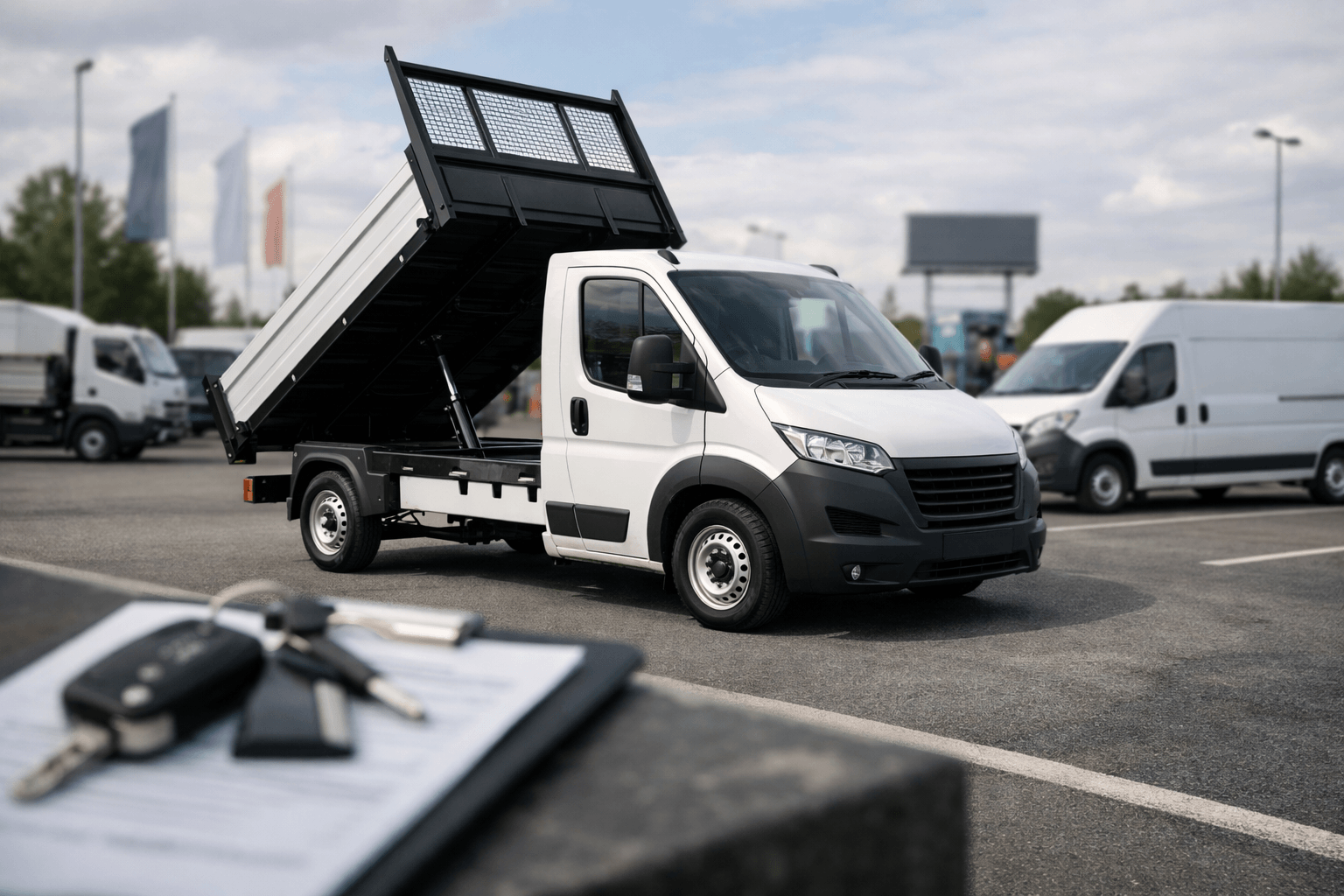
Selling a tipper van throws up questions no generic van-buying guide ever bothers to answer. This FAQ tackles the eight questions UK sellers ask most — from what your hydraulic ram’s condition means for your offer, to what happens to the toolbox bolted to the body. Read it once and you will know exactly what to expect.
- A non-operational hydraulic body does not automatically disqualify your tipper from receiving an offer — condition affects price, not eligibility
- Aftermarket additions like tie-down rails and toolboxes are yours to remove before collection, or declare upfront for an adjusted valuation
- A cracked tipper body or seized ram still qualifies for an offer — buyers factor in repair or scrap value
- The tipper van sale process is faster than most sellers expect: online quote, agreed price, collection, payment
- Collection is available across the UK — you do not need to deliver the vehicle
Does my tipper van's hydraulic body need to be working to get an offer?
No. A seized or non-operational hydraulic ram does not disqualify your tipper from an offer — it affects the figure, not your eligibility to sell. Buyers who specialise in tippers understand that hydraulic systems fail, and they price accordingly, factoring in repair costs or the residual scrap value of the body. Be upfront about the ram’s condition when you request a quote; accurate information produces an accurate offer and avoids renegotiation at collection.
Test the ram before you call — even a partial lift is worth noting. “Raises but won’t hold” is a more useful description than “broken”, and it can positively influence the valuation.
Will a cracked tipper body or damaged bed affect my sale?
Yes, it will affect the price — but it will not stop the sale. Cracked steel bodies, split aluminium sides and damaged tipping beds are common on working tippers, and experienced buyers build repair or recycling costs into their offers. The key is accurate disclosure: describe the damage honestly when you request your quote so the figure you receive reflects the vehicle’s actual condition. An offer agreed on accurate information is an offer that holds.
What happens to aftermarket additions — toolboxes, tie-down rails, racking?
Anything you bolted on, you can bolt off. Aftermarket additions — toolboxes, side rails, cab racking, or bespoke tie-down systems — are not considered part of the vehicle unless they were factory-fitted. Remove them before collection if you want to keep them. If removal is impractical, declare them when requesting a quote; the buyer will either include them in the valuation or agree to leave them behind. Never assume additions are included in the agreed price without confirming it in writing.
Removing aftermarket bodywork can expose rust or structural damage underneath. Inspect the body once anything is stripped off and update your description if the condition has changed.
How do I get an accurate quote for my tipper van in the UK?
Gather four things before you request a quote: the registration number, current mileage, an honest condition description, and details of any modifications or damage specific to the tipper body. The registration pulls the base vehicle data automatically; the tipper-specific information is what separates a precise offer from a rough estimate. If you are researching your options, the tipper van specialists at We Buy Vans offer online valuations built around the working realities of tipper ownership — not a generic van calculator.
Photograph the hydraulic ram, the tipping body, and the cab interior before you request a quote. Buyers who can see the condition upfront move faster and negotiate less.
How long does the tipper van sale process actually take?
From online quote to cash in your account, most sellers complete the tipper van sale process within 48 to 72 hours. The steps are straightforward: submit your details, receive an offer, confirm acceptance, agree a collection slot, and receive payment — typically on the same day as collection. Delays almost always trace back to incomplete paperwork, so have your V5C logbook ready before you book collection.
Is tipper van collection available across the UK?
Yes — collection is nationwide. Whether you are in Glasgow, Cardiff, or rural East Anglia, the vehicle comes to you; you do not drive it anywhere. This matters more for tippers than for standard vans, because a tipper with a seized ram or a damaged body may not be roadworthy enough to deliver. Confirm your postcode when requesting a quote; most buyers will confirm collection availability at the same time as the offer.
What paperwork do I need to sell my tipper van in the UK?
You need three documents: the V5C logbook (registered in your name or your company’s name), a valid MOT certificate if the vehicle has one, and proof of identity. If the tipper is registered to a business, you may also need a letter of authority confirming you are entitled to sell it. Missing the V5C is the single most common cause of delayed collection — if you have lost it, apply for a replacement from the DVLA before you book.
A tipper without a current MOT can still be sold — buyers collect SORN vehicles regularly. Declare the MOT status upfront so the offer reflects it accurately.
How are tipper vans valued differently from standard panel vans?
Tipper vans are valued on two components simultaneously: the base vehicle (make, model, age, mileage, mechanical condition) and the tipper body (material, size, operational status, structural integrity). A panel van valuation ignores the body entirely; a tipper valuation cannot. A well-maintained hydraulic system and a sound steel or aluminium bed can meaningfully increase an offer above the base vehicle value. Conversely, a seized ram or cracked body reduces the offer — but rarely eliminates it, because the body still has scrap or repair value.
Still have questions?
The tipper van selling questions UK sellers ask most are covered above — but your vehicle may have a detail that does not fit a standard answer. Get a quote that accounts for your specific tipper: its body condition, its hydraulic system, its modifications, and its location. A precise question deserves a precise offer.