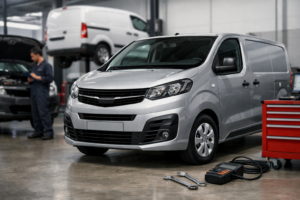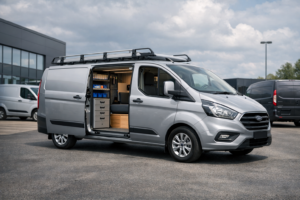

You work with your hands for a living. Every job site is different, every client has their own demands — and your van has to keep up with all of it. Carpenters and their top 5 preferred vans is a topic worth getting right, because the wrong van doesn’t just inconvenience you. It costs you time, money, and the occasional swear word when your timber won’t fit.
So let’s get straight to it: the five vans carpenters consistently rate highest are the Volkswagen Transporter, Ford Transit Custom, Mercedes-Benz Sprinter, Vauxhall Vivaro, and Renault Trafic. Each has its own strengths, and the right pick depends on how you work.
- The Volkswagen Transporter is the premium benchmark, but the Ford Transit Custom often wins on value and practicality
- Load length matters more than headline payload figures for most carpentry work
- Racking and shelving systems can transform even a modest van into a rolling workshop
- Reliability and low running costs are just as important as load space when you’re self-employed
- Resale value varies significantly — some vans hold their worth far better than others
Why the right van matters more than you think
A carpenter’s van is not just transport. It’s a mobile workshop, a storage unit, and — let’s be honest — a rolling advert for your business. Clients notice what’s parked on their driveway.
Beyond appearances, the practical stakes are high. Timber, sheet materials, tools, fixings, and finishing equipment all need to fit safely and be accessible without a 20-minute unpack every morning. A poorly configured van adds friction to every single job.
The vans below have earned their reputations through real-world use by tradespeople across the UK. They’re not ranked by spec sheet — they’re ranked by how carpenters actually rate them.
1. Volkswagen Transporter — the premium workhorse
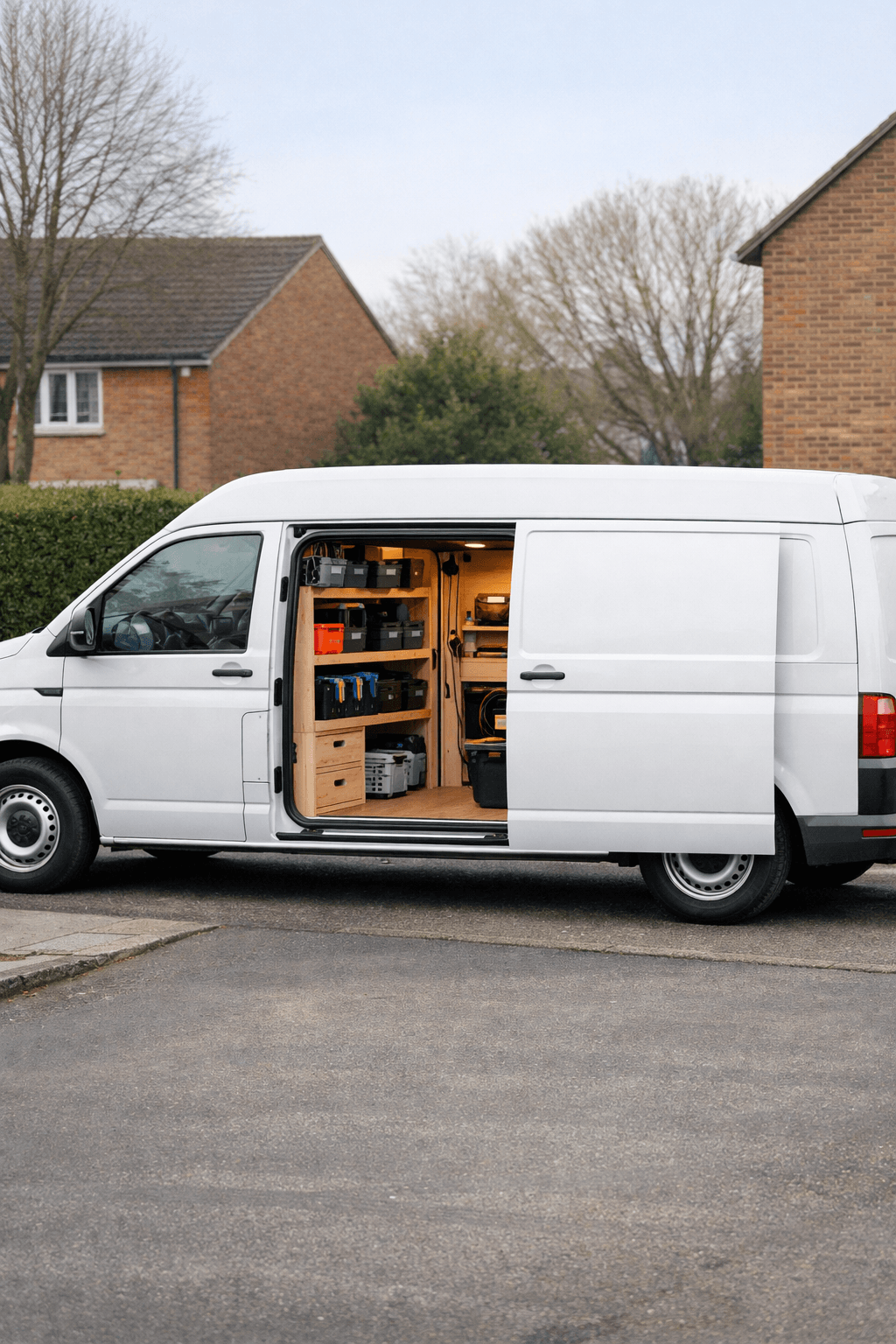
The Volkswagen Transporter is the van other vans get compared to. It’s been the benchmark for quality, refinement, and reliability in the medium van segment for decades.
Carpenters love the Transporter for its build quality and its ability to feel like a proper vehicle rather than a box with wheels. The load area in the long-wheelbase version offers enough room for most timber lengths, and the twin sliding doors make loading sheet materials far less of a wrestling match.
The numbers that matter:
- Load volume: up to 5.8 m³ (long-wheelbase)
- Max payload: around 1,000 kg depending on spec
- Load length: up to 2,800 mm in the long-wheelbase version
The Transporter’s resale value is exceptional. A well-maintained example holds its worth better than almost any rival — which matters when you’re thinking about your next van purchase.
The downside? It’s the most expensive option on this list to buy new. But for many carpenters, the lower depreciation and premium feel make it worth every penny.
2. Ford Transit Custom — the crowd favourite
Ask a group of UK carpenters which van they’d choose if price weren’t a factor, and many would say the Transporter. Ask which one they actually drive, and the Ford Transit Custom wins by a landslide.
It’s easy to see why. The Transit Custom hits a sweet spot of load space, running costs, and dealer network that’s hard to argue with. Ford’s UK service network is vast, which means less downtime when something needs fixing.
What carpenters particularly rate:
- The wide range of body configurations (SWB, LWB, double cab-in-van)
- Strong aftermarket support for racking and shelving
- Comfortable cab for longer drives between sites
- Competitive new and used pricing
The 2024 plug-in hybrid version is worth a look if you’re working in urban areas with clean air zones. Range anxiety is real, but for city-based carpenters doing shorter runs, it’s a genuinely practical option.
3. Mercedes-Benz Sprinter — when you need serious space
If you’re regularly moving large frames, long runs of timber, or bulky workshop equipment, the Mercedes-Benz Sprinter is the van that makes everything else feel cramped.
The Sprinter’s load area — particularly in the high-roof, extra-long configuration — is simply in a different league. Carpenters who fabricate bespoke joinery off-site and deliver assembled pieces often find the Sprinter is the only van that works for them.
It’s also a genuinely reliable vehicle. The Mercedes dealer network is strong across the UK, and the Sprinter has a long track record of high mileage without major issues when serviced properly.
The Sprinter is a large van. If you’re working in tight residential streets or need to park in city centres regularly, the sheer size becomes a daily frustration rather than an asset.
4. Vauxhall Vivaro — the practical all-rounder
The Vauxhall Vivaro doesn’t get the same headlines as the Transporter or the Transit Custom, but carpenters who use it tend to be quietly devoted to it. It’s practical, well-priced, and surprisingly capable.
The Vivaro shares its platform with the Renault Trafic and Peugeot Expert, which means parts and servicing are widely available. It’s a medium panel van that handles most carpentry needs without the premium price tag of the VW or the bulk of the Sprinter.
Where it stands out:
- Competitive price point new and used
- Flexible interior configurations
- Strong fuel economy on the road
- Decent payload for its class
If you’re a sole trader looking to keep overheads manageable without compromising on a reliable, innovative vehicle, the Vivaro deserves serious consideration.
5. Renault Trafic — underrated and worth a look
The Renault Trafic is the Vivaro’s French cousin — same platform, slightly different character. It’s been a quiet favourite among UK tradespeople for years, and carpenters who prioritise running costs often land here.
The Trafic is competitively priced, fuel-efficient, and comfortable enough for long days on the road. Renault’s warranty and service packages can make the total cost of ownership genuinely attractive compared to more premium options.
If you’re thinking about moving on from your current van, it’s worth understanding what your existing vehicle is worth before you commit to a new purchase — the equity in your current van can make a real difference to what you can afford next.
What the Trafic does well:
- Lower purchase price than most rivals
- Good fuel economy
- Comfortable cab for a working day
- Solid reliability record
The main trade-off is brand perception. Some carpenters feel the Trafic doesn’t project the same professional image as a Transporter or Sprinter on a client’s driveway. Whether that matters depends on your client base.
How to choose the right van for your carpentry work
The right van for you depends on three things: what you carry, where you work, and what you can spend.
Ask yourself these questions before you commit:
- What’s the longest piece of timber or sheet material I regularly transport?
- Do I need a high roof to stand up and work inside the van?
- How many miles do I cover annually, and does fuel economy matter more than payload?
- Am I in a city with clean air zones, or mainly rural and suburban?
- What’s my realistic budget — new, used, or leased?
There’s no universal answer. A joiner fitting bespoke kitchens in central London has different needs from a site carpenter building frames in rural Yorkshire.
Before you buy, spend time thinking about your racking setup. A well-racked medium van often outperforms a larger van with no organisation. Companies like Sortimo and Van Vault offer systems designed specifically for tradesperson use.
Frequently Asked Questions
Which van has the most load space for a carpenter?
The Mercedes-Benz Sprinter in its high-roof, extra-long configuration offers the largest load volume of any van on this list — up to 17 m³ in its biggest form. For most carpenters, though, the Ford Transit Custom or Volkswagen Transporter long-wheelbase offers enough space without the bulk.
Is the Volkswagen Transporter worth the extra cost?
For many carpenters, yes — particularly if you factor in resale value. The Transporter holds its value better than most rivals, which reduces the effective cost of ownership over a three-to-five-year period. If upfront cost is a barrier, the used market for Transporters is strong and well-supplied.
What van do most self-employed carpenters use in the UK?
The Ford Transit Custom is the most commonly seen carpentry van on UK sites, largely because of its balance of practicality, price, and dealer support. The Volkswagen Transporter is the aspirational choice, but the Transit Custom is the everyday reality for many sole traders.
Can I fit 8×4 sheet materials in a medium panel van?
Most medium panel vans — including the Transit Custom and Vivaro — can carry 8×4 (2,440 x 1,220 mm) sheets flat in the load area when properly configured. Check the internal load length and width of the specific model and variant before you buy, as these vary between short and long-wheelbase versions.
Should I buy new or used?
Used vans offer significantly better value upfront, and the market for quality used Transporters, Transit Customs, and Sprinters is well-supplied in the UK. If you’re buying used, prioritise full service history, low mileage, and a pre-purchase inspection from a trusted mechanic. New vans come with warranty peace of mind but depreciate quickly in the first two years.
Are electric vans a realistic option for carpenters yet?
For carpenters working in urban areas with regular access to charging, electric vans like the Ford E-Transit Custom are becoming genuinely viable. For those covering long distances between rural sites, range and charging infrastructure remain real limitations. The honest answer: watch this space — the technology is improving quickly, but it’s not the right fit for every carpentry business yet.
Your van works as hard as you do. Take the time to match it to how you actually work — not just what looks good on paper. Whether you’re upgrading, downsizing, or buying your first dedicated work van, the five options above give you a solid shortlist to start from.