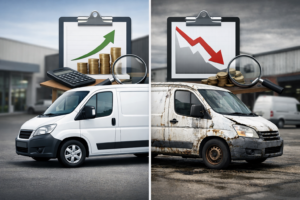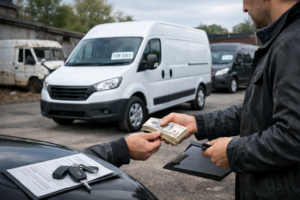

Selling a camper van quickly in the UK is entirely possible — but only if you price it right, present it honestly, and choose the right route to market from the start. Use a van buying service and you can have money in your account the same day. Sell privately and you can achieve significantly more — if you follow the steps in this guide.
- Price realistically from day one — overpriced camper vans stall within 48 hours and never recover
- Proactively document your leisure electrics, damp checks, and gas system — it eliminates buyer hesitation faster than any photograph
- A pre-sale habitation certificate can be the single most effective conversion tool you own
- A van buying service delivers a fast camper van sale in the UK with zero viewings — but expect 20–30% below private sale value
- Complete the V5C transfer and notify the DVLA the same day money changes hands
Why Camper Vans Can Be Slow to Sell (And How to Beat the Odds)
Camper vans are not like ordinary used cars. The buyer pool is smaller, more specific, and more emotionally driven. A Ford Focus buyer wants reliable transport. A camper van buyer wants a lifestyle — and they will scrutinise every detail of whether your van delivers it.
Seasonal demand is real and significant. Spring and early summer — March through June — are peak buying months. List in November and you are fighting against cold weather, low daylight for photos, and buyers who have mentally parked the dream until next year. If you have any choice in timing, list early in the year.
The most common mistakes that cause listings to stall: overpricing by 15–20%, poor photography, vague descriptions that omit the technical details buyers actually search for, and failing to respond to enquiries within the hour. Fix these and your listing will outperform 80% of what is currently on the market.
Speed and price are a trade-off. Know which matters more to you before you begin.
Step 1: Know What Your Camper Van Is Actually Worth
Start with the market, not with what you paid or what you spent on the conversion. Search Auto Trader, eBay Motors, and Facebook Marketplace for comparable vans — same base vehicle, similar age and mileage, similar conversion quality — and note what they are actually selling for, not just asking for.
The factors that move value most significantly are: the base vehicle’s age and mileage, the quality of the conversion (professional versus DIY), the layout (fixed bed commands a premium), solar capacity in watts, leisure battery capacity in amp-hours, the heating system brand (Webasto, Espar, and Propex are names buyers recognise and trust), and whether the conversion has a habitation certificate.
Professional conversions by known converters — Wellhouse, Auto-Sleepers, Reimo — carry a premium buyers will pay. A well-executed DIY conversion with documented receipts and a habitation check can compete. An undocumented DIY build with no paperwork will always be discounted, regardless of quality.
Overpricing kills momentum in the first 48 hours — the period when your listing receives the most organic visibility. A van priced £2,000 too high in week one will sit for months and eventually sell for less than it would have at the right price from the start.
When you are uncertain, request a free quick camper van valuation from a specialist dealer or buying service. It costs nothing and gives you a real-world floor price.
Step 2: Prepare Your Camper Van for Sale
Presentation matters more for camper vans than for any other vehicle category. Buyers are not just buying transport — they are buying the idea of sleeping in it, cooking in it, living in it. A dirty, cluttered van kills that fantasy immediately.
Deep clean everything: the cab, the living area, the kitchen, the storage. Shampoo the upholstery. Clean the windows inside and out. Polish the exterior. This is not optional — it is the single highest-return preparation activity you can do.
Address the issues buyers will use to negotiate hard. Damp is the number one concern for any camper van buyer. Check every seal — roof lights, windows, doors, the join between the conversion and the vehicle body. If there is any softness in the floor or walls, address it before listing. A damp reading on a buyer’s meter will cost you far more in negotiation than the repair would have cost to fix.
This is where most sellers stop. Do not stop here. The sellers who close fastest are the ones who proactively document their technical systems. Get your leisure electrics tested and written up. Have your gas system checked and certified. Run your solar panel through a full charge cycle and photograph the controller readings. Buyers of camper vans are more technically literate than buyers of ordinary cars — they will ask about these systems, and a seller who already has the answers in writing removes every reason to hesitate.
Gather all paperwork before a single enquiry arrives: V5C logbook, MOT history and any advisories, service records for the base vehicle, conversion receipts and invoices, and any habitation check certificates. Missing paperwork costs you money at the negotiation stage.
Consider commissioning a pre-sale habitation check from a qualified engineer. This is the single most underused tool in a private seller’s armoury. A current habitation certificate — covering gas, electrics, water ingress, and appliance function — tells a buyer that a qualified third party has inspected the van and signed it off. It eliminates the biggest source of buyer hesitation. It justifies your asking price. And it dramatically reduces the time between first enquiry and signed receipt.
Step 3: Take Photos and Video That Actually Sell
Shoot in natural daylight, outdoors, with the van clean and doors open. Dark interior shots make even spacious vans look cramped and uninviting. If you shoot on a dull day, wait for a better one.
The shots you must have: all four exterior angles plus front and rear, the full interior set up for living, the bed made with fresh bedding, the kitchen with a cafetière and a cup on the worktop, all storage solutions open and organised, the dashboard showing the mileage, and the engine bay clean and tidy.
A short walkthrough video — 90 seconds on a smartphone — will increase your enquiry rate significantly. Start outside, walk around the van, then step inside and narrate what you see. Show the bed folding out if it converts. Show the solar controller reading. Show the heating system. Show the water pump working. This is not about production quality. It is about giving remote buyers enough confidence to make the journey to view.
Sell the lifestyle, not just the vehicle. A coffee cup on the worktop, a folded map on the seat, fresh bedding on the bed — these details cost nothing and convert browsers into enquirers faster than any specification list.
Step 4: Write a Listing That Converts Browsers Into Buyers
Lead with the most compelling details: base vehicle, year, mileage, and the headline feature that makes this van worth viewing. “2019 Ford Transit Custom, 67,000 miles, professional Reimo conversion, fixed king-size bed, 200W solar, Webasto heating” tells a buyer in one line whether this is worth their time.
Then list every feature buyers search for, with specific numbers: solar capacity in watts, leisure battery in amp-hours, insulation type, heating system brand, water tank capacity, bed dimensions and configuration, and any additional features — reversing camera, awning, bike rack, hook-up cable.
Be transparent about faults. State any MOT advisories. Mention if there is a small damp patch that has been treated. Honesty here does not cost you buyers — it saves you time-wasting viewings from buyers who would have discovered the issue anyway and used it to negotiate far harder.
Use bullet points for the specification list and a short narrative paragraph to sell the experience. Include the keywords buyers actually search: off-grid capable, stealth, self-build, high-top, pop-top, wild camping ready — where they honestly apply to your van.
Step 5: Choose the Right Platforms to List On
Facebook Marketplace and Facebook camper van groups are the highest-volume source of serious buyers in the UK. List here first, every time. Share your listing into relevant groups — search for campervan buy and sell groups filtered to your region.
Auto Trader reaches a wider audience and carries more credibility for higher-value vans. It costs money to list, but for a van priced above £20,000, the additional reach is worth it.
eBay Motors auction format can create urgency and competitive bidding for desirable vans. Set a realistic reserve. Gumtree is free and worth including for the volume, though lead quality is lower.
Specialist sites — Campervan Finder, Quirky Campers for rental-ready vans, and Out and About Live — attract buyers who are specifically in the market and further along in the decision process. For niche base vehicles, post in the relevant forums: the VW T4, T5, and T6 forums have active buy-and-sell sections with buyers who know exactly what they want.
List on all relevant platforms simultaneously. Refresh your listings every few days to stay near the top of search results.
Step 6: Handle Enquiries and Viewings Like a Pro
Respond to every message within the hour. Buyers browsing camper vans are often looking at multiple listings simultaneously. The seller who responds first — with a complete, helpful answer — gets the viewing. The seller who responds six hours later gets a message saying the buyer found something else.
Pre-qualify buyers before booking a viewing. Ask whether they have funds ready or finance arranged. This single question eliminates the majority of time-wasters and ensures that the people who come to view are genuinely in a position to buy.
Never hand over keys for a test drive without first checking the buyer’s insurance or using trade plates. Verify their identity — ask to see a driving licence. Have someone else present at the viewing. These are not excessive precautions; they are standard practice for any private vehicle sale.
Have everything ready at the viewing: all documents, a spare key, and every system working and demonstrable. Show the solar controller live. Run the heating. Turn on the water pump. A seller who can demonstrate every system with confidence — and back it up with a habitation certificate — closes sales. A seller who says “I think the solar works” loses them.
Step 7: Negotiate and Close the Sale Quickly
Price your van with negotiation room built in — typically 5–8% above your true walk-away figure. Know that number before any offer arrives, and do not move below it.
When a low-ball offer comes in — and it will — do not reject it bluntly. Counter with your minimum acceptable price and explain briefly what justifies it: the habitation certificate, the new leisure battery, the recent service. Buyers who open low are often still genuinely interested; they are testing you.
Accept a deposit to secure the sale — a minimum of £200–£500, non-refundable if the buyer pulls out without cause. Write a simple receipt: date, amount, buyer and seller names, vehicle registration, agreed sale price, and expected completion date. Both parties sign it.
For the final payment, use bank transfer only. For sums above £10,000, request CHAPS transfer — it clears the same day and is irrevocable. Never accept a cheque. Never accept cash without counting it in the buyer’s presence.
Complete the V5C transfer correctly — the buyer fills in their section, you retain the yellow slip and send the green portion to the DVLA, or notify the DVLA online at gov.uk the same day. Road tax does not transfer; it stays with you or is refunded by the DVLA.
Should You Sell to a Dealer or Instant Buying Service Instead?
If speed matters more than maximum price, a van buying service is the right answer. These services — the camper van equivalents of We Buy Any Car — will give you an online quote based on your registration, request photos or a video, and in many cases offer a sell camper van same day service with collection and payment handled in a single visit.
If you want to explore this route, the process at a specialist service typically works like this: enter your registration for an instant online valuation, accept or negotiate the offer, agree a collection date, have the van inspected at collection, and receive payment by bank transfer the same day. For sellers who need a fast camper van sale in the UK without viewings, negotiation, or uncertainty, this is a legitimate and efficient option.
You can learn more about how this works on the We Buy Vans camper van buying service page.
The honest trade-off: buying services typically pay 20–30% below private sale value. On a £25,000 van, that is a real difference. But weigh it against the cost of your time, the risk of a deal falling through on collection day, and the stress of managing enquiries for weeks.
Part-exchange at a camper van dealership is a middle option. You will not get private sale money, but the dealer handles all the paperwork and the transaction is straightforward. Get at least two quotes before accepting any offer and use them as leverage.
The buying service is the right choice when: you need to sell urgently, the van is in poor condition that would make private sale difficult, or you simply do not have the time or inclination to manage the process yourself.
How to Sell a Camper Van With Outstanding Finance
You must disclose outstanding finance before selling. Selling a vehicle with undisclosed finance is not just unethical — it exposes you to serious legal liability, and the finance company retains a legal interest in the vehicle regardless of who owns it.
Contact your finance provider for a settlement figure — the exact amount required to clear the agreement on a specific date. This figure changes daily, so get it close to the point of sale.
If the settlement figure is less than the sale price (positive equity), the process is straightforward: the buyer pays you, you settle the finance, and you transfer the vehicle. If the settlement figure exceeds the sale price (negative equity), you will need to fund the shortfall from your own pocket before you can legally sell.
Part-exchanging at a dealership is often the cleanest solution when finance is outstanding — the dealer handles the settlement directly with the finance company as part of the transaction.
If a buyer discovers undisclosed finance after purchase, they can pursue you for the full settlement amount plus any costs incurred. The HPI check that most informed buyers run before any purchase will reveal outstanding finance immediately.
Tax, Legal, and DVLA Considerations When Selling
For the vast majority of private sellers, selling a camper van does not attract Capital Gains Tax. Private motor vehicles — including camper vans used for personal use — are exempt from CGT in the UK. The exception applies only if you are trading vehicles as a business, in which case income tax rules apply instead.
Notify the DVLA as soon as the sale completes. Do this online at gov.uk using the vehicle’s registration number. You will receive a refund for any remaining full months of road tax — road tax does not transfer to the new owner, so do not let a buyer tell you otherwise.
If your camper van is registered as a motorhome (body type: motorhome) rather than a panel van, the V5C will reflect this. Buyers should be aware of the category, as it affects insurance and in some cases road tax rates. Do not misrepresent the registration category in your listing.
If you sell vehicles regularly — even privately — HMRC may consider you a trader rather than a private seller, which carries different legal obligations under the Consumer Rights Act 2015. Private sellers are not liable for the same statutory guarantees that traders must provide. If in doubt, sell no more than a few vehicles per year and be transparent in your listings that you are a private seller.
Tips to Sell Even Faster: Proven Tactics That Work
Price just below a psychological threshold. £19,950 is searched and clicked more than £20,000. The difference to you is trivial. The difference in enquiry volume is not.
Create a genuine deadline. “I need to sell before the end of the month” is honest if it is true, and it motivates buyers who are sitting on the fence. Do not invent urgency — buyers can sense it.
Offer to include useful extras: a folding awning, camping chairs, a kitchen kit, a solar-powered light string. These items cost you little and add perceived value that justifies your asking price in a buyer’s mind.
Share your listing in relevant Facebook groups and tag the location specifically — “available in Leeds”, “can deliver within 50 miles” — to capture local buyers who prefer not to travel far.
Offer viewings at a campsite rather than your driveway. Let buyers sit in the van with a coffee, watch the sunset, and feel what they are actually buying. Sellers who do this report significantly faster sales. It is not a gimmick — it is understanding what actually motivates a camper van buyer.
Troubleshooting: Why Is My Camper Van Not Selling?
The price is wrong. This is the cause in the majority of stalled listings. Check comparable sold prices — not asking prices — on eBay Motors, where you can filter for completed listings. If your van has been listed for more than three weeks without a serious offer, reduce the price by at least 5% and refresh all listings simultaneously.
The photos are poor. Dark, blurry, or cluttered images will be scrolled past without a second look. Reshoot in daylight on a dry day with the van clean and staged. Add a walkthrough video.
The listing is vague. If you have not listed solar capacity, battery size, heating system, bed configuration, and insulation type with specific numbers, buyers will assume the worst or simply move on to a listing that does tell them. Rewrite the description with full technical detail.
You are not responding fast enough. Check your platform notifications are active. Aim to respond within 30 minutes during daylight hours.
The timing is wrong. If it is October through January, consider withdrawing the listing and relaunching in March. A van that sits unsold through winter acquires a stigma — buyers wonder why it did not sell.
Frequently Asked Questions
What is the fastest way to sell a camper van in the UK?
The fastest route is a specialist van buying service that offers a same-day sale. You enter your registration, receive a valuation, agree the price, and they collect the van and transfer payment — sometimes within 24 hours. You will receive less than private sale value, typically 20–30% less, but there are no viewings, no negotiation, and no risk of a deal collapsing at the last moment.
What time of year is best to sell a camper van in the UK?
March through June is the strongest selling window. Buyer demand peaks as the weather improves and people begin planning summer trips. Listing in January or February — before the spring rush — also works well, as serious buyers are actively searching ahead of the season. Avoid listing in October through December unless you need to sell urgently.
How do I price my camper van to sell quickly?
Research actual sold prices on eBay Motors completed listings and active comparable listings on Auto Trader and Facebook Marketplace. Price your van at or just below the market rate for comparable examples — not at the top of the range unless your van is genuinely exceptional and you can prove it with documentation. Build in 5–8% negotiation room. Price just below a round number (£19,950 rather than £20,000).
Can I sell a camper van with outstanding finance?
Yes, but you must disclose it and settle the finance before or as part of the sale. Get a settlement figure from your finance provider. If the sale price exceeds the settlement figure, you can pay off the finance from the proceeds. If not, you must fund the shortfall yourself. Part-exchanging at a dealership is often the simplest route when finance is outstanding.
Do I need to pay tax when I sell my camper van in the UK?
In almost all cases, no. Private motor vehicles — including camper vans used for personal use — are exempt from Capital Gains Tax in the UK. If you are regularly buying and selling vans as a business activity, HMRC may treat the income as trading income subject to income tax. If you sell one personal camper van, you will not owe tax on the proceeds.
Is it better to sell a camper van privately or to a dealer?
It depends on what you value most. Private sale typically returns 20–30% more than selling to a dealer or buying service. But it requires time, effort, viewings, and the ability to handle negotiations and paperwork. If you need a fast camper van sale in the UK, or if the van is in poor condition, a dealer or buying service is the more practical choice. If you have time and the van is well-presented and documented, sell privately.
What paperwork do I need to sell a camper van in the UK?
You need: the V5C logbook, a valid MOT certificate, service history for the base vehicle, any conversion receipts or invoices, and — ideally — a current habitation check certificate. Missing any of these will cost you money at the negotiation stage, as buyers will use gaps in documentation to justify lower offers.
How do I safely accept payment when selling a camper van privately?
Bank transfer is the only safe method for large sums. For amounts above £10,000, request a CHAPS transfer — it clears the same day and cannot be reversed. Never accept a personal cheque. If accepting cash, count it in the buyer’s presence before handing over the keys. Write a signed receipt for both parties regardless of payment method.
Should I get a habitation check before selling my camper van?
Yes — and it is one of the most underused tactics in private camper van sales. A habitation check, carried out by a qualified engineer, covers gas safety, electrical systems, water ingress, and appliance function. A current certificate tells buyers that a qualified third party has signed off the van. It removes the biggest source of buyer hesitation, justifies your asking price, and closes sales faster. The cost — typically £100–£200 — is recovered many times over.
Why is my camper van not selling and what can I do about it?
The most common causes are overpricing, poor photography, a vague listing description, and slow response to enquiries. Check comparable sold prices and reduce your price if you have had no serious offers after three weeks. Reshoot your photos in daylight with the van clean and staged. Rewrite your listing with full technical specifications — solar watts, battery amp-hours, heating brand, bed dimensions. Respond to every enquiry within the hour. If the timing is wrong — late autumn or winter — consider relisting in spring.