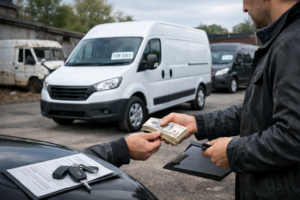

Van sale scams in the UK are increasing fast — and they target both buyers and sellers. This guide covers every major scam pattern doing the rounds right now, the red flags that give them away, and the exact steps you can take to protect yourself, whether you’re handing over cash or handing over your keys.
Why Van Sale Scams Are on the Rise in the UK
Used van fraud has surged in the UK over the past few years, and the timing isn’t accidental. Post-pandemic supply chain disruptions pushed used van prices sharply higher, making them a far more attractive target for fraudsters than the average used car. When a Ford Transit can fetch £15,000–£20,000 privately, the incentive for a scammer is obvious.
Online marketplaces — AutoTrader, Facebook Marketplace, eBay Motors — have made it trivially easy to reach thousands of potential victims with a single fake listing. A convincing advert costs nothing to create and can be live within minutes. Action Fraud consistently reports vehicle fraud among the top categories of reported fraud in England and Wales, with losses running into tens of millions of pounds annually across all vehicle types.
Tradespeople and small business owners are disproportionately targeted for two reasons. First, they buy and sell vans regularly, so they’re statistically more exposed. Second, the pressure of running a business means they sometimes move faster than they should — a scammer’s best friend is a buyer in a hurry.
The Most Common Van Sale Scams in the UK
Understanding the scam types is the fastest way to spot them. Here are the ones you’re most likely to encounter.
Van cloning is when a fraudster copies a legitimate van’s identity — its registration plate, Vehicle Identification Number (VIN), and V5C logbook details — onto a different (usually stolen) van. The cloned van looks legitimate on the surface but isn’t.
Phantom or advance-fee scams involve a van that simply doesn’t exist. The seller takes a deposit — sometimes a full payment — and disappears. These are especially common on Facebook Marketplace and Gumtree.
Mileage fraud (clocking) is the manipulation of a van’s odometer to show a lower mileage than the vehicle has actually covered. Vans are prime targets because they accumulate high mileage quickly in commercial use, which hammers their value.
Finance fraud occurs when a seller offloads a van that still has outstanding hire purchase (HP) or personal contract purchase (PCP) finance on it. Under UK law, the finance company retains ownership until the debt is cleared — meaning the buyer can lose the van even after paying for it.
Stolen vans with forged paperwork are exactly what they sound like: a vehicle taken to order, given fake V5C documents, and sold quickly before anyone notices.
Fake escrow or shipping scams typically involve a van listed at an eye-catchingly low price, supposedly located abroad. The “seller” insists on using an escrow service — which turns out to be fake — or charges for shipping that never happens.
Part-exchange fraud is subtler: a dealer or private seller undervalues your existing van while appearing to offer a generous deal on the replacement, pocketing the difference on both ends.
How Van Cloning Works and Why It’s So Dangerous
Van cloning is one of the most dangerous private van sale fraud types because it’s designed to pass casual inspection. Here’s how it works in practice.
A scammer identifies a legitimate van listed for sale — say, a white Ford Transit Custom on AutoTrader. They copy the registration number, VIN, and V5C details from that listing. They then apply those details to a stolen van of the same make, model, colour, and approximate age. The result is a vehicle that matches its paperwork on a surface check.
Popular fleet vans — the Transit, Mercedes Sprinter, Vauxhall Vivaro — are particularly vulnerable precisely because they’re so common. White is the most cloned colour because it’s the most common commercial vehicle colour. A cloned van can pass a visual inspection easily when the model is ubiquitous.
The consequences for the buyer are severe. You lose both the van and the money you paid. The van is seized by police as stolen property, and you may face awkward questions about how you came to be in possession of it, even if you’re entirely innocent.
To detect cloning, check the VIN in at least three locations: the plate visible through the windscreen, the stamp on the door pillar or chassis, and the engine bay stamp. All three must match each other and the V5C exactly. Any discrepancy — different font, different depth of stamp, a character that looks re-stamped — is a serious warning sign.
Red Flags to Watch for in Any Van Listing
Trust your instincts, but back them up with specifics. These are the warning signs that should make you pause.
- Price significantly below market value for the age, mileage, and specification — if it looks too good to be true, it almost certainly is
- Seller refuses to meet in person or insists on remote payment before you’ve seen the vehicle
- V5C logbook anomalies: mismatched fonts, smudged ink, incorrect DVLA watermarks, or a document number that doesn’t verify
- Seller claims to be abroad, in the military, or working overseas — this is a textbook setup for a phantom scam
- Contact only via WhatsApp or email with no verifiable phone number or physical address
- Pressure tactics: “I’ve got three other buyers coming this afternoon” is designed to make you skip your due diligence
- Stock photos or reverse-image-search hits — drag the listing photos into Google Images and see where else they appear
- No credible service history for what’s presented as a high-mileage commercial vehicle
If a seller won’t give you a landline number or a verifiable address, stop. Legitimate sellers have nothing to hide and everything to gain from making you feel comfortable.
Essential Checks Before Buying a Used Van in the UK
Run these checks before you commit a single pound.
A full HPI or Cazana vehicle history check (typically £10–£20) will flag outstanding finance, insurance write-offs, stolen status, and mileage discrepancies across its recorded history. This is non-negotiable for any private purchase.
Use the free DVLA vehicle enquiry service at gov.uk to verify the van’s tax status, MOT expiry, and whether the registered keeper details match what the seller has told you. Cross-reference the MOT history — also free at gov.uk — for mileage readings at each test. A van that shows 90,000 miles on today’s odometer but recorded 110,000 miles at its last MOT has been clocked.
Verify the VIN in multiple physical locations on the vehicle, as described in the cloning section above. Ask for a video call walk-around if you’re buying remotely, before transferring any funds. Use an independent inspection service — the RAC, AA, or a specialist commercial vehicle inspector — for any purchase above a few thousand pounds.
Ask the seller for proof of identity and cross-reference it with the V5C keeper details. If the name on their driving licence doesn’t match the registered keeper on the V5C, ask why — and expect a clear, verifiable answer.
Safe Payment Practices When Buying a Van
How you pay matters as much as what you pay for.
Never transfer money by bank transfer to someone you haven’t met and verified in person, with ID confirmed. Once a Faster Payment has left your account, recovery depends entirely on your bank’s goodwill and the speed of your report — it is not guaranteed.
Avoid any seller who demands cryptocurrency, gift cards, or strictly cash. These are all methods designed to make recovery impossible. A credit card deposit on purchases over £100 gives you Section 75 protection under the Consumer Credit Act 1974, meaning the card provider is jointly liable if the seller defaults or commits fraud.
Legitimate escrow services exist, but fake ones are common in van scams. If a seller proposes an escrow service you haven’t heard of, look it up independently — don’t use any link the seller provides. Paying in full before you’ve physically inspected the van is never acceptable. Walk away from anyone who insists on it.
Buying from Dealers vs. Private Sellers: Risk Comparison
Buying from a regulated dealer carries significantly stronger legal protections than buying privately. FCA-regulated dealers must comply with the Consumer Rights Act 2015, which gives you the right to reject a vehicle within 30 days if it’s not as described, not of satisfactory quality, or not fit for purpose.
Private sales operate under “buyer beware” principles, though the Misrepresentation Act 1967 still applies — a private seller who knowingly lies about a van’s condition or history can be liable. The practical challenge is enforcing that.
Verify any dealer’s legitimacy before you buy: check the FCA register, search Companies House, and visit the physical premises. Some fake van buyer scams involve fraudsters posing as dealers with professional-looking websites and fabricated reviews — a Companies House search and a physical visit cut through that quickly.
If you’re considering selling your van privately and want to avoid the stress of vetting strangers, using a regulated van buying service removes almost all of the risk — for both sides of the transaction.
What to Do If You’ve Been Scammed When Buying a Van
Act immediately — speed genuinely affects your chances of recovery.
Report to Action Fraud at actionfraud.police.uk as soon as you realise what’s happened. Keep every piece of evidence: screenshots, emails, WhatsApp messages, payment receipts, and the listing itself. Then contact your bank to request a Faster Payments recall or, if you paid by card, initiate a chargeback. Banks are required to make reasonable efforts to recover funds under the Contingent Reimbursement Model code, though outcomes vary.
Report the fraudulent listing to the platform — AutoTrader, Facebook Marketplace, or eBay Motors — so it can be taken down before another victim is caught. If a cloned vehicle is involved, inform the DVLA directly.
If the van you purchased turns out to have outstanding finance on it, seek legal advice promptly. Citizens Advice and your local Trading Standards office are free escalation routes and can advise on next steps. If you paid any part of the purchase price by credit card, contact your card provider to make a Section 75 claim.
Van Sale Scams Targeting Sellers Too
Here’s the section most guides completely skip — and it’s the one that could cost a tradesperson their van.
Private van sellers face a distinct set of scams, and they’re just as damaging as buyer-side fraud.
Overpayment cheque scams work like this: a “buyer” sends a cheque for more than the agreed price and asks you to refund the difference by bank transfer. The cheque later bounces. You’ve sent real money; they’ve sent nothing. Banks can take weeks to confirm a cheque has cleared — never release a vehicle or refund a difference until you have confirmed cleared funds.
Fake payment confirmation screenshots are increasingly common. A scammer sends a convincing screenshot of a bank transfer or a PayPal confirmation email. Neither has actually been sent. Always log into your own bank account independently to verify that funds have arrived before handing over keys or documents.
Test drive theft is exactly what it sounds like. A “buyer” takes the van for a test drive — sometimes alone, sometimes with a plausible excuse for why you can’t come along — and simply doesn’t return. Always accompany test drives. Always take a photo of the buyer’s driving licence before handing over keys. Never allow a test drive without confirmed ID.
As a seller, treat every prospective buyer with the same scepticism a buyer should apply to you. Ask for ID, verify it, and don’t be embarrassed about doing so. Any genuine buyer will understand.
To protect yourself as a private van seller: conduct ID checks as standard, always accompany test drives, and only accept confirmed cleared funds — not cheques, not screenshots, not PayPal pending payments. If in doubt, meet at your bank branch so a cashier can confirm the payment in person.
- Van cloning, phantom scams, finance fraud, and mileage clocking are the most common buyer-side scams — run an HPI check and verify the VIN in multiple locations on every purchase
- Sellers face overpayment cheque fraud, fake payment confirmations, and test drive theft — always verify cleared funds before releasing a vehicle
- Section 75 protection applies to credit card payments over £100, making a card deposit one of the safer payment methods
- Report fraud to Action Fraud immediately and contact your bank the same day to maximise recovery chances
- A regulated buying service eliminates most of the risk for sellers who don’t want to deal with unknown private buyers
Frequently Asked Questions
How do I check if a van is cloned in the UK?
Check the VIN in at least three physical locations on the vehicle — the dashboard plate, the door pillar or chassis stamp, and the engine bay — and confirm all three match the V5C logbook exactly. Then run an HPI check to verify the vehicle’s history against the registered plate. Any mismatch between physical stamps and the V5C is a strong indicator of cloning.
What is the best vehicle history check for a used van?
HPI Check and Cazana are the most widely used paid services in the UK, typically costing £10–£20. Both will flag outstanding finance, insurance write-offs, stolen status, and mileage anomalies. Complement these with the free DVLA vehicle enquiry and MOT history check at gov.uk for a complete picture.
Can I get my money back if I bought a scam van?
It depends on how you paid. Credit card payments over £100 are covered by Section 75 of the Consumer Credit Act 1974, making your card provider jointly liable. Bank transfers are harder to recover, but report to your bank immediately — a Faster Payments recall is possible if you act quickly. Always report to Action Fraud as well.
Is it safe to buy a van on Facebook Marketplace?
Facebook Marketplace carries higher fraud risk than regulated dealer platforms because anyone can list anything with minimal verification. It can be safe if you apply all the standard checks: verify the seller’s identity, run an HPI check, inspect the van in person, check the VIN, and never pay before viewing. Treat every listing with healthy scepticism.
What should I do if the V5C logbook doesn't match the van?
Do not proceed with the purchase. A V5C mismatch — wrong VIN, wrong colour, wrong keeper name — is one of the clearest signs of a cloned or stolen vehicle. Report the discrepancy to the police and, if you’ve already paid, to Action Fraud. You can also contact the DVLA directly to verify the document’s authenticity.
How do I know if a van still has finance outstanding?
An HPI or Cazana check will flag outstanding HP or PCP finance against the vehicle’s registration number. This is one of the primary reasons to run a history check before any private purchase. If finance is showing, the finance company retains legal ownership of the van regardless of what you’ve paid the seller.
Are van dealers in the UK regulated?
Yes. Franchised and many independent dealers are subject to the Consumer Rights Act 2015 and, where they offer finance, FCA regulation. You can verify a dealer’s FCA authorisation on the FCA register at register.fca.org.uk. Check Companies House for company registration and visit the physical premises before committing to a purchase.
What are the signs of a clocked van?
Check the MOT history at gov.uk — mileage is recorded at every test, so a drop in mileage between tests is a definitive sign of clocking. Physical signs include a worn interior, pedals, and steering wheel that don’t match the stated mileage, and service stamps that show higher mileage than the current odometer reading.
Can a scammer steal my van during a test drive?
Yes — test drive theft is a real and growing risk for private van sellers. Always accompany the buyer on the test drive, take a clear photo of their driving licence before handing over the keys, and never allow a solo test drive with a stranger. If a buyer insists on going alone, decline.
What payment method is safest when buying a used van privately?
A credit card deposit of at least £100 gives you Section 75 protection, making it the safest option for part of the payment. For the balance, a bank transfer made in person — after you’ve verified the seller’s identity and inspected the vehicle — is more secure than sending money remotely. Never pay by cryptocurrency, gift card, or cheque.