
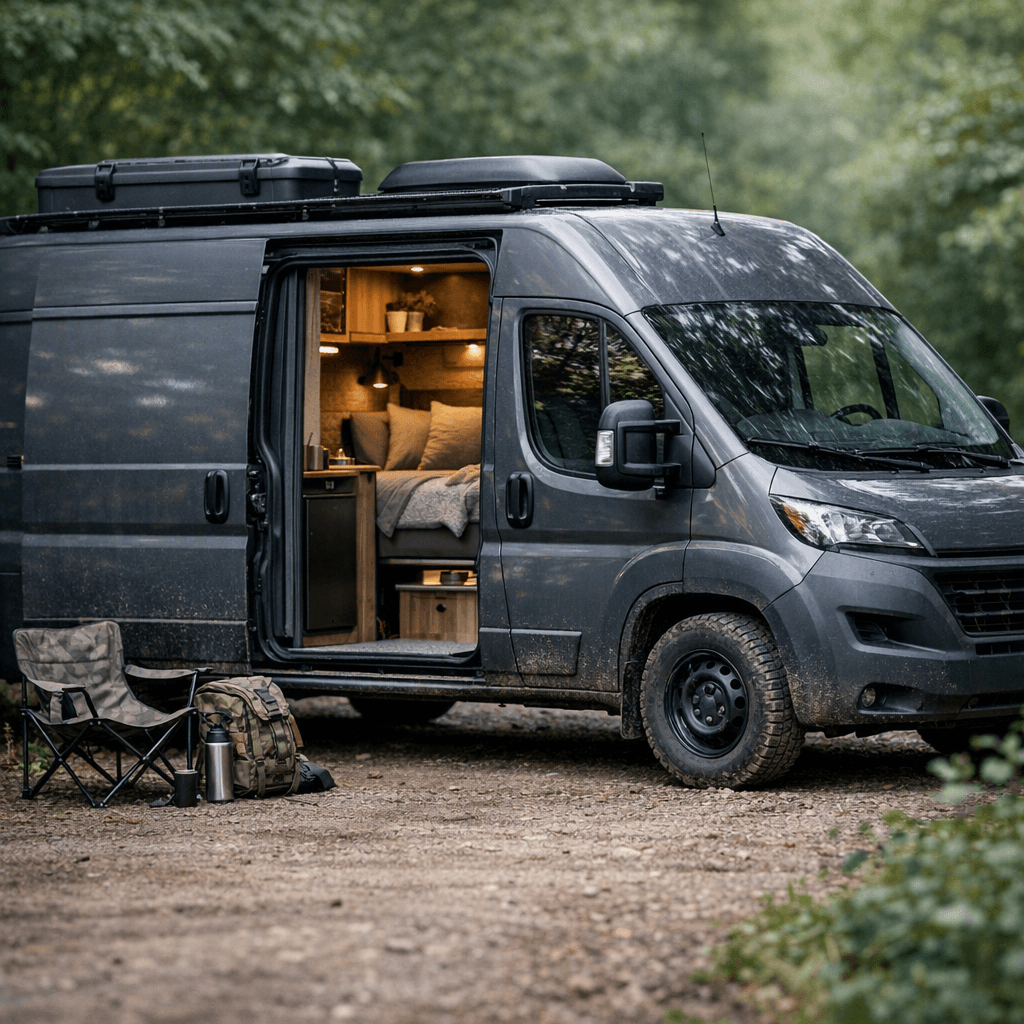
Stealth campers have become one of the most fascinating corners of Britain’s van‑mod culture. They’re the opposite of the flashy show vans you see at meets. No bright paint. No big alloys. No giveaway windows. From the outside, they look like ordinary delivery vans—plain, anonymous, forgettable. But inside, they’re fully functioning micro‑homes built with precision, creativity, and a bit of mischief. The appeal is simple: freedom without attention.
The stealth movement started quietly. Early builders were people who wanted to travel cheaply, park anywhere, and avoid the usual restrictions that come with traditional camper vans. A standard camper screams “tourist.” A stealth van blends into the background. It can sit on a residential street, a lay‑by, or a car park without raising eyebrows. That anonymity became the foundation of the culture.
What makes stealth campers impressive is the engineering that goes into them. Builders have to work around the lack of windows, the need for insulation, and the challenge of fitting everything into a tight space. Every inch matters. Beds fold into walls. Kitchens slide out from under benches. Storage hides behind panels. The best stealth builds feel like magic tricks—open a door and the van transforms.
Lighting is one of the cleverest parts. Without visible windows, natural light is limited. Builders use warm LEDs, hidden strips, and diffused panels to create a cosy interior that feels bigger than it is. Some even install fake “window frames” inside to give the illusion of space. It’s all about making a small, dark box feel like a comfortable retreat.
Power is another challenge. Stealth campers rely heavily on solar panels, but they’re often mounted flat and discreet so they don’t stand out. Battery systems are tucked away under flooring or inside cabinets. Many builds include inverters, charge controllers, and split‑charge systems that keep everything running without needing a campsite hookup. The goal is independence—being able to live off‑grid without announcing it.
Ventilation is where stealth builders get creative. Traditional campers have roof vents, skylights, and side windows. Stealth vans can’t. So modders use hidden vents behind factory grilles, low‑profile roof fans painted to match the van, or clever airflow channels built into the interior. It’s subtle engineering that keeps the van comfortable without breaking the disguise.
The interior style of stealth campers varies massively. Some are minimalist, with clean lines, pale wood, and simple layouts. Others feel like rustic cabins, complete with reclaimed timber, warm fabrics, and tiny fireplaces. A few go full modern, with black cabinetry, integrated tech, and fold‑out workstations. The common thread is efficiency—everything has a purpose.
What’s interesting is how stealth culture has influenced mainstream van life. Even people with full camper conversions now borrow ideas from stealth builds: hidden storage, multi‑use furniture, compact layouts. The stealth mindset—making the most of limited space—has become a design philosophy across the entire van‑mod scene.
There’s also a social element. Stealth campers attract a certain type of builder: independent, resourceful, and quietly adventurous. They’re not chasing attention at shows. They’re chasing freedom. Online communities share tips on insulation, layouts, parking etiquette, and clever hacks. It’s a culture built on problem‑solving and subtlety.
Of course, stealth camping isn’t about hiding from the world. It’s about blending into it. It’s about having a home that goes wherever you go, without needing permission or explanation. In a country where space is tight and travel is expensive, stealth campers offer a unique kind of mobility.
The rise of stealth camper vans shows how far Britain’s van‑mod culture has evolved. From loud show vans to silent micro‑homes, the scene now covers every style imaginable. And the stealth movement proves that sometimes the most impressive builds are the ones nobody notices.