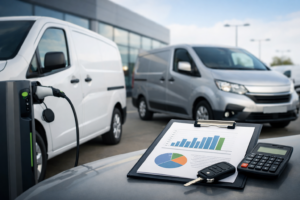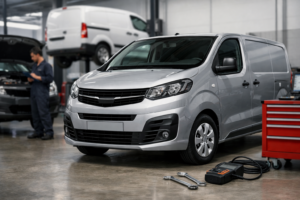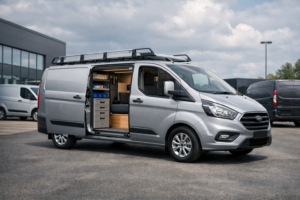

Selling your van? The choice between a private van sale vs van buying service comes down to three things: how much money you actually need, how much time you can afford to spend, and how complex your situation is. Neither route is universally better. This guide gives you an honest, unbiased breakdown of both — so you can make the decision that fits your van, your schedule, and your finances.
Key takeaways
- Private sales typically achieve 10–20% more in headline price, but realistic costs and time investment narrow that gap significantly
- Van buying services offer speed, simplicity, and will purchase vans in almost any condition — including those with outstanding finance or a failed MOT
- For sole traders and tradespeople, the opportunity cost of time spent on a private sale is a real financial factor that most comparisons completely ignore
- Getting a buying-service quote first is a smart move regardless of which route you choose — it gives you a price floor to negotiate from
- The best route depends on your van’s condition, how quickly you need the money, and what your own time is genuinely worth
What Does Each Option Actually Involve?
A private van sale means listing your van yourself on marketplaces such as AutoTrader, Facebook Marketplace, or Gumtree, then managing every enquiry, viewing, and negotiation personally. You set the price, write the ad, take the photos, and handle the paperwork. Everything is on you.
A van buying service — sometimes called an instant buyer or direct buyer — is a company that purchases your van directly from you. Some generate an offer online in minutes using algorithmic pricing. Others confirm a price after a physical inspection. Either way, you are selling to a trade buyer rather than a private individual.
It is worth understanding the spectrum here. Services like We Buy Vans typically provide an online quote quickly, followed by an inspection before the final price is locked in. Dealer part-exchange sits at the other end — faster and simpler, but often the least financially rewarding option.
Note
This guide focuses specifically on vans, not cars. The van market has different buyer pools, different seasonal patterns, and different condition expectations. What works for selling a hatchback does not always translate.
How Much Money Will You Actually Get?
Private sale almost always achieves a higher headline price — typically 10–20% more than a buying service offer. But headline price is not the same as money in your pocket.
Subtract realistic private-sale costs:
- AutoTrader listing fees (can reach £30–£60+ depending on the package)
- Fuel and time for multiple viewings
- Price reductions after negotiation — buyers routinely offer 5–10% below asking
- Potential repair costs to make the van presentable
Buying services have their own deductions too: condition adjustments at inspection, admin fees on some platforms, and finance settlement handling charges where applicable.
A worked example: A van listed privately at £8,000 might realistically sell for £7,200 after negotiation. Deduct £50 in advertising, £30 in fuel, and a new set of wiper blades and a valet — call it £150 total costs — and you net around £7,020. A buying service offers £6,800. The real difference is £220, not £1,200.
High-mileage or older vans tend to see a wider gap, because buying services apply steeper condition adjustments. Niche body types — Luton box vans, tippers, minibuses — often sit unsold privately for weeks, which erodes any price advantage through holding costs alone.
Speed of Sale: Days vs Weeks vs Months
Van buying services are fast. An online offer typically arrives within minutes to 24 hours, and collection or drop-off can happen within 24–72 hours of acceptance.
Private van sales take longer. Depending on the make, mileage, condition, and time of year, expect two to six weeks on the market as a realistic average — and longer for less popular models or niche body types. Seasonal demand matters: January and spring see more buyer activity, while mid-summer and December tend to be slower.
If you need funds quickly — to place a deposit on a replacement van, or to manage business cash flow — speed has a direct monetary value. Every week you hold a van you are not using costs you in insurance, road tax, and potentially storage. Run the numbers: if holding costs are £80 per week and a private sale takes four weeks longer than a buying service, that is £320 quietly disappearing from your price advantage.
Effort and Hassle: The Hidden Time Cost
This is the section most comparison articles skip entirely — and it is the one that matters most to tradespeople and sole traders.
Private sale is genuinely time-consuming. Tasks include:
- Writing a detailed, accurate listing
- Photographing the van properly (inside, outside, load area, roof height, any racking)
- Fielding calls, texts, and messages — many from people who never show up
- Arranging and waiting in for viewings
- Negotiating face-to-face with strangers
- Dealing with payment safely
There are also real safety considerations. Meeting strangers, accepting cash, and verifying bank transfers all carry risk. Scams targeting private van sellers are not rare.
The opportunity cost calculation that competitors ignore:
If you are a sole trader earning £30 per hour and you spend 15 hours across three weeks managing a private sale — writing the ad, answering enquiries, doing viewings, negotiating — that is £450 in lost billable time. If the private sale nets you £600 more than a buying-service offer, your real gain is £150. Add two no-shows that cost you an hour each, and you have broken even before accounting for the emotional drain of negotiating with time-wasters.
The formula is simple: (Private sale net price) − (Buying service offer) − (Hours spent × your hourly rate) = True advantage of selling privately. Run that calculation with your own numbers before you decide.
Pro tip
If you earn more than £20 per hour, a private-sale price premium of under £600–£800 rarely makes financial sense once you factor in your time honestly.
A buying service, by contrast, involves filling in an online form, receiving an offer, booking a collection or drop-off, and receiving payment directly to your bank. For a busy business owner, that simplicity has genuine value.
Paperwork, Finance and Legal Responsibilities
Private sale comes with real legal obligations. You must provide:
- The V5C logbook (and complete the relevant section to transfer ownership)
- A valid MOT certificate
- Service history where available
- Honest disclosure of any known faults — the “sold as seen” label does not protect you from misrepresentation claims
Outstanding finance is a significant complication in private sales. Most private buyers are unwilling to wait for a settlement figure and a clear title — and legally, you cannot sell a van you do not own outright. Buying services handle finance settlements routinely and will factor the outstanding balance into the transaction.
Do not forget DVLA notification. Failing to tell the DVLA you have sold a vehicle can result in you being held liable for road tax and any penalties incurred after the sale.
For VAT-registered businesses, the picture is more complex. Selling a van that was purchased with VAT reclaimed may mean you need to account for VAT on the sale. Selling to a trade buyer (such as a buying service) can simplify this. Speak to your accountant before proceeding — getting this wrong is an expensive mistake.
Buying services handle all transfer paperwork as standard. For a business owner already juggling multiple responsibilities, that is a genuine advantage.
Condition of Your Van: Who Accepts What?
Private buyers are picky. Cosmetic damage, high mileage, a patchy service history, or a short MOT will either put buyers off entirely or give them leverage to negotiate hard. Selling a van “as seen” is harder than it sounds — private buyers expect transparency and will use any imperfection as a bargaining chip.
Buying services will purchase vans in almost any condition — damaged, high-mileage, non-running, or with a failed MOT — adjusting the offer to reflect the condition rather than refusing to buy.
Pre-sale repairs are worth considering for private sales, but approach them carefully. New tyres, a professional valet, and fixing a broken light are likely to pay back. Major bodywork or mechanical work rarely recoups its full cost in a higher sale price.
Warning
The “sold as seen” clause in a private sale does not protect you from claims of misrepresentation. If you know about a significant fault and do not disclose it, you could face a legal dispute even after the sale completes.
Which Types of Van Seller Should Use Each Route?
Private sale suits you if:
- You have a popular, in-demand model in good condition (Ford Transit, VW Transporter, Mercedes Sprinter)
- You have a full service history and a current MOT
- You have two to four weeks to wait and the time to manage enquiries
- You are comfortable negotiating and meeting strangers
A van buying service suits you if:
- You need the money quickly
- Your van has outstanding finance, damage, high mileage, or a failed MOT
- You have a niche body type (Luton, tipper, minibus, Dropside) with a limited private buyer pool
- You are a sole trader or small business owner who cannot afford to spend hours off the tools
- You are selling multiple vans from a fleet — private listings at scale are impractical
First-time van sellers who are unfamiliar with the process often benefit from the reliability and simplicity of a buying service. The process is predictable; a private sale is not.
Comparing the Top Van Buying Services in the UK
The main players in the UK van buying market include specialist services, general car-and-van platforms, and dealer part-exchange. Each works differently.
How offers are generated matters. Some platforms use algorithmic pricing based on the registration, mileage, and a self-reported condition assessment. Others send an inspector or require you to bring the van in. Algorithmic quotes are fast but more likely to be adjusted at inspection. Physical inspection models take longer but the final price is more reliable.
Key things to check before accepting any offer:
- Price guarantee period: How long is the quote valid? Some expire within 24–48 hours
- What triggers a price drop at handover: Undisclosed damage, tyre condition, or a service history gap are common reasons for a last-minute reduction
- Admin fees: Some services charge a flat fee or percentage; others include everything in the quoted price
- Finance settlement process: Confirm who handles the settlement and how long it takes to clear
Pro tip
Get quotes from at least three buying services before accepting any offer. It takes around 20 minutes and can add several hundred pounds to your final payment. Use the highest quote as your benchmark.
Private Sale Platforms for Vans: Where to List
Choosing the right platform when you sell a van privately in the UK makes a measurable difference to how quickly it sells and who sees it.
- AutoTrader Vans: The largest dedicated audience for van buyers in the UK. Listing fees apply, but the buyer quality is generally higher and more serious
- Facebook Marketplace: Free to list, high local traffic, and good for vans priced under £5,000. Scam risk is higher — stick to cash on collection or verified bank transfer, and meet in a safe location
- Gumtree: Declining in traffic but still useful for lower-value or older vans where you want free or low-cost exposure
- eBay Motors: Worth considering for rare, specialist, or converted vans where you need a national buyer pool rather than a local one
Writing a listing that converts: Van buyers are often tradespeople who care about specifics. Include payload capacity, load length and height, ply-lining status, any racking or shelving, roof type (high or standard), and whether it is a panel van, crew van, or other body type. Vague listings get ignored.
Photography tips for vans: Shoot the load area open, the roof height from outside, any racking or conversions, the dashboard (showing mileage), and all four corners of the exterior. Good photos of the load space convert van buyers more than glamour shots of the exterior.
The Honest Verdict: Which Option Wins?
There is no single correct answer to the best way to sell a van — it depends on your specific van, your timeline, and what your time is genuinely worth.
Use this decision framework:
- Get a buying-service quote first. This takes 10–15 minutes and gives you a guaranteed floor price
- Calculate the realistic net private-sale price: subtract advertising costs, likely negotiation loss, and repair costs
- Apply the opportunity cost formula: subtract (hours you will spend × your hourly rate) from the private-sale advantage
- If the true advantage is under £500–£800, the buying service is almost always the rational choice
- If the advantage is larger, list privately — but set a firm walk-away price before you start, so emotion does not push you into a bad deal
The hybrid approach works well for many sellers: get a buying-service quote to establish your floor, then list privately for two to three weeks with a clear deadline. If you hit your target, great. If not, you already have a confirmed offer waiting.
Summary comparison:
| Factor | Private Sale | Van Buying Service |
|---|---|---|
| Price achieved | Higher (typically 10–20%) | Lower headline, but costs reduce the gap |
| Speed | 2–6 weeks typical | 24–72 hours |
| Effort required | High | Low |
| Paperwork | Seller’s responsibility | Handled by the service |
| Damaged / high-mileage vans | Difficult to sell | Accepted (with adjusted offer) |
| Outstanding finance | Complicated | Handled routinely |
| Best for | Patient sellers, popular models in good condition | Busy sellers, complex situations, urgent sales |
Frequently Asked Questions
Will I always get more money selling my van privately than using a buying service?
Not necessarily — and almost never by as much as the headline figures suggest. Private sale typically achieves 10–20% more in asking price, but once you subtract advertising costs, negotiation losses, repair spend, and the value of your own time, the real advantage is often under £500. For high-mileage or niche vans that sit unsold for weeks, holding costs can eliminate the advantage entirely.
How quickly will a van buying service pay me after accepting an offer?
Most reputable van buying services transfer payment on the same day as collection or handover, directly to your bank account. Some services pay within a few hours of the transaction completing. Confirm the payment timeline before you book — and check whether any finance settlement on the van affects the timing.
Can I sell a van with outstanding finance privately?
Legally, you cannot sell a vehicle you do not own outright. If there is a finance agreement secured against the van, the finance company holds an interest in it. You would need to settle the finance before or at the point of sale. Private buyers are rarely willing to wait for this process. Van buying services handle finance settlements as a standard part of the transaction, making them a much more practical route if your van is on finance.
Do van buying services accept vans with a failed MOT or accident damage?
Yes — this is one of the clearest advantages of using a buying service. They will make an offer on vans in almost any condition, including those with a failed MOT, accident damage, or mechanical faults. The offer will reflect the condition, but you will receive a figure. Selling a van with a failed MOT privately is extremely difficult, as most private buyers want a van they can drive away immediately.
Are van buying service online quotes the same as the final offer at inspection?
Not always. Online quotes based on self-reported condition are subject to revision at inspection if the physical condition does not match what was described. Common reasons for a price reduction at handover include undisclosed bodywork damage, tyre wear, and missing service history. Be honest and accurate when completing the online form — it reduces the risk of a last-minute adjustment and makes the process smoother for everyone.
What paperwork do I need to sell my van privately in the UK?
You need the V5C logbook (the registration document), a valid MOT certificate if the van has one, and service history if available. At the point of sale, you complete the relevant section of the V5C and give the buyer their portion. You must then notify the DVLA that you have sold the vehicle — this can be done online. Failing to notify the DVLA leaves you potentially liable for road tax and any fines incurred after the sale.
Is it worth repairing my van before selling it privately?
Minor cosmetic work — a professional valet, replacing blown bulbs, fixing a cracked mirror — is usually worth doing because it improves buyer confidence and reduces negotiation leverage. Major mechanical work or significant bodywork repair rarely recoups its full cost in a higher sale price. A good rule of thumb: only spend money on repairs if you are confident the return will be at least double the outlay. When in doubt, sell as-is and price accordingly.
How do I avoid scams when selling a van on Facebook Marketplace or Gumtree?
The most common scams involve fake bank transfer confirmations, overpayment cheques, and buyers who ask you to release the van before funds clear. Protect yourself by only accepting cash in person or a verified bank transfer that has fully cleared before handing over keys and documents. Meet in a public place or at a legitimate business address. Never accept a banker’s draft or cheque. If something feels wrong, it usually is — walk away.
Can a VAT-registered business sell a van privately, and what are the tax implications?
Yes, a VAT-registered business can sell a van privately, but the tax position needs careful handling. If the business reclaimed VAT when purchasing the van, VAT may be due on the sale price. Selling to a private individual rather than a VAT-registered trade buyer can complicate the VAT accounting. The rules vary depending on how the van was used and how VAT was originally treated. Speak to your accountant before selling — getting this wrong can result in an unexpected VAT bill.
What is the best time of year to sell a van privately for the highest price?
January and spring (February to April) typically see the strongest demand from private buyers, as tradespeople and small businesses plan for the year ahead. Summer can be slower, and December is generally the weakest month. If you have flexibility on timing and your van is in good condition, listing in late January or early spring gives you the best chance of achieving your asking price quickly.
If you have read this far, you have everything you need to make an informed decision. Get at least one buying-service quote before you commit to either route — it costs nothing and gives you a genuine baseline. From there, run the numbers honestly, factor in your own time, and choose the option that actually works for you.