

You already know your van’s mileage. You probably know its age. But if those are the only two things you’re factoring into your expected sale price, you’re almost certainly leaving money on the table — or setting yourself up for a nasty surprise at valuation time.
What affects van valuation UK sellers often overlook goes well beyond the basics. Mileage and age matter, yes. But trade buyers — the people who actually set the market — are pricing for a whole other set of factors that most sellers never think about. Factors like payload rating, roof height, and whether your ply lining is intact.
This article is here to fix that.
Key takeaways
- Mileage and age are just the starting point — trade buyers price heavily for specification, condition, and configuration
- Factory-fitted options can meaningfully increase a van’s value; aftermarket additions rarely do
- Ply lining condition, roof height, and payload rating are significant value drivers that most sellers completely overlook
- Van colour affects resale speed and price more than most people expect
- Presenting your van well before valuation — including paperwork — can shift the number in your favour
Why the obvious factors are only half the story
Age and mileage are the headline numbers, and yes, they matter. A three-year-old van with 40,000 miles will almost always command more than the same model at eight years and 140,000. That’s not a surprise to anyone.
But here’s the thing: two identical vans, same age, same mileage, can value very differently depending on factors that don’t show up in a basic search filter. Van depreciation factors are more nuanced than most sellers realise, and understanding them is how you go into a valuation with realistic — and sometimes higher — expectations.
Trade buyers aren’t just buying a vehicle. They’re buying something they can turn around quickly, at a price that works for their next customer. That means they’re looking at the full picture.
How van condition impacts price beyond the obvious
Van condition impact on price is significant, but it’s not just about whether the bodywork is dented. Of course, dents, rust, and cracked glass will pull the number down — that’s obvious. What’s less obvious is where the damage is and what it signals.
A scuffed bumper on a working van? Buyers expect that. A cracked windscreen, worn-out driver’s seat, or a cab that smells like it’s been lived in for three years? Those raise questions about how the vehicle was treated overall.
Here’s what trade buyers actually look at when they assess condition:
- Tyre tread depth — below 3mm and you’re looking at a deduction; below 2mm and it’s a mandatory replacement cost
- Brake condition — worn pads and discs are factored in as an immediate cost
- Service history completeness — a full stamped service book (or digital equivalent) is a genuine value-add, not just a nice-to-have
- Interior cab condition — torn seats, broken switches, and cracked dashboards all count
- Load area condition — more on this below
Pro tip
Clean your van before valuation. It sounds obvious, but a clean van signals a cared-for van. A professional valet costs £50–£100 and can easily return more than that in perceived value.
The ply lining factor nobody talks about
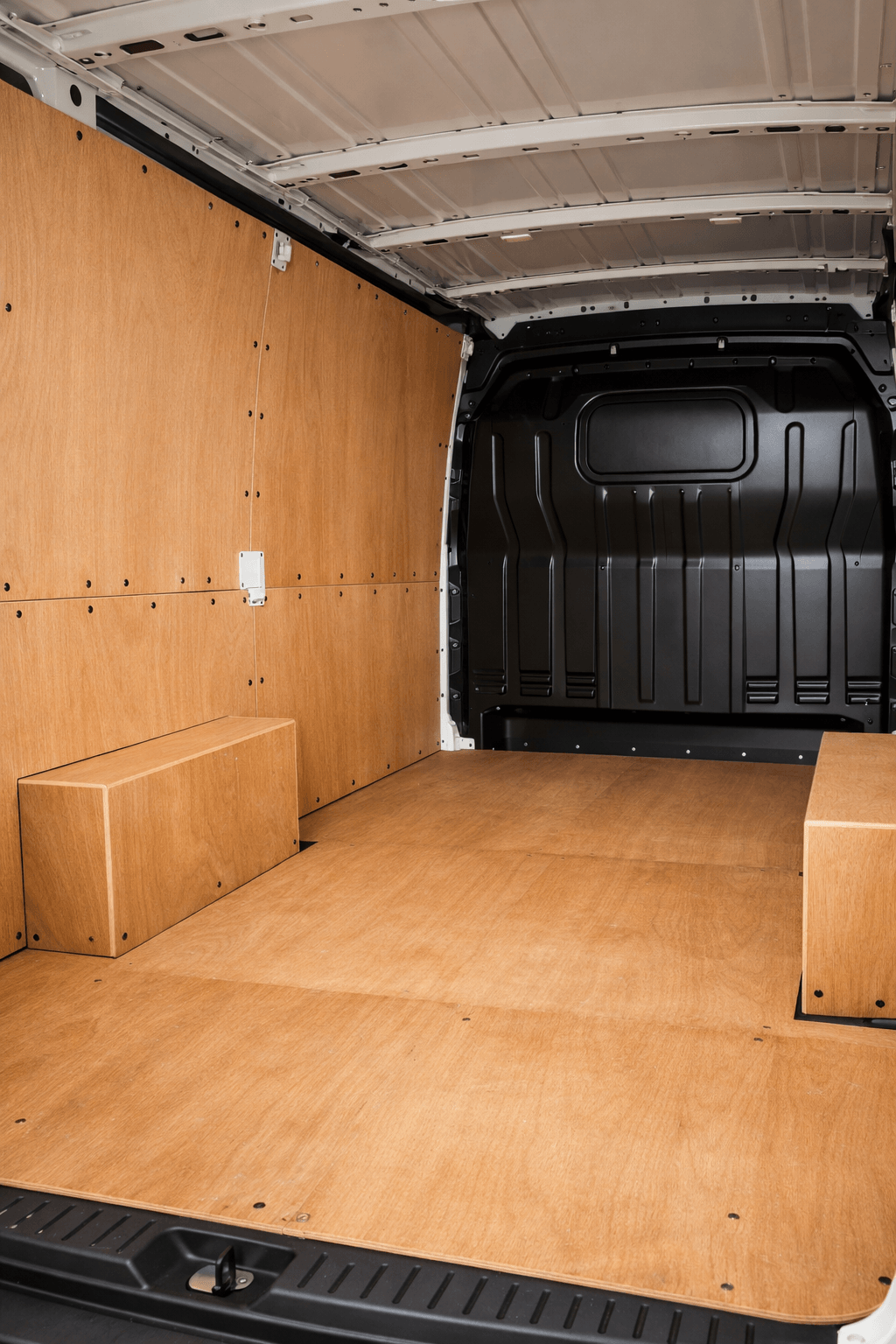
This is one of the most underappreciated van valuation factors, full stop.
Ply lining — the wooden or composite panels fitted to the inside of the load area — protects the bodywork from cargo damage. A van with intact, well-fitted ply lining tells a trade buyer that the body panels behind it are likely in decent shape. A van with missing, broken, or water-damaged ply lining raises immediate questions.
Replacing ply lining isn’t cheap. A full van lining can run to several hundred pounds fitted, and buyers will factor that cost into their offer.
Warning
If your ply lining has been removed and the bare metal shows dents or rust, expect a meaningful deduction — not just for the cosmetic issue, but for the implied history of heavy use.
Roof height and payload: the spec details that trade buyers price for
This is where most valuation guides completely miss the mark. Van spec and value UK are more closely linked than sellers realise, and two of the biggest spec-driven value drivers are roof height and payload rating.
Roof height matters because it determines what jobs a van can do. A high-roof Transit or Sprinter opens up a whole category of buyers — trades who need to stand upright in the back, couriers running large-volume routes, conversion companies. A medium-roof van is more versatile for general use. A low-roof panel van has a narrower buyer pool.
More buyers competing for your van = stronger price.
Payload rating is the maximum weight a van is legally certified to carry, and it’s stamped on the plate inside the door. For trade buyers, this is a hard spec. A van with a higher payload rating can do jobs a lower-rated van legally can’t. That’s real, tangible utility — and it’s priced accordingly.
If you’re thinking about getting a quick and accurate valuation for your van, knowing your exact payload figure before you start is a small thing that makes you look like a serious seller.
Factory-fitted options vs. aftermarket additions
Here’s a distinction that catches a lot of sellers off guard.
Factory-fitted options — things specified and installed by the manufacturer before the van left the production line — tend to hold value reasonably well. Rear parking sensors, a factory tow bar, a factory-fitted roof rack, cruise control, air conditioning: these are all things buyers look for and will pay a modest premium for.
Aftermarket additions — things bolted on after the fact — are a different story. A racking system you had installed, a third-party alarm, custom shelving: these rarely add value in a trade sale, and sometimes they complicate it. A buyer who doesn’t need your specific racking has to factor in the cost of removing it.
The honest truth: don’t expect to recoup the cost of aftermarket additions at resale. If you can remove them cleanly and they’re worth something separately, that might be your better play.
Does van colour affect resale value?
Yes — more than most people think. Van colour resale value is a real factor, particularly in the used commercial vehicle market.
White is the dominant colour in the UK commercial van market by a significant margin, and for good reason: it’s the default for liveried fleet vehicles, it’s easy to respray, and it appeals to the widest pool of buyers. A white van will typically sell faster and sometimes at a slight premium over an identical van in an unusual colour.
Metallic silver and grey also perform reasonably well. Bright colours — red, blue, green — narrow your buyer pool. It doesn’t mean an unusual colour tanks your valuation, but it can mean a longer wait or a slight discount to move the vehicle.
Note
If your van is a non-white colour and is otherwise in excellent condition with strong spec, lead with the spec. Buyers who want what your van offers will find the colour acceptable.
Mileage: it’s not just the number, it’s the type of miles
A van with 80,000 motorway miles is in a very different position to one with 80,000 urban delivery miles. Stop-start city driving is harder on brakes, clutches, engines, and bodywork than steady motorway running.
Trade buyers know this. If you can articulate the nature of your van’s use — long-distance sales rep vehicle, for example, versus multi-drop courier — that context can support a stronger valuation. Service records that show regular maintenance despite high mileage tell a better story than low mileage with patchy history.
What you can actually do before valuation
You can’t change your van’s age or its history. But you can control presentation, and presentation moves numbers.
Before you seek a valuation:
- Get a full valet done — inside and out, including the load area
- Gather all paperwork — V5C, service history, MOT certificates, any warranty documents
- Check and note your payload rating — it’s on the plate inside the driver’s door
- List any factory-fitted options — check the original order sheet if you have it, or look up the VIN
- Fix the cheap stuff — a blown bulb or missing trim panel costs very little to sort and signals neglect if left
- Be honest about the rest — known issues declared upfront build trust and avoid renegotiation later
Frequently Asked Questions
Does a full service history really make a difference to van valuation?
Yes, genuinely. A complete, stamped service history — whether physical or digital — demonstrates the van has been maintained to schedule. For trade buyers, it reduces the risk of expensive surprises. The difference between a full history and a partial one can be several hundred pounds on a mid-range van.
Does the number of previous owners affect what my van is worth?
It can, though it matters less for vans than for cars. Trade buyers are more focused on condition, spec, and history than owner count. That said, a van with one careful owner and a clean history will always tell a better story than one with five owners and patchy records.
Will modifications or added racking increase my van’s valuation?
Rarely. Aftermarket modifications almost never return their cost at resale in a trade sale. If the racking or shelving is high-quality and in good condition, it might help with a private sale to someone in the same trade — but for trade valuations, it’s typically neutral at best.
How does roof height affect what a van is worth?
High-roof vans appeal to a broader range of trade buyers — particularly tradespeople who work in the load area and high-volume couriers. A wider buyer pool generally supports a stronger price. If your van is high-roof, make sure that’s front and centre when you present it for valuation.
Is a white van worth more than the same van in another colour?
Not always dramatically more, but white does sell faster and to a wider audience in the UK commercial market. Unusual colours can mean a longer selling period or a modest discount. Strong spec and good condition can offset a non-standard colour in most cases.
Does payload rating actually affect the valuation?
Yes — for trade buyers, payload is a functional specification, not just a number. A higher payload rating means the van can legally carry more weight, which opens it up to buyers with heavier load requirements. It’s a real differentiator, especially in the light commercial vehicle segment.
If you’ve read this far, you’re already better prepared than most sellers. You know your mileage. Now you know the rest. Get your paperwork together, give the van a proper clean, check that payload plate, and go into your valuation with the full picture — not just the headline numbers.