Selling your van privately in the UK carries a genuine risk most guides don’t warn you about: scammers actively target sellers, not just buyers. This article walks you through the most common van sale scams UK sellers face, how to spot the red flags before money changes hands, and how to protect yourself every step of the way.
What you’ll need before you start
No special tools required here — just a bit of time and a healthy dose of scepticism. Before you list your van anywhere, it helps to have:
- Your van’s V5C logbook to hand (so you know what legitimate document requests look like)
- A basic understanding of how bank transfers and payment apps work
- Access to the DVLA’s online vehicle enquiry service (free to use)
- A mobile phone to verify callers and reverse-search numbers
Why van sellers are a prime target for fraud
Scammers love private van sales for one simple reason: the amounts involved are significant, the transactions are informal, and sellers are often in a hurry to get the deal done.
Unlike buying a van, where most fraud guides focus on clocked mileage or hidden write-offs, seller-side fraud — where the person listing the vehicle is the one who gets stung — is surprisingly common and rarely discussed. You’re handing over a high-value asset, often to a stranger, often outside a bank. That’s a gift to anyone looking to exploit the situation.
The scams below aren’t hypothetical. They follow recognisable patterns, and once you know the script, they’re much easier to spot.
The most common van sale scams in the UK
Recognise the fake payment scam
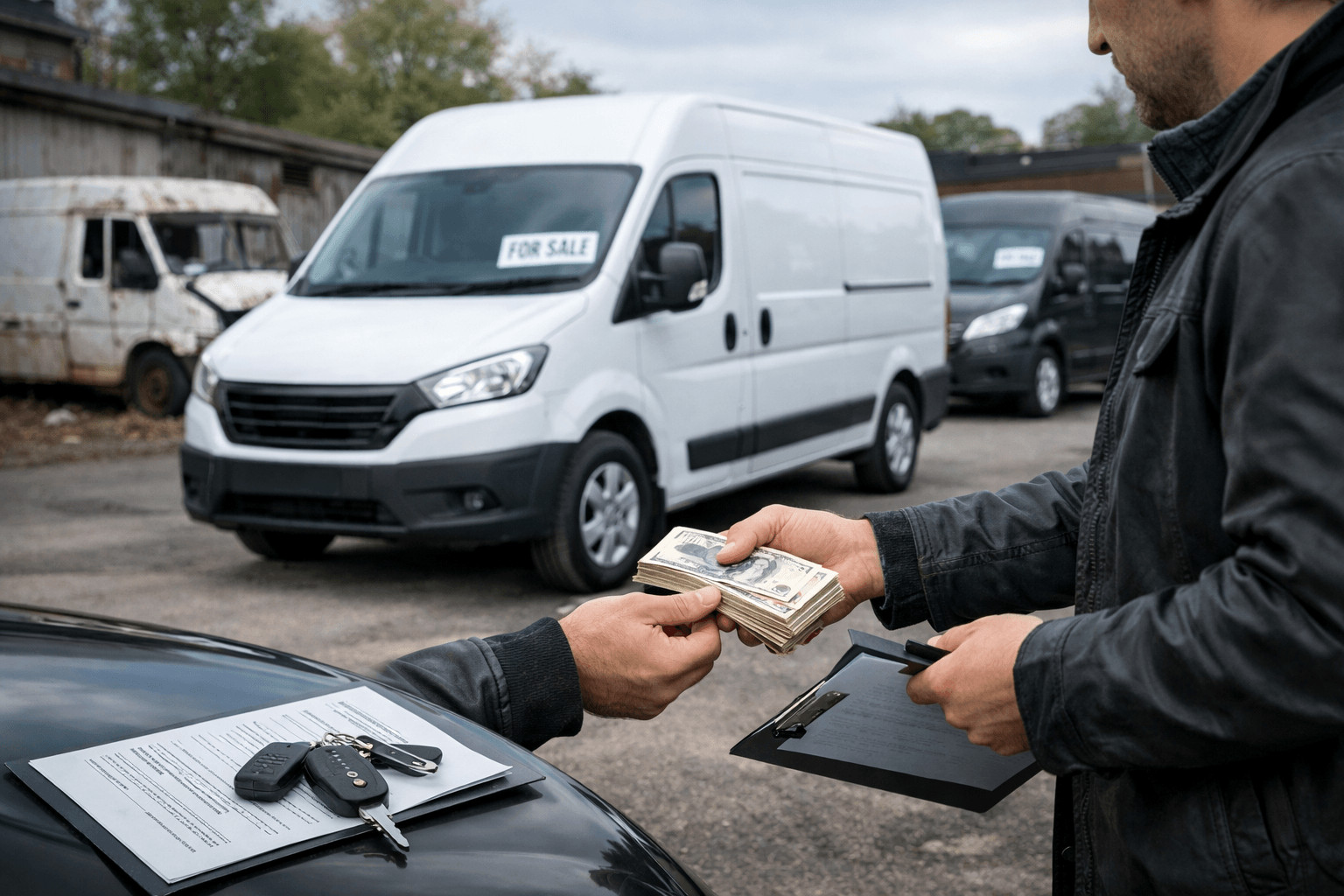
This is the big one. A buyer contacts you, agrees to your asking price with almost no negotiation (flag number one), and then sends a screenshot of a bank transfer or a PayPal payment. The money never actually arrives, but they’ve already collected the van — and the keys.
A screenshot of a payment is not a payment. Always log into your actual bank account and confirm the funds have cleared before you hand over the keys or the V5C. Screenshots can be faked in under two minutes.
Variations include fake “pending” transfer emails that mimic your bank’s branding, and overpayment scams where the buyer sends a cheque for more than the agreed price and asks you to refund the difference. The cheque bounces days later. You’re out the van and the refund.
Watch out for the fake escrow or “safe account” trick
A buyer — often claiming to be overseas or unable to view in person — suggests using an escrow service or a “secure holding account” to protect both parties. They send you a link. The site looks professional. You ship the van (or hand it over to a courier). The money never arrives because the escrow service is entirely fictional.
Legitimate escrow services exist, but any buyer who insists on a specific third-party service they’ve chosen should raise every alarm you have. A genuine buyer doesn’t mind using a service you’ve independently verified.
Spot the identity and V5C fraud
Some scammers aren’t after your van at all — they’re after your paperwork. They’ll arrange a viewing, show intense interest, and then ask to photograph or “borrow” your V5C logbook to “check a few details.” With your V5C details, they can clone your van’s identity onto a stolen vehicle and sell it.
Never let anyone walk away with your V5C — not even briefly. If they need to check the plate or VIN, do it together, in front of you, and take the document straight back.
Identify the test drive theft
Straightforward but devastating. A “buyer” turns up, takes the van for a test drive, and simply doesn’t come back. They may have produced convincing (but fake) ID beforehand.
Always take a photo of the buyer’s driving licence before any test drive. Better still, ride along. If they won’t accept those terms, that tells you everything you need to know.
Beware of courier and shipping scams
Common in private van sale fraud targeting sellers on Facebook Marketplace and Gumtree. The buyer says they’re purchasing on behalf of a business or a family member abroad and will arrange a courier to collect. They send payment confirmation. The “courier” arrives, collects the van, and the payment reverses or never clears.
The pattern here: remote buyer + courier collection + upfront payment confirmation = almost always a scam.
If you never meet the buyer face to face and a third party collects the vehicle, your risk exposure is extremely high. Insist on in-person collection with cleared funds only.
How to avoid van selling scams: a practical checklist
You don’t need to be paranoid — just methodical. Here’s what a safe private sale looks like in practice:
- Meet in person. No exceptions for high-value vehicles.
- Accept bank transfer only — and wait for it to clear (same-day Faster Payments should show instantly; if it doesn’t, stop).
- Never accept cheques for a private van sale. Ever.
- Verify the buyer’s ID before a test drive and keep a copy.
- Don’t release the V5C until the money is confirmed in your account.
- Trust your gut. If a buyer is pushy, overly eager, or making the process unnecessarily complicated, walk away.
If you want to sidestep the risk entirely, using a regulated buying service is the safest way to sell a van in the UK. You can get a guaranteed quote and sell your van without the private sale headaches — no strangers at your door, no fake payments, no drama.
Troubleshooting: “I think I’ve been scammed — what now?”
Act fast. The first 24–48 hours matter most.
If money hasn’t cleared but you’ve handed over the van: Contact your bank immediately and report it as a fraud case. Report to Action Fraud (actionfraud.police.uk) with your crime reference number. Contact the DVLA to flag the V5C.
If you’ve released the V5C to a fraudster: Report to the DVLA straightaway. They can flag the vehicle on their system to prevent it being used in further fraud.
If you’ve been the victim of a fake escrow or payment scam: Report to Action Fraud, your bank, and the platform where you listed the van (Autotrader, Gumtree, Facebook Marketplace all have fraud reporting tools).
The police may not investigate individual cases immediately, but a crime reference number from Action Fraud is essential for any insurance or bank fraud claim.
Frequently Asked Questions
How do I know if a van buyer is genuine?
A genuine buyer asks practical questions about the van’s history, condition, and service records — not just the price. They’re willing to meet in person, happy for you to verify their ID, and don’t rush you into a decision. If someone agrees to your price immediately, wants to send a courier, and can’t view in person, treat that as a strong warning sign.
Is it safe to sell a van privately in the UK?
It can be, but it carries real risks that a regulated sale doesn’t. Private van sale fraud is underreported because many sellers feel embarrassed or assume nothing can be done. Protecting yourself means being strict about payment methods, ID checks, and never releasing the vehicle before funds are confirmed.
What's the safest payment method when selling a van privately?
Bank transfer (Faster Payments) is the safest option for private van sales in the UK — provided you wait for the money to appear in your actual account before handing anything over. Never accept cheques, cash apps you’re not familiar with, or PayPal “Friends and Family” (which offers no buyer or seller protection).
Can I report a fake van buyer to the police?
Yes. Report to Action Fraud online at actionfraud.police.uk or by calling 0300 123 2040. If the scammer has your vehicle, also report to your local police as a theft. Keep all communications — messages, emails, screenshots — as evidence.
- Fake payment screenshots are the most common van sale scam targeting UK sellers — always verify funds in your own bank account before releasing the van
- Never let a buyer walk away with your V5C logbook, even temporarily
- Courier collection scams are rife on Facebook Marketplace and Gumtree — insist on in-person collection
- Test drive theft is preventable: always take a photo of the buyer’s driving licence first
- A regulated buying service eliminates seller-side fraud risk entirely — no strangers, no fake payments, no uncertainty