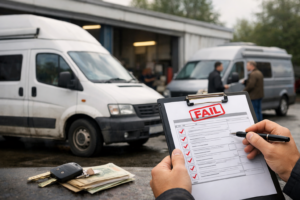

If you’re trying to decide whether to sell your Ford Transit privately or use a van buying service, here’s the short answer: private sale typically nets you 10–20% more, but it takes 2–8 weeks and real effort. A van buying service pays you in 24–48 hours with almost no hassle, at a lower price. Which one wins depends entirely on your timeline, your van’s condition, and your appetite for negotiation.
Why Selling a Ford Transit Is Different From Selling a Car
Selling a Transit isn’t like offloading a family hatchback. The buyer pool is almost entirely commercial — sole traders, small fleets, courier operators, construction firms — and they shop very differently from private car buyers.
These buyers scrutinise payload ratings, Euro emissions standards, roof height, wheelbase, and service history with a professional eye. A missed service stamp or a vague listing description doesn’t just reduce your price; it kills the enquiry entirely.
There’s also the paperwork layer that car sellers rarely face. Finance settlements, VAT reclaim status, and registered keeper history (especially if the van has had multiple business owners) all need to be squared away before money changes hands. Miss one of these and you’re looking at a delayed sale at best, a legal headache at worst.
Timing matters too. Van demand traditionally picks up in January (new business contracts) and September (post-summer fleet refreshes). If your timeline is flexible, aligning your sale with these windows — whichever route you choose — can meaningfully improve your outcome.
Understanding Your Two Main Options at a Glance
Before diving deep, here’s a quick orientation.
Private sale means you list the van yourself, field enquiries, arrange viewings, negotiate the price, and handle all the paperwork. The upside is a higher sale price. The downside is time, effort, and the very real possibility of time-wasters.
Van buying services (instant offer platforms) work like this: you enter your van’s details online, receive a provisional quote, bring the van in for a physical inspection, get a revised offer, and — if you accept — receive payment within 24–48 hours and hand over the keys. Simple. Fast. And yes, cheaper.
A third route worth a brief mention is Ford Transit dealer part-exchange — trading your Transit in against a new or used vehicle at a franchised dealer. This is convenient if you’re buying another vehicle anyway, but part-exchange values are typically the lowest of the three options because the dealer needs margin on both transactions.
The right choice hinges on four variables: how much time you have, the van’s mechanical condition, how much return you need, and whether you’re comfortable negotiating with trade buyers.
| Private Sale | Van Buying Service | Dealer Part-Exchange | |
|---|---|---|---|
| Typical return | Highest | Mid | Lowest |
| Time to sell | 2–8 weeks | 24–48 hours | Same day |
| Effort required | High | Very low | Very low |
| Risk of no sale | Real | None | None |
| Best for | Low-mileage, good condition | High-mileage, damaged, urgent | Buying another vehicle |
Selling Your Ford Transit Privately: The Full Picture
Private sale gives you the best shot at top money — but it demands a realistic understanding of what you’re signing up for.
The best platforms for Transit listings in the UK are Auto Trader Vans (highest trade buyer traffic), eBay Motors (good for nationwide reach), Facebook Marketplace (free and fast for local buyers), and Gumtree (useful for budget-conscious buyers). Auto Trader Vans charges listing fees; the others are free or low-cost. For a premium Transit in good condition, Auto Trader Vans is worth the spend.
Pricing is where most private sellers go wrong. Don’t anchor on what you paid or what you think it’s worth — search live comparable listings filtered by body style (panel van, Jumbo, Tourneo, minibus), wheelbase, roof height, and mileage. The Ford Transit private sale market is heavily saturated, which genuinely suppresses prices and extends listing times compared to less common vans. Expect more competition and longer waits than you might anticipate.
Photography makes or breaks enquiries. Shoot the load area (buyers want to see condition and dimensions), the bulkhead, the roof height from outside, tyre tread depth, and — critically — the dashboard with no warning lights showing. A warning light in a photo is an instant red flag that invites lowball offers.
Your listing description needs to answer trade buyer questions before they ask: payload rating, Euro emissions standard (Euro 6 matters for ULEZ compliance), roof height, wheelbase, service history type, and MOT expiry. Vague listings attract time-wasters; detailed listings attract serious buyers.
And time-wasters are real. Expect no-shows, tyre-kickers who arrive to negotiate 20% off, and occasional scam attempts (more on those in the FAQ). Budget emotionally for this — it’s part of the process.
Legally, you must notify the DVLA when the van changes hands (via the V5C tear-off or online), write a simple dated receipt signed by both parties, and — if the van has outstanding finance — settle the HP or PCP agreement before or at the point of sale. Selling a van with undisclosed outstanding finance is fraud.
Realistic timeline: 2–8 weeks, depending on spec, mileage, and asking price. High-mileage workhorse panel vans can sit for months in a crowded market.
Realistic return: Typically 10–20% more than an instant offer — but that’s gross. Subtract listing fees (Auto Trader Vans can run £30–£100+ depending on package), any prep costs, your time, and the fuel for test drives, and the net gap narrows considerably.
Using a Van Buying Service: How It Actually Works
Van buying services strip out almost all the friction. Here’s the actual process:
Online valuation
Enter your registration, mileage, and condition details on the platform. You’ll receive a provisional quote — treat this as a ceiling, not a guarantee.
Physical inspection
You bring the van to an inspection centre (or, with some services, they come to you). An assessor checks the bodywork, mechanical condition, tyre wear, service history, and any warning lights.
Revised offer
The inspection almost always results in a revised — usually lower — offer. Adjustments for undisclosed damage, missing service stamps, or worn tyres are standard. The gap between the online quote and the final offer typically ranges from a few hundred to over a thousand pounds on a Transit, depending on condition. Don’t be surprised by this; factor it in from the start.
Payment and collection
Accept the offer, sign the paperwork, and the van is collected or driven away. Payment lands in your account within 24–48 hours in most cases.
Major UK services worth getting quotes from include We Buy Any Van, Motorway, and CarGurus Instant Offer. Always get at least three quotes — offers on the same Transit can vary by several hundred pounds between platforms.
If you want a specialist starting point, selling your Ford Transit through a dedicated van buying platform that focuses specifically on vans (rather than a car-first service that handles vans as an afterthought) tends to produce more accurate initial valuations and fewer inspection-day surprises.
Who benefits most from this route? Sellers with high-mileage Transits that would struggle in a saturated private market, vans with accident damage, vans with finance to settle quickly, and anyone who simply needs funds within days. The convenience premium — the money you leave on the table versus a private sale — is real, but so is the certainty.
Side-by-Side Cost and Return Comparison
Let’s make this concrete. Take a 2019 Ford Transit 350 L3 H2 panel van with 90,000 miles in average condition with a full service history.
A realistic private listing price might be around £14,000–£15,000, with serious buyers likely negotiating to £13,000–£13,500. From that, subtract:
- Auto Trader Vans listing fee: ~£60
- Fuel for 3–5 test drives: ~£30
- Minor prep (valet, a bulb, touch-up): ~£100–£200
- Your time (viewings, calls, messages): unquantifiable but real
Net private sale proceeds: approximately £12,700–£13,300
A van buying service might offer £11,500–£12,500 for the same vehicle after inspection adjustments. No fees, no prep costs, no time investment beyond one visit.
The real gap: roughly £500–£1,500 in favour of private sale — not the £2,000+ headline difference that comparing list prices suggests.
Break-even point: If the private sale effort takes more than 3–4 weeks of active management, or requires more than £200–£300 in prep costs, the financial case for going private weakens significantly. For many sellers, the buying service wins on a net-adjusted basis.
VAT note: If your business is VAT-registered, a van buying service typically handles the transaction more cleanly from a VAT accounting perspective. Speak to your accountant before choosing a route — the right structure can affect your net proceeds meaningfully.
Ford Transit Variants and Which Selling Method Suits Each
Not all Transits are equal in the used market, and the right selling method varies by variant.
| Variant | Recommended Method | Reason |
|---|---|---|
| Transit Custom / Trail / Limited (low mileage) | Private sale | Strong demand, buyers will pay a premium |
| Workhorse panel van (high mileage) | Van buying service | Saturated market; reduces relisting risk |
| Minibus / Tourneo | Specialist dealer or auction | Niche buyer pool makes private sale slow |
| Welfare / conversion units | Specialist trade buyer | Conversions need specialist valuers |
| E-Transit (electric) | Caution with buying services | Used EV market is still forming; services may undervalue |
The E-Transit deserves a specific note. The used electric van market is still establishing itself, and van buying service algorithms may not yet price E-Transits accurately — particularly early-adopter models. If you own one, get multiple quotes and consider reaching out directly to electric vehicle specialists before accepting any offer.
Condition, Finance and Documentation: What Changes the Outcome
Outstanding hire purchase or PCP finance complicates both routes, but differently. With a buying service, they’ll often settle the finance directly with the lender and pay you the equity (or ask you to cover negative equity). Privately, you must settle the finance yourself before transferring ownership — you cannot legally sell a van that has undisclosed finance against it.
MOT validity matters more in private sale than with buying services. A private buyer will almost always want a current MOT; a buying service will typically accept a van without one, but will adjust the offer accordingly. A van with 10+ months of MOT remaining is a genuine private-sale asset.
Service history is another differentiator. Full Ford dealer stamps carry the most weight with private buyers. Independent stamps are acceptable but attract more scrutiny. No history is a significant price reducer in either channel.
Structural or cosmetic damage beyond minor scuffs often makes private sale impractical — serious buyers walk away or offer insultingly low prices. A buying service becomes the realistic option here.
ULEZ and Clean Air Zone (CAZ) compliance is increasingly important, particularly for buyers based in or near London, Birmingham, or other major cities. Euro 6 Transits (generally 2016 onwards, but check your specific vehicle) are compliant; earlier models are not. Make this clear in any listing — it’s a genuine selling point that many sellers forget to mention.
How to Get the Best Result Whichever Route You Choose
Here’s the tactic that most guides completely miss: the hybrid approach.
List your Transit privately with a firm two-week deadline. Before you list, get quotes from three van buying services and note the best offer. That figure becomes your psychological floor — the minimum you’ll accept privately. If a private buyer offers you £500 above the buying service quote, you know it’s worth taking. If two weeks pass without a serious offer, you accept the buying service quote and move on. No extended listing, no months of frustration, no being stuck.
This approach gives you the upside of private sale while eliminating the risk of an unsold van. It’s genuinely the best of both worlds, and almost no seller thinks to do it.
Beyond that:
- Get at least three buying service quotes before accepting any offer — variation between platforms is real and meaningful
- Time your listing for January or September if your timeline allows
- Minor prep pays off: a thorough clean, working bulbs, and a complete document pack all improve buyer confidence without significant cost
- Know your walk-away number before any negotiation begins — decide it in advance, not in the moment
Use your best buying service quote as a negotiating anchor in private sale conversations. “I have a firm offer of £X from a buying service — I’d prefer to sell privately, but I won’t go below that” is a completely legitimate and effective negotiating position.
Which Method Should You Choose? A Decision Framework
Choose private sale if: your Transit is in excellent condition, you have at least four weeks, you’re comfortable fielding trade buyer enquiries, and the van is a higher-spec or lower-mileage model where the premium is worth chasing.
Choose a van buying service if: you need funds within days, the van has high mileage or damage, you have finance to settle urgently, or the thought of managing viewings and negotiations genuinely doesn’t suit your situation.
The hybrid approach — list privately for two weeks with a firm deadline, using a pre-obtained buying service quote as your floor — is the best option for most sellers who have some flexibility but don’t want to be stuck.
- Private sale returns 10–20% more than a buying service, but the net gap after costs and time narrows to roughly £500–£1,500 in most cases
- Van buying services settle in 24–48 hours with minimal effort — the convenience premium is real but often worth it
- The hybrid strategy (private listing with a hard deadline and a buying service quote as your floor) gives you upside without the downside risk
- Variant matters: high-spec Customs suit private sale; high-mileage workhorses suit buying services; minibuses and E-Transits need specialist routes
- Always get three buying service quotes — offers vary significantly between platforms
Frequently Asked Questions
How much less will a van buying service offer compared to a private sale for a Ford Transit?
Typically 10–20% less than a realistic private sale price, but the net difference after private sale costs (listing fees, prep, time) is usually closer to £500–£1,500. The headline gap sounds larger than it is once you account for the real costs of selling privately.
Can I sell my Ford Transit privately if it still has finance outstanding?
You can list it, but you cannot legally transfer ownership until the finance is settled. You must either pay off the outstanding balance before the sale or arrange for the buyer to pay the lender directly — the latter is complex and most private buyers won’t agree to it. Van buying services often handle this more cleanly by settling the finance on your behalf.
Which van buying services give the best price for a Ford Transit?
We Buy Any Van, Motorway, and CarGurus Instant Offer are the main platforms worth using. Offers vary significantly — getting all three quotes on the same day gives you the most accurate comparison. Specialist van-focused platforms sometimes outperform car-first services on Transit valuations specifically.
How long does it take to sell a Ford Transit privately in the UK?
Expect 2–8 weeks as a realistic range. High-spec, low-mileage Transits in good condition at the right price can sell in days. High-mileage workhorse panel vans in a saturated market can take months. The sheer volume of Transits listed privately at any given time is the key factor suppressing both prices and sale speeds.
Does the Ford Transit's body style (panel van, minibus, Jumbo) affect which selling method is better?
Yes, significantly. Panel vans in good condition suit private sale or buying services equally. Minibus and Tourneo variants have a niche buyer pool that makes private sale slow — specialist dealers or auctions often perform better. Jumbo L4 variants attract a specific trade audience; buying services may undervalue them. Match your method to your variant.
Will a van buying service accept a Ford Transit with a failed MOT or warning lights?
Most will, but they’ll adjust the offer downward to account for the cost of rectification. A failed MOT or active warning lights are not deal-breakers for buying services the way they are for private buyers. Expect a meaningful reduction — typically £200–£800 depending on the fault — rather than an outright refusal.
What documents do I need to sell my Ford Transit privately?
You need the V5C logbook, MOT certificate (if current), service history records (stamped book or digital records), any spare keys, and — if the van has had any modifications or conversions — documentation for those. Write a simple dated receipt signed by both parties, and notify the DVLA of the change of keeper on the day of sale.
Is it worth repairing my Ford Transit before selling, or should I sell as-is?
It depends on the repair cost versus the likely return. Minor items — a working bulb, a thorough valet, fixing a simple warning light — typically return more than they cost in private sale. Major mechanical or bodywork repairs rarely pay back in full. If the repair cost exceeds £500, get a buying service quote first to establish your baseline, then decide whether the repair justifies the private sale premium.
How do I avoid scams when selling a Ford Transit on Facebook Marketplace or eBay?
Never release the van until cleared funds are in your account — not a screenshot of a transfer, not a cheque, not a bank transfer “pending”. Meet buyers at your home or a public location in daylight. Be wary of buyers who want to pay over the asking price and ask you to refund the difference. For high-value Transits, cash or bank transfer (verified as cleared) are the only safe payment methods.
Can a VAT-registered business reclaim VAT when selling a Ford Transit through a buying service?
This depends on how the van was purchased and how VAT was handled at acquisition. If the van was purchased with VAT reclaimed, the sale proceeds are subject to VAT output tax. Van buying services will typically pay you the VAT-exclusive amount and handle the VAT element separately, which can simplify your accounting. Always confirm the VAT treatment with your accountant before completing the sale — getting this wrong creates a liability, not a saving.