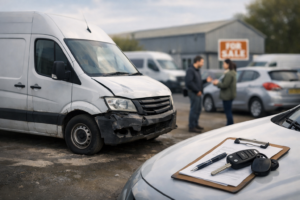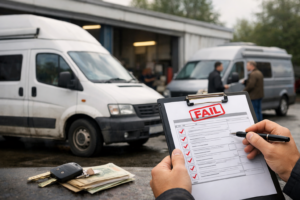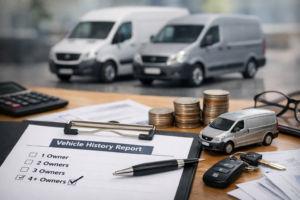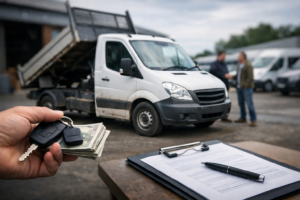
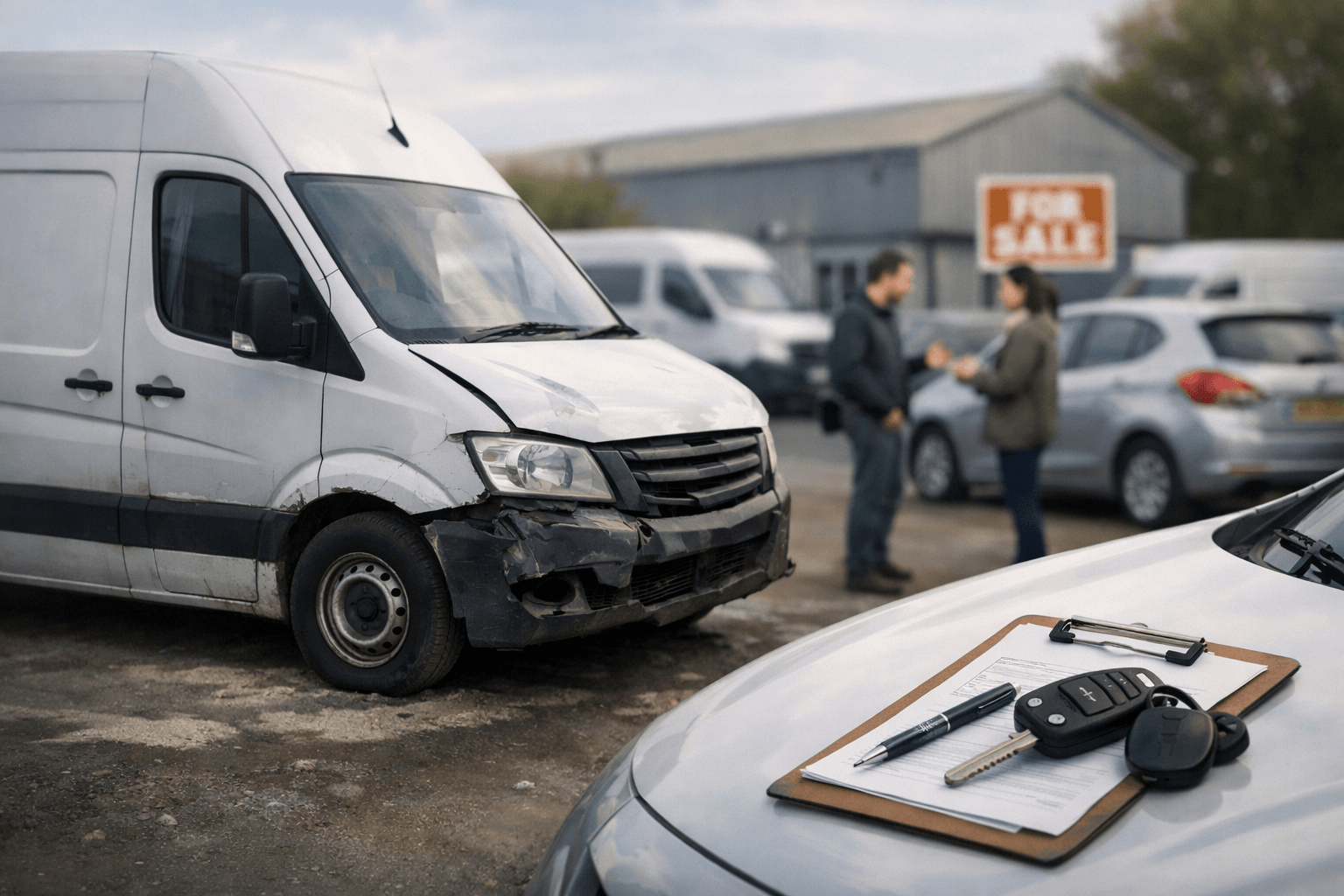
Your van has given up. It’s sitting on the drive, refusing to start, and you’re wondering whether it has any value left at all. Good news: it does. Knowing how to sell a non-runner van UK sellers often overlook the fact that buyers exist specifically for vehicles in this condition, and getting a fair price is more straightforward than you might think.
- Non-runner vans still have real monetary value, whether sold for parts, scrap, or repair and resale
- Specialist buyers will collect a broken down van sale free of charge, even if it cannot be driven
- You will need to prepare a few documents and clear the vehicle before the driver arrives
- Honest, accurate descriptions get you better offers and smoother transactions
- Selling privately is possible but specialist buyers are usually faster and simpler for unroadworthy vehicles
Why a Non-Runner Van Still Has Value
A van that won’t start or drive is not a van that’s worthless. That is the single most important thing to understand before you do anything else.
Vans contain steel, aluminium, copper wiring, catalytic converters, and a long list of reusable components. Even a vehicle that has been sitting for years holds scrap metal value at a minimum. If the engine turns over but won’t run, or the body is solid but the gearbox has failed, the value climbs considerably because a buyer can repair it, strip it for parts, or sell it on.
Scrap metal prices fluctuate with global commodity markets, but a typical large panel van can yield meaningful returns even in poor condition. The key is finding the right buyer rather than accepting the first offer that comes along.
What “Non-Runner” Actually Means to a Buyer
A non-runner van is any vehicle that cannot be driven under its own power. That covers a wide range of situations, and buyers will want to know exactly where yours falls.
Common non-runner categories include:
- Engine failure (seized, blown head gasket, snapped timing belt)
- Gearbox or clutch failure
- Electrical fault preventing starting
- Accident damage making the van unroadworthy
- Flood or fire damage
- Failed MOT with prohibitive repair costs
The more specific you can be, the more accurate your quote will be. Guessing or being vague tends to lead to revised offers on collection day, which wastes everyone’s time.
If you have any recent garage reports or MOT failure certificates, keep them handy. They give buyers confidence and can actually support a higher offer because they remove uncertainty.
How Much Is a Non-Runner Van Worth?
The honest answer: it depends on the make, model, age, mileage, and the nature of the fault. But “it depends” is only useful if you know what it depends on.
Here is what drives the value up:
- Popular makes with strong parts demand (Ford Transit, Mercedes Sprinter, Volkswagen Transporter)
- Solid bodywork with no major corrosion
- Low mileage relative to age
- A fault that is repairable at reasonable cost
- Full service history or documentation
Here is what drives it down:
- Extensive rust or structural damage
- High mileage with a major mechanical failure
- Missing documents, including no V5C logbook
- Modifications that reduce the parts market
A non-runner van that would otherwise be worth £8,000 roadworthy might fetch £3,000 to £5,000 depending on the fault. A high-mileage van with a seized engine might return scrap value only, which is still a real number rather than zero.
Be cautious of any buyer who quotes high over the phone and then dramatically reduces the offer on arrival. Reputable specialist buyers base their offers on the information you provide, and a small adjustment for something genuinely undisclosed is reasonable. A large unexplained reduction is not.
How Free Collection Works When Your Van Cannot Be Driven
This is the part most articles skip over, and it is exactly what sellers of unroadworthy vans most need to know.
When you sell your van through a specialist van buyer, free collection is standard for non-runners. But the logistics are different from a normal vehicle handover, and understanding them in advance makes the whole process far smoother.
A non-running van collection uses a flatbed recovery truck or a low-loader, not a driver who simply hops in and drives away. The driver will need to be able to access the vehicle safely, which means you have a few responsibilities before they arrive.
Clear the area around the van
The recovery truck needs enough space to manoeuvre and deploy its loading equipment. A van wedged tightly between other vehicles, or parked against a wall with no clearance, creates a real problem. Check that there is at least a few metres of clear space at the front or rear of the vehicle.
Locate all keys and documents
Even if the van won’t start, the buyer will want the keys. They need them to release the steering lock, which matters when the vehicle is being winched or rolled onto a flatbed. Gather the V5C logbook, any service history, MOT certificates, and any garage reports. Missing documents do not kill a sale but they can affect the offer.
Remove all personal belongings
Once the van is collected, retrieving anything left inside becomes very difficult. Go through the cab, the load area, under seats, and any storage compartments. This includes tools, equipment, sat navs, and anything stored in roof vents or side lockers.
Check for any fuel or hazardous materials
If the van carries any residual fuel beyond what is in the tank, remove it before collection. The same applies to gas cylinders, chemicals, or any materials that would complicate transport. The recovery driver will appreciate it, and in some cases it is a legal requirement.
Confirm the collection details in writing
Before the driver arrives, make sure you have written confirmation of the agreed price, the collection time, and the payment method. Reputable buyers pay on collection or via same-day bank transfer. Do not hand over the keys or sign anything until you are satisfied.
If your van is on a public road rather than private property, check whether it has a current tax disc or SORN declaration. A SORN vehicle cannot legally be on a public road, and moving it to a public road to facilitate collection could create a legal issue. The buyer should be able to advise you on this.
Selling a Non-Runner Van Privately vs. Using a Specialist Buyer
Both routes have merit, and the right choice depends on your priorities.
Selling privately through platforms like Facebook Marketplace or Gumtree can yield a higher price, but it comes with real challenges. You will need to field enquiries from tyre-kickers, manage viewings, and potentially deal with buyers who want to test-drive something that cannot be driven. Describing a van that won’t start value accurately enough to satisfy a private buyer without scaring them off is a skill in itself.
Using a specialist buyer is faster, simpler, and removes the logistics headache. You get a quote, agree a price, arrange collection, and receive payment. The trade-off is that the offer will typically be lower than a private sale, because the buyer needs margin to resell, repair, or part out the vehicle.
For most people selling an unroadworthy van, the specialist route wins on convenience. For a van with a minor, well-documented fault and strong demand, private sale is worth the extra effort.
Frequently Asked Questions
Do I need an MOT to sell a non-runner van in the UK?
No. You do not need a valid MOT to sell a vehicle in the UK. You are legally required to inform the buyer that the vehicle does not have a valid MOT, and you cannot sell it as roadworthy if it is not. Specialist buyers of non-runners are fully aware of this and it will not affect the sale.
Can I sell a van with no V5C logbook?
Yes, but it complicates things. Without a V5C, a buyer cannot easily register the vehicle in their name. Some specialist buyers will still purchase the van at a reduced price, and you can apply for a replacement V5C from the DVLA for a small fee before selling if you want to maximise your return.
How quickly can a non-runner van be collected?
Most specialist buyers can arrange collection within one to three working days of agreeing a price. Some offer same-day or next-day collection depending on your location and their schedule. It is worth asking when you request a quote.
Will I be paid on the day of collection?
Reputable buyers pay on collection, either in cash or via same-day bank transfer. Confirm the payment method before you agree to anything, and do not hand over the V5C or keys until payment is confirmed.
What happens to my van after it is collected?
That depends on the buyer and the condition of the van. Non-runners in repairable condition are often fixed and resold. Vans with extensive damage are typically stripped for parts, with the remaining shell going to an Authorised Treatment Facility (ATF) for environmentally compliant scrapping. ATFs are regulated by the Environment Agency and issue a Certificate of Destruction, which formally removes you from liability for the vehicle.
Is it legal to sell an unroadworthy van?
Yes. Selling an unroadworthy van in the UK is entirely legal as long as you are honest about its condition. You cannot misrepresent it as roadworthy, and if you sell it to a private buyer who intends to drive it, you should make its condition clear in writing. Selling to a specialist buyer removes most of this concern because they are not buying it to drive immediately.
If your van is sitting unused and you are ready to move it on, the practical steps are simpler than most people expect. Get a few quotes, be specific about the fault, prepare the vehicle for collection, and confirm payment before you hand anything over. A reliable, premium service from a specialist buyer means you get a fair price without the hassle of managing a private sale for a vehicle that cannot move under its own power.