You’ve accepted a van offer — here’s exactly what happens next. From the moment you say yes to the moment cleared funds land in your account, there are around a dozen distinct steps. This guide walks you through every one of them, so you know what to expect, what to prepare, and how to protect yourself at each stage.
Prerequisites: You’ll need your V5C logbook, MOT certificate, service history records, any finance settlement documents, and your bank details for payment. If the van was a business asset, have your VAT registration number and purchase records to hand.
What “Accepting an Offer” Actually Means in the Van Buying Process
Accepting an offer is not the same as completing a sale — and that distinction matters more than most sellers realise.
In the UK, a verbal acceptance has limited legal weight. Until you have written confirmation — an email, a platform message, or a signed agreement — either party can walk away without legal consequence in most private and dealer-led sales. Online instant-offer platforms (such as We Buy Any Van or Motorway) typically send a written offer confirmation via email, which creates a clearer paper trail, but the sale is still not legally complete until payment is made and ownership transferred.
The route you used to sell shapes everything that follows. A private sale gives you more control but more admin. A dealer sale moves faster with less paperwork on your side. An online instant-offer platform sits somewhere between the two: fast, structured, and largely managed for you — but with a physical inspection still to come.
Immediate Steps After Your Offer Is Accepted
Confirm everything in writing
Whether you sold privately, through a dealer, or via a platform, get the agreed price, timeline, and any conditions confirmed in writing before you do anything else. A simple email reply from the buyer saying “confirmed — £X, collection on [date]” is enough. This protects you if the price is later disputed.
Agree a clear timeline
Pin down the date for inspection (if applicable), payment, and collection or delivery. Vague timelines create anxiety and give bad-faith buyers room to delay. Ask for specific dates, not “sometime next week.”
Keep the van listed until funds are cleared
Do not pull your listing or turn down other enquiries until you have either a non-refundable deposit or cleared payment in your account. A holding deposit — typically a small amount paid upfront to reserve the van — signals commitment, but check whether it is refundable if the buyer withdraws.
Removing your listing the moment someone says “yes” leaves you exposed if they pull out. Keep your options open until money moves.
Freeze the mileage if required
Some buyers, particularly dealers, will specify a mileage figure in the offer. If you continue using the van commercially between acceptance and collection, you may trigger a price renegotiation. If the mileage matters to the buyer, stop using the van or agree a mileage allowance in writing.
The Vehicle Inspection and Appraisal Stage
Most dealers and online platforms will conduct a physical inspection before finalising the price. This is standard — not a red flag.
Inspectors typically check bodywork condition (dents, scratches, rust), tyre depth, service history, dashboard warning lights, load area wear, and whether the van matches its advertised specification. They are looking for anything that could reduce the van’s resale value.
How to prepare your van before inspection to avoid price reductions:
- Clean the interior and load area thoroughly
- Fix any minor issues you can (bulbs, washer fluid, loose trim)
- Gather all paperwork so it is ready to show
- Clear any warning lights you know are minor — or be ready to explain them honestly
If the inspection reveals issues you were not aware of, the buyer may renegotiate the price. That is their right. You then have three choices: accept the revised figure, counter-negotiate, or walk away. We cover what to do if they push too hard in the troubleshooting section below.
Private sellers who want to pre-empt problems can commission an independent pre-sale inspection from a mobile mechanic or AA/RAC inspector. It costs around £100–£200 and can prevent nasty surprises on collection day.
Paperwork You Need to Have Ready
Get these documents together before inspection day — not on the morning of collection.
- V5C logbook: Essential. Without it, many dealers will reduce their offer or decline to proceed. If yours is missing, apply for a replacement V5C from the DVLA (form V62) — allow several weeks.
- MOT certificate: Include any advisory notes. Buyers will check the MOT history online anyway; being upfront about advisories builds trust.
- Service history: Physical stamps, receipts, or digital service records. A full history is worth real money.
- Finance settlement letter: If the van is on HP or PCP, you need a current settlement figure from your lender before the sale can complete.
- Spare keys and handbook: Missing keys can knock hundreds off your offer.
- ULEZ/emissions documentation: If the buyer is based in or near a clean air zone, they may need evidence of the van’s emission standard.
Settling Outstanding Finance Before Completion
You cannot legally sell a van with outstanding hire purchase (HP) finance without settling it first — the finance company owns the vehicle until the final payment is made.
Contact your lender and request a settlement figure. This is the exact amount needed to clear the finance on a specific date. Settlement figures are typically valid for 14 days, so time this carefully.
Many dealers and online platforms handle this for you: they pay the lender directly and deduct the settlement amount from your payout. This is clean and efficient, but confirm the process with your buyer in writing before assuming they will manage it.
What if the settlement figure is higher than your offer? This is called negative equity — you owe more than the van is worth. You will need to make up the shortfall from your own funds before the sale can complete. There is no way around this; the lender must be paid in full.
How and When You Get Paid
Payment timing depends on who is buying. Dealers and online platforms typically pay by BACS bank transfer (1–3 working days) or same-day CHAPS transfer (usually for larger amounts). If you need same-day van payment, ask the buyer upfront whether CHAPS is available and whether there is a fee.
Never hand over the keys or sign transfer documents before cleared funds are in your account. A CHAPS reference number is not the same as cleared funds. Wait for the money to show in your balance.
If you are selling via an online instant-offer platform, the payment process is typically: offer confirmed → inspection passed → sale agreement signed → payment initiated. The van collection process UK-wide usually happens on the same day as the final paperwork, with payment following within 24 hours on most platforms.
For private sales, cash feels safe but carries real risk — counterfeit notes, disputes about amounts, and no paper trail. A bank transfer is safer, but screenshot fraud is real: some buyers send a fake “payment sent” screenshot. Log into your own banking app to verify the money is there before the buyer drives away.
Transferring Ownership: Notifying the DVLA
Notify the DVLA on the day of sale — not the day after, not “when you get round to it.”
If you are using a V5C with a green slip (newer format): the buyer takes the main document, and you complete and post the yellow “sell, transfer or part-exchange” slip to the DVLA. You can also notify the DVLA online at gov.uk, which is faster and gives you immediate confirmation.
Keep your yellow slip or a screenshot of your online notification. This is your proof that you transferred ownership on a specific date. Without it, you could be held liable for parking fines, road tax, or even criminal offences committed in the van after the sale.
Any remaining full months of road tax are automatically refunded to you by the DVLA — you do not need to apply separately. The refund goes to the card or account the direct debit was taken from.
Cancelling Insurance and Road Tax After the Sale
Call your insurer the same day the sale completes. Most insurers will issue a pro-rata refund for any unused premium. Do not assume they will cancel automatically — they will not.
Road tax is no longer transferable between owners. The buyer must tax the vehicle before driving it away. If the van is not being driven immediately after purchase, the new owner should register it as SORN (Statutory Off Road Notification) to avoid being fined.
If the van was on a business or fleet policy, remove it from the policy in writing and keep a record. If it was the only vehicle on the policy, cancel the policy entirely and request a no-claims confirmation letter for future use.
The Handover: What to Expect on Collection or Delivery Day
A professional handover takes around 20–30 minutes and follows a clear sequence.
Final walkaround
Walk around the van together with the buyer or collection agent. Confirm the condition matches what was agreed. Note the mileage on the odometer.
Take timestamped photos
Photograph all four sides of the van, the load area, the dashboard (showing mileage), and any pre-existing marks. Use your phone so the timestamp is embedded in the metadata. This protects you if a dispute arises later about condition.
Sign the final sale agreement
Most dealers and platforms will have a handover receipt or sale agreement for both parties to sign. Read it before signing. If anything contradicts what was agreed, raise it now — not after you have signed.
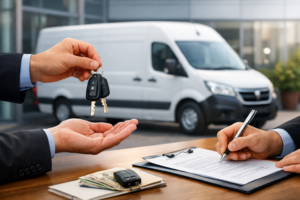
Hand over keys and documents
Give the buyer all keys, the V5C (if applicable), MOT certificate, service history, handbook, and any other agreed items. Get a receipt confirming what was handed over.
If the buyer tries to renegotiate the price at the point of handover — a tactic sometimes called a “last-minute chip” — stay calm. You are under no obligation to accept. Refer back to the written agreement and give them a clear choice: proceed at the agreed price or the sale does not go ahead.
Selling a Van That Was a Business Asset: Tax and Records
This is the section most guides skip entirely — and it matters if you are a sole trader, a limited company director, or a fleet manager.
When you sell a van that was used in your business, HMRC needs to know. The sale affects your tax position in several ways.
Capital allowances: If you claimed capital allowances on the van (Annual Investment Allowance or writing-down allowance), you must account for the disposal. The sale proceeds are treated as a “disposal value” and fed back into your capital allowances pool. Depending on your pool balance, this may create a balancing charge (additional taxable profit) or a balancing allowance (a final deduction). Speak to your accountant before the tax year end.
VAT: If you are VAT-registered and the van was purchased with VAT reclaimed, the sale may be subject to VAT. You will need to charge VAT on the sale price and account for it in your VAT return. If you sell to a VAT-registered dealer — as you would through most online platforms — they will typically handle this cleanly. But do not assume: confirm with your accountant.
Updating your accounts: Remove the van from your fixed asset register on the date of sale. Record the sale proceeds and calculate any gain or loss against the net book value. If the van was leased rather than owned, notify the leasing company — selling a leased van without permission is a breach of contract.
If you are a sole trader selling through a reliable van-buying service, a specialist platform that buys vans directly from businesses and private sellers can simplify the process considerably — they handle finance settlement, DVLA notification support, and same-day payment, which reduces the admin burden on your end.
After the Sale: Loose Ends to Tie Up
The sale is done — but a few things still need your attention.
- Telematics and tracking: If the van had a GPS tracker or telematics device fitted, contact the provider to cancel the subscription and, if the device is owned rather than leased, arrange removal.
- Personal and business data: Delete sat nav history, saved addresses, and any Bluetooth-paired devices. If the van had a dashcam with cloud storage, close the account or transfer ownership. This is not just good practice — under UK GDPR, you are responsible for personal data until it is properly removed.
- Breakdown cover: Cancel any AA, RAC, or manufacturer breakdown policy linked to the van. Most providers will issue a pro-rata refund.
- Warranty plans: If the van had an extended warranty, check whether it is transferable (some are, and transferability adds value) or whether you can claim a refund for unused cover.
What Can Go Wrong After Accepting an Offer (And How to Handle It)
Troubleshooting common problems
The buyer withdraws after inspection. Unless a non-refundable deposit was paid, you have limited legal recourse in most private and dealer sales. Your best protection is to keep the van listed until funds are cleared — which means you can simply move to the next buyer.
The offer is reduced after inspection. This happens. Assess whether the reduction reflects a genuine issue or a negotiating tactic. If the issue is real and you were not aware of it, the revised offer may be fair. If it feels manufactured, get a second opinion from another buyer or platform before accepting.
Payment is delayed. For dealer and platform sales, allow the agreed timeline plus one working day before chasing. Then chase in writing, and set a clear deadline. If payment does not arrive within five working days of the agreed date with no credible explanation, seek legal advice.
Disputes after the sale. In private sales, “sold as seen” provides some protection, but it does not cover deliberate misrepresentation. If you knowingly concealed a fault, you could face a claim. Be honest about known issues — it protects you legally and ethically.
Fraudulent buyers. Red flags in private van sales include: buyers who will not meet in person, offers significantly above asking price, requests to use unusual payment methods, and pressure to hand over keys before payment clears. Trust your instincts. If something feels wrong, it probably is.
- Accepting an offer is not completing a sale — either party can withdraw until payment is made and ownership transferred
- Get everything confirmed in writing immediately after acceptance, including price, timeline, and any conditions
- Never hand over keys before cleared funds are visible in your own bank account
- Notify the DVLA on the day of sale to avoid liability for future fines or offences
- If the van was a business asset, account for the disposal in your capital allowances and VAT records before your next tax return
Frequently Asked Questions
How long does it take to receive payment after accepting a van offer in the UK?
Payment timing depends on the buyer. Dealers and online platforms typically pay within 24 hours of the handover, often via same-day CHAPS or BACS (1–3 working days). Private buyers pay at the point of handover. If you need same-day van payment, confirm the payment method and timing in writing before collection day.
Can a buyer pull out after accepting an offer on a van?
Yes. In the UK, a verbal or written acceptance of a van offer does not create a legally binding contract in most private or dealer sales — either party can withdraw before payment is made and ownership transferred. A non-refundable holding deposit reduces this risk but does not eliminate it entirely.
Do I need to notify the DVLA on the same day I sell my van?
Yes — and it is in your direct interest to do so. Notifying the DVLA on the day of sale protects you from liability for parking fines, road tax, and any offences committed in the van after it leaves your hands. You can notify online at gov.uk in minutes, or post the yellow slip from your V5C.
What happens to my road tax when I sell my van?
Road tax is not transferable. The DVLA will automatically issue a refund for any full unused months to the account from which the direct debit was taken. The buyer must tax the vehicle before driving it away — this is their legal responsibility, not yours.
Can I sell my van if it still has finance outstanding?
Not without settling the finance first. If the van is on hire purchase (HP), the finance company owns the vehicle until the final payment is made. You must obtain a settlement figure from your lender and clear the balance before — or as part of — the sale. Many dealers and platforms handle this on your behalf and deduct the settlement from your payout.
What paperwork do I need when selling a van privately in the UK?
You need the V5C logbook, current MOT certificate (including any advisory notes), service history records, any finance settlement letter, all spare keys, and the handbook. If the van is ULEZ-compliant or has relevant emissions documentation, include that too. Missing paperwork — especially the V5C — will reduce your offer or cause the sale to fall through.
What should I do if the dealer reduces the offer after inspecting my van?
First, ask them to explain exactly what caused the reduction and by how much each issue affected the price. If the issues are genuine and you were not aware of them, the revised offer may be fair. If the reduction feels disproportionate, get a second opinion from another buyer or platform before accepting. You are never obligated to accept a revised offer.
Is a verbal agreement to sell a van legally binding in the UK?
A verbal agreement to sell a vehicle can technically be a contract under English law, but enforcing it is extremely difficult without written evidence. In practice, most sellers and buyers treat acceptance as non-binding until written confirmation and payment are exchanged. Always confirm the agreement in writing to protect yourself.
How do I remove personal data from my van before handing it over?
Delete all saved destinations and recent history from the sat nav. Remove all Bluetooth-paired devices (phones, tablets) from the van’s infotainment system. If the van has a dashcam with cloud storage, delete the footage and close or transfer the account. Check for any fleet management or telematics apps that may hold location data and cancel or transfer the subscription.
What are the tax implications of selling a business van in the UK?
If you claimed capital allowances on the van, the sale proceeds are treated as a disposal value and fed into your capital allowances pool, potentially creating a balancing charge (extra taxable profit) or a balancing allowance. If you are VAT-registered and reclaimed VAT on the purchase, you will likely need to charge VAT on the sale. Always update your fixed asset register on the date of sale and speak to your accountant before your next tax return.
Selling van next steps summary: confirm in writing → gather paperwork → pass inspection → settle finance → hand over on collection day → notify DVLA → cancel insurance → sort your business records. Follow the sequence and the van sale completion process is straightforward.