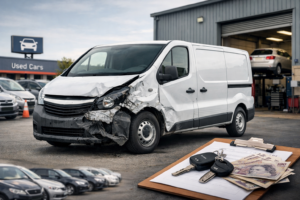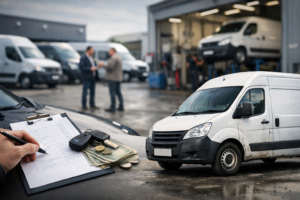

You can get a higher van valuation — often meaningfully higher — without spending hundreds on repairs. The biggest wins come from documentation, presentation, and honest disclosure. Do those three things well, and you give buyers every reason to offer top price.
What you’ll need before you start
This guide is beginner-friendly. You don’t need mechanical knowledge or a big budget. Before you work through the steps, gather the following:
- Your van’s V5C (logbook)
- Any service history documents, MOT certificates, or receipts
- A bucket, car shampoo, microfibre cloths, and a vacuum
- Tyre pressure gauge (or a local garage willing to check)
- About two to three hours of your time
That’s genuinely it. Everything below works with what you already have.
The 7 steps to a better van valuation
Gather every document you own
Paperwork is money. A full service history — even a partial one — signals to any buyer or valuation platform that the van has been looked after. Dig out your V5C, MOT certificates going back as far as you have them, any dealer or garage service stamps, and receipts for parts or repairs.
Organise them chronologically in a folder or envelope. It sounds obvious, but a tidy paper trail communicates care and reliability before anyone even looks at the van itself.
If you’ve lost some service stamps but used the same garage for years, call them. Many garages keep records and will print a summary of work carried out — it costs nothing to ask.
Be honest about known issues
This might feel counterintuitive, but disclosing known faults upfront almost always works in your favour. Buyers and valuation tools factor in uncertainty. When you’re transparent about a minor issue — a scuff on the rear bumper, a warning light that comes on occasionally — you remove that uncertainty, and the offer reflects reality rather than a worst-case assumption.
Hiding problems doesn’t make them disappear. It just means they surface during inspection, erode trust, and often result in a lower revised offer than if you’d mentioned it from the start.
Deliberately concealing a known mechanical fault from a private buyer can have legal consequences under the Consumer Rights Act 2015. With trade buyers, transparency protects your reputation and keeps the sale moving.
Clean the van properly — inside and out
Presentation affects perception, and perception affects offers. A clean van signals a cared-for van, even if the two aren’t always the same thing. Wash the exterior thoroughly, including the roof, wheel arches, and underneath the door sills. Clean the windows inside and out.
Inside, vacuum every surface, wipe down the dashboard and door cards, and remove all personal items and rubbish. If the van has a ply-lined load area, sweep it out and wipe it down. Lingering smells — cigarette smoke, damp, food — are red flags for buyers and can drag an offer down noticeably.
A small tub of dashboard polish and a fabric freshener cost under a fiver and can make the interior feel significantly more premium. Don’t underestimate first impressions.
Check and correct the basics
You don’t need to spend money on repairs to improve van value before selling — but fixing the genuinely simple stuff is worth it. Check tyre pressures and inflate to the manufacturer’s recommended level (usually found on a sticker inside the driver’s door or in the handbook). Check all lights are working: headlights, brake lights, indicators, reversing lights.
Top up screenwash, engine oil, and coolant if they’re low. These take minutes and cost very little. An MOT tester or buyer who spots a bald tyre or a blown brake light will immediately wonder what else has been neglected.
You don’t need to fix expensive mechanical issues to improve your valuation. Focus on the things that cost under £20 and take under an hour. Leave the big-ticket repairs to the buyer — they’ll factor it into their offer either way, and you’re unlikely to recoup the cost.
Get an accurate mileage and spec check
Know your van inside out before anyone asks. Confirm the exact mileage. Check what trim level it is, what engine size, what payload rating, and what optional extras were fitted (tow bar, roof rack, air conditioning, reversing camera). These details matter when a buyer or valuation tool is calculating an offer.
If you’re not sure of the spec, the V5C and your van’s VIN number can help you cross-reference the manufacturer’s original build sheet. Some manufacturers offer this free online.
Extras like a tow bar, roof rack, or manufacturer-fitted shelving can genuinely add value — but only if you mention them. Don’t assume the buyer will notice.
Get a valuation before you commit to anything
Before you accept any offer or list the van anywhere, get a proper valuation so you know what “good” looks like. If you want to get a fast, no-obligation figure for your van, you can do that online in minutes — it gives you a baseline to measure any offer against.
Getting a valuation first puts you in a stronger position. You’re not guessing, and you’re not accepting the first number that comes along out of uncertainty. Knowing your van’s market value is how you avoid leaving money on the table.
Time your sale sensibly
Van demand shifts with the seasons and the economy. Tradespeople buying vans tend to be most active in spring and early autumn, when work picks up. Selling in a slow period — deep winter or August, when many businesses are quieter — can mean fewer competing buyers and slightly softer offers.
You don’t always get to choose your timing, and the difference isn’t dramatic. But if you have flexibility, it’s worth factoring in. Listing when demand is higher means more buyers competing for your van, which supports a stronger offer.
Troubleshooting: common mistakes that cost you money
Even with the best intentions, sellers regularly make avoidable errors. Here’s what to watch for.
Overpricing based on sentiment. Your van might have served you brilliantly for five years, but buyers don’t pay for your attachment to it. Use real market data — not just what similar vans are listed for online, which often includes aspirational prices that never actually sell.
Skipping the clean because “it’s just a work van.” Buyers know work vans get used hard. That’s not the issue. A dirty van suggests neglect. A clean van — even a high-mileage one — suggests care. The clean is worth doing every time.
Waiting for the “perfect” offer indefinitely. Vans depreciate. Every month you wait is a month of depreciation, insurance, and tax. If you’ve done the steps above and received a fair offer, the cost of holding out is real.
Not having the V5C ready. No V5C, no quick sale. If yours is missing, apply for a replacement from the DVLA before you start marketing the van. It takes a couple of weeks and costs £25.
Frequently Asked Questions
Does fixing mechanical problems always increase van value?
No — and this is one of the most common misconceptions. Expensive repairs rarely return their full cost in a higher offer. A buyer or trade purchaser will factor in known faults, but they’ll also factor in the cost of fixing them at trade rates, which are often lower than retail. Focus on presentation, documentation, and the low-cost basics instead.
How much does a full service history add to a van's value?
There’s no universal figure, but a full service history consistently produces stronger offers than a partial or missing one — particularly on higher-mileage vans where buyers want evidence of maintenance. Even a partial history is better than none.
Should I sell privately or to a trade buyer?
Private sales can achieve higher headline prices, but they take longer, involve more admin, and carry more risk. Trade buyers — including specialist van buying services — offer speed, certainty, and no tyre-kickers. For most sellers, the time and hassle saved by a trade sale is worth more than the marginal price difference.
Does mileage matter more than age?
Both matter, and they interact. A five-year-old van with 60,000 miles will typically attract a stronger offer than the same van with 150,000 miles. But a well-documented, well-maintained high-mileage van often outperforms a low-mileage van with no service history. Evidence of care matters as much as the numbers themselves.
What's the fastest way to improve van value before selling?
Clean it thoroughly, gather your paperwork, and get a valuation so you know your baseline. Those three steps cost almost nothing and make a measurable difference to the offers you receive.
- Documentation — service history, MOT certificates, receipts — is one of the highest-return things you can prepare
- Honest disclosure of known issues builds trust and usually results in better, more stable offers
- A thorough clean signals care and reliability without spending money on repairs
- Fix the cheap, visible basics (tyres, lights, fluid levels) — skip expensive mechanical work you’re unlikely to recoup
- Get a valuation before you accept anything, so you know what a fair offer looks like