
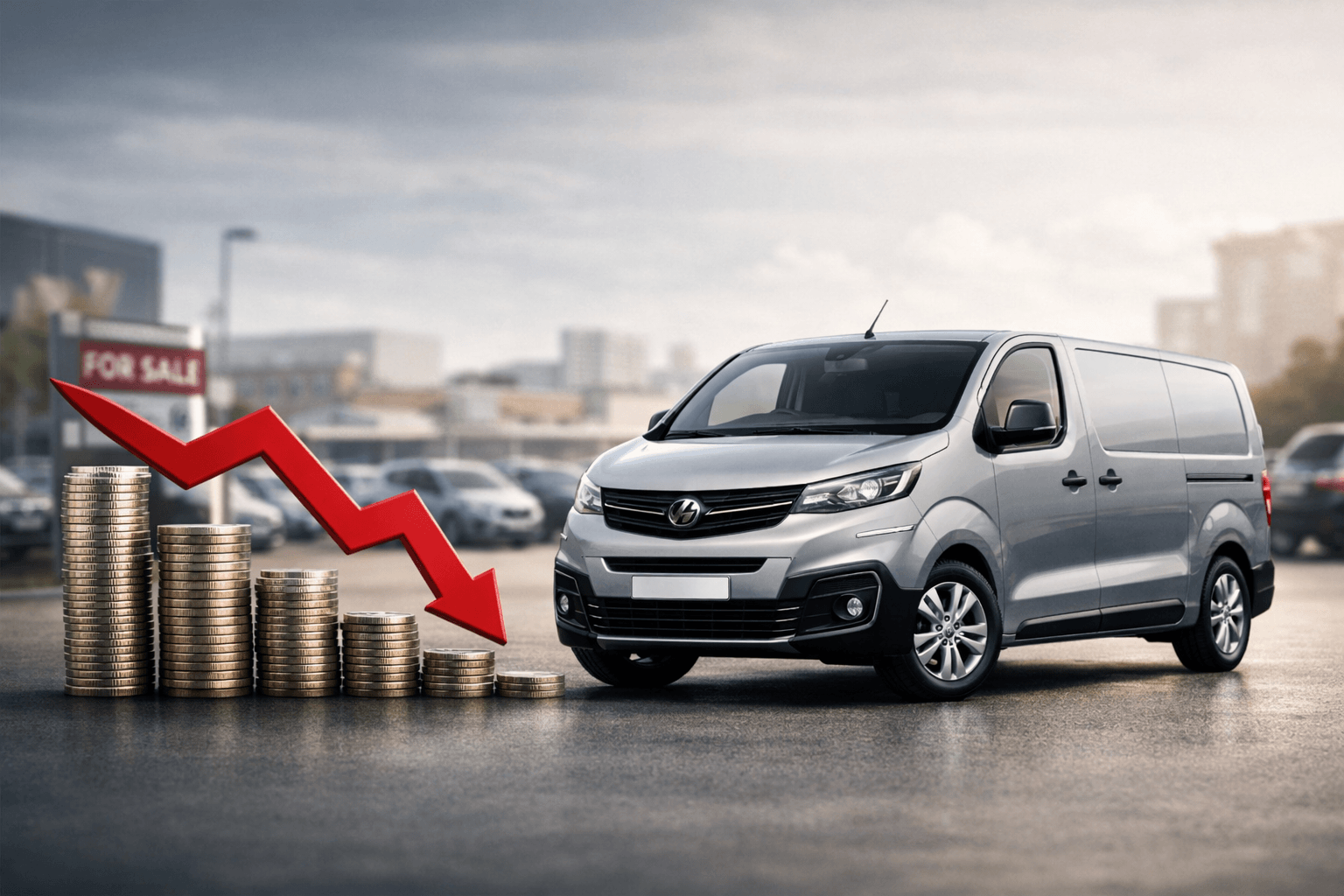
A Vauxhall Vivaro loses roughly 50–60% of its value in the first three years. After five years, some models retain less than a third of their original price. If you own one — or plan to — that number should change how you think about when to sell.
Timing your exit wrong costs you thousands. Timing it right puts that money back in your pocket.
What Is Vauxhall Vivaro Depreciation?
Depreciation is the gap between what you paid and what someone will pay you today. It is not a fee, a fine, or a punishment. It is simply the market’s verdict on how much your van is worth right now versus the day you drove it away.
Think of it like a mobile phone. The moment a newer model launches, your old handset drops in value — not because it stopped working, but because something fresher exists. Vans work the same way. Every new Vivaro that rolls off the production line nudges the used ones down a rung.
The Technical Definition of Van Depreciation
Depreciation is the reduction in an asset’s monetary value over time, measured as a percentage of its original purchase price. For commercial vehicles, it is typically expressed as value retained — the percentage of the original price a van holds after one, three, or five years.
A van that cost £28,000 new and sells for £16,800 after three years has retained 60% of its value. It has depreciated by 40%, or £11,200 in cash terms. Both figures matter: the percentage tells you how the van compares to others; the pound figure tells you what it actually cost you to own it.
How Vauxhall Vivaro Depreciation Works Year by Year
Depreciation does not fall in a straight line. It front-loads. The steepest drop hits in year one, slows through years two and three, then levels off — much like water draining from a bath. Fast at first, then a trickle.
Here is how the typical Vivaro depreciation curve looks across the van’s life:
-
Year 1: The sharpest drop. Expect to lose 20–25% of the purchase price the moment the van becomes “used”. A £30,000 Vivaro can shed £6,000–£7,500 in twelve months even with low mileage.
-
Years 2–3: The slide continues but slows. Cumulative depreciation typically reaches 45–55% by the end of year three. This is where most fleet operators sell, which is why the three-year-old Vivaro market is competitive.
-
Years 4–5: Value loss moderates significantly. The van is now priced for a different buyer — often a small trader who wants reliability at a lower entry point. Vivaro value drop by year five typically sits at 60–70% of original cost.
-
Years 6–10: Depreciation slows to a crawl. The floor has largely been reached. What drives price now is condition and mileage, not age alone.
These figures assume average mileage of around 15,000–20,000 miles per year and a well-maintained vehicle. High mileage or poor service history accelerates the curve dramatically.
Several factors govern how fast does a Vivaro depreciate in any individual case:
- Engine type. The 1.5-litre diesel tends to depreciate faster than the 2.0-litre in the used market, where buyers associate the larger engine with better durability for heavy work.
- Trim and body length. Sportive trim and L2H1 (medium wheelbase, low roof) configurations hold value better — they suit the widest range of buyers.
- Mileage. Every 10,000 miles above the average for the van’s age chips another percentage point off resale value.
- Service history. A full Vauxhall service history is worth real money at sale time. Buyers pay a premium for it. Sellers without it pay the price.
- Market timing. Demand for used vans peaks in spring and autumn. Selling in January or August typically yields less.
Real-World Depreciation Examples
Example 1: The Three-Year Fleet Van
A business buys a new Vivaro 2.0 CDTi L2H1 Sportive for £32,000 in 2021. By 2024, with 60,000 miles on the clock and a full service record, it sells for approximately £17,000–£19,000. That is a retention rate of roughly 53–59%. The business lost around £13,000–£15,000 to depreciation over three years — or approximately £360–£415 per month.
Example 2: The High-Mileage Sole Trader
A sole trader buys the same van but covers 30,000 miles a year. By year three, 90,000 miles are on the clock. The trade-in value drops to around £11,000–£13,000. Mileage alone has cost an extra £5,000–£7,000 in depreciation versus the fleet example. The Vivaro trade-in value is not just about age — it is about the total story the odometer tells.
Example 3: The Older, Well-Kept Van
A 2017 Vivaro 1.6 CDTi in good condition with 85,000 miles sells today for roughly £7,000–£9,000, against an original price of around £24,000. That is a retention rate of 29–37% after seven years. The depreciation curve has flattened — but the bulk of the loss happened in years one through four.
If you are weighing up whether to sell now or hold on, the Vauxhall Vivaro trade-in and private sale options available today can give you a real-world benchmark for what your specific van is worth in the current market.
Common Misconceptions About Vivaro Depreciation
Misconception 1: “Diesel vans hold their value better than petrol”
In the light commercial vehicle market, this used to be straightforwardly true. It is now more complicated. Uncertainty around future diesel regulations — particularly in urban clean air zones — has introduced a discount on older diesel vans in some markets. A 2019 Euro 6 diesel Vivaro is largely unaffected. A pre-2016 Euro 5 model faces a steeper depreciation penalty in city-heavy resale markets.
Misconception 2: “Keeping the van longer means less total depreciation”
The total pound loss does increase over time, but the rate of loss slows. The expensive years are years one through three. Holding a van from year five to year eight costs you relatively little in depreciation — but increases maintenance costs. Vivaro resale value over time does not simply keep falling at the same rate; it plateaus. The decision to hold or sell should weigh depreciation against repair costs, not depreciation alone.
Misconception 3: “A new Vivaro depreciates less than a used one”
The opposite is true. Buying a two-year-old Vivaro means the previous owner absorbed the steepest part of the depreciation curve. You buy at a lower price and lose value more slowly going forward. For buyers, this is one of the most powerful arguments for buying used. For sellers of new vans, it is a reminder that the first two years are the most expensive to own.
Why Vauxhall Vivaro Depreciation Matters to You
If you own a Vivaro, depreciation is a running cost — as real as fuel or insurance, just less visible. Most van owners track fuel spend to the penny. Few track what their van is worth month by month. That is a mistake.
Calculate your monthly depreciation cost the same way you calculate fuel. Take the expected resale value in three years, subtract it from today’s price, and divide by 36. That figure belongs in your cost-of-ownership calculation.
Knowing how fast does a Vivaro depreciate also tells you the optimal time to sell. The evidence points to years three to four as the sweet spot for most owners. By then, the steepest depreciation has already happened. But the van is still recent enough to attract buyers who want a reliable workhorse without the risk of an older, higher-mileage vehicle.
Sell too early — in year one or two — and you crystallise a large loss. Sell too late — after year six — and you may have extracted good working life, but the van’s condition and mileage will push you toward trade-in prices rather than private sale values.
Vivaro trade-in value drops sharply once a van crosses 100,000 miles, regardless of age. If your van is approaching that threshold, sell before it gets there.
Summary
- A Vauxhall Vivaro typically loses 20–25% of its value in year one, reaching 50–60% depreciation by year three.
- The steepest depreciation happens in the first three years; the curve flattens significantly after year five.
- Engine type, trim, mileage, service history, and market timing all affect how much value a Vivaro retains.
- Years three to four represent the optimal sell window for most owners — past the steepest drop, still attractive to buyers.
- Crossing 100,000 miles is a significant value threshold; selling before that point typically yields a meaningfully better price.
Frequently Asked Questions
How much does a Vauxhall Vivaro depreciate per year?
In year one, a Vivaro typically loses 20–25% of its purchase price. In years two and three, the annual rate slows to roughly 10–15% per year. After year five, annual depreciation is often less than 5–8% of the original value. The exact figure depends on mileage, trim, engine, and condition.
What is the best age to buy a used Vivaro to avoid depreciation?
A two- to three-year-old Vivaro offers the best balance. The first owner has absorbed the steepest value drop. You buy at a significantly reduced price and lose value at a much slower rate from that point forward.
Does a Vivaro hold its value better than rival vans?
The Vivaro sits in the middle of the pack for the medium van segment. It broadly matches the Ford Transit Custom and Volkswagen Transporter on depreciation curves, though the Transporter tends to hold slightly better in the premium used market. The Vivaro’s strength is its wide buyer base, which supports demand in the used market.
How does mileage affect Vivaro trade-in value?
Every 10,000 miles above the annual average for the van’s age reduces trade-in value. The 100,000-mile mark is a psychological and practical threshold for many buyers. Crossing it can reduce trade-in offers by £1,000–£3,000 depending on the age of the van.
Is it worth keeping a Vivaro beyond five years?
It can be, if the van is in good condition and maintenance costs are manageable. Depreciation has largely run its course by year five. But repair costs tend to rise, and the pool of buyers willing to pay a strong price narrows. Running a five-year-old Vivaro is a cost decision more than a depreciation decision.