
For years, van engines were seen as purely functional—built for torque, reliability, and long days on the job. Speed wasn’t part of the conversation. But as van customisation grew, a new subculture emerged: tuners who looked at small diesel and petrol van engines and thought, “We can get more out of that.” What followed was a quiet revolution. Suddenly, vans weren’t just workhorses. They were sleepers. Quick, responsive, and surprisingly fun to drive.
The first wave of tuning came from simple remaps. Factory ECUs are conservative by design, prioritising emissions, fuel economy, and longevity. Tuners realised that by adjusting boost pressure, fuelling, and timing, they could unlock hidden performance without touching the hardware. A good remap could add 20–40% more power to a small van engine. Builders loved it. The van felt sharper, pulled harder, and became genuinely enjoyable on the road.
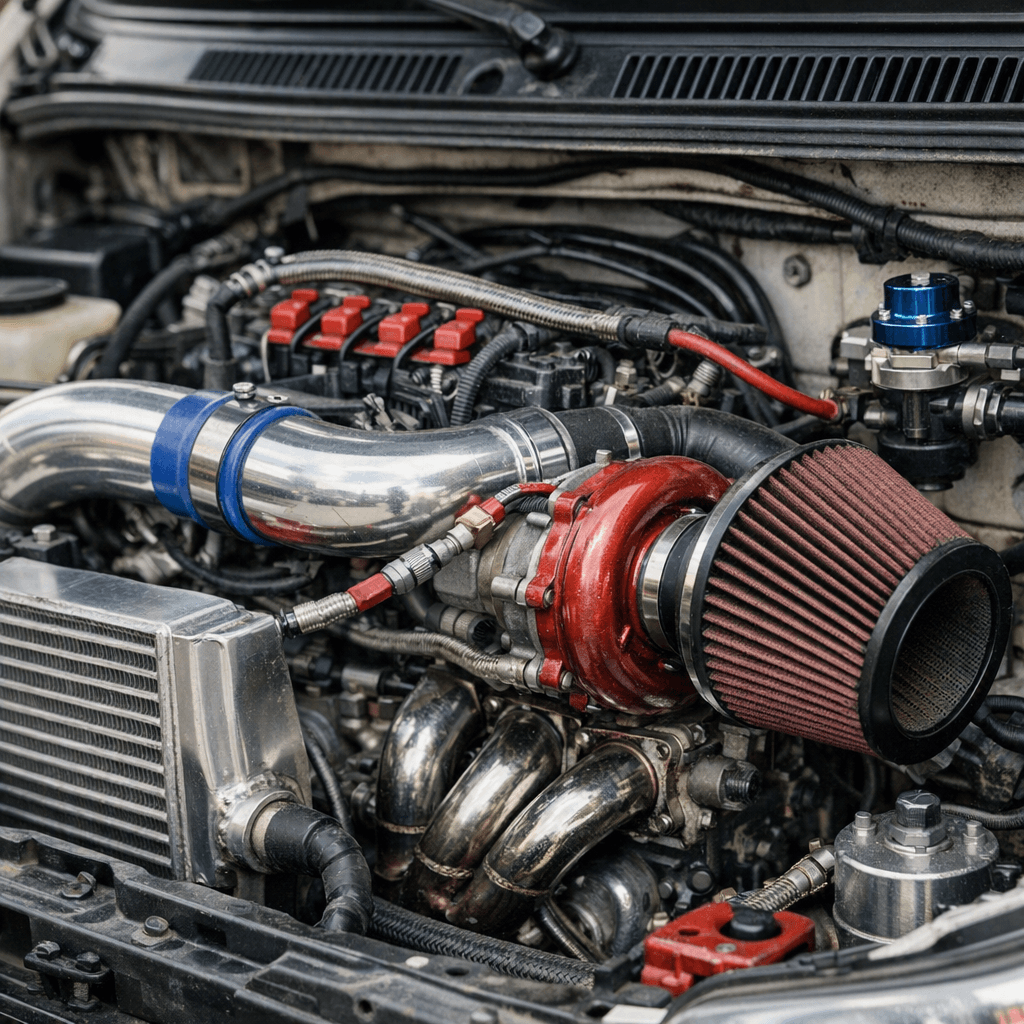
But remaps were just the beginning. As the scene grew, tuners started experimenting with hardware upgrades. One of the most popular mods was the turbo upgrade. Many small vans use modest turbos designed for efficiency rather than excitement. Swapping to a larger or more responsive turbo transformed the driving experience. Boost came earlier, power delivery became smoother, and the van gained a new personality. It wasn’t about racing—it was about making the van feel alive.
Exhaust systems also played a huge role. Factory exhausts are restrictive, designed to keep noise down and emissions in check. Tuners replaced them with freer‑flowing systems that improved airflow and reduced back pressure. The result was better throttle response, a slight bump in power, and a deeper, more purposeful sound. Some builders went further, adding custom downpipes or straight‑through systems for maximum flow. The difference was dramatic.
Air intake upgrades followed. Small van engines often suffer from limited airflow, especially under load. High‑flow filters, larger intake pipes, and improved airboxes helped engines breathe more freely. Combined with remaps and exhaust mods, these upgrades created a balanced setup that delivered reliable gains without compromising everyday usability.
Then came the more serious builds. Some tuners began experimenting with intercooler upgrades, improving cooling efficiency and allowing the engine to run higher boost safely. Others installed uprated injectors, fuel pumps, and clutches to handle the extra power. A few even swapped entire engines, fitting performance units from cars into vans. These builds blurred the line between practicality and performance, creating machines that surprised anyone who underestimated them.
Suspension and braking upgrades became essential. More power meant the van needed better control. Tuners installed stiffer springs, uprated shocks, and thicker anti‑roll bars to keep the van stable under acceleration. Big‑brake kits, larger discs, stronger calipers, and performance pads ensured the van could stop as well as it could go. The result was a driving experience that felt tight, responsive, and confidence‑inspiring.
What made this tuning movement special was the sleeper factor. Most tuned vans looked completely stock. No loud paint. No big spoilers. Just ordinary work vans with extraordinary performance. Builders loved the reactions—overtaking confidently on a B‑road, pulling away smoothly from roundabouts, or surprising car drivers who didn’t expect a van to move like that. It became part of the culture: subtle performance, hidden capability.
The tuning scene also fostered a strong community. Builders shared dyno results, tuning maps, hardware combinations, and troubleshooting tips. Forums and social groups became hubs of experimentation. People compared setups, debated turbo choices, and celebrated each other’s gains. It wasn’t competitive—it was collaborative. Everyone wanted to push the platform further.
Today, tuned vans are a respected part of Britain’s mod culture. They prove that performance isn’t limited to sports cars or hot hatches. With the right mods, even a small van engine can deliver excitement, character, and surprising power. It’s a reminder that customisation isn’t just about looks, it’s about unlocking potential. And tuners have shown that vans have far more potential than anyone expected.