Selling a van after an accident in the UK is entirely possible — and often more straightforward than you’d expect. Whether your van has been repaired, written off, or sits somewhere in between, you have legal options. The key is knowing what to disclose, what your van is actually worth, and which route gets you the best result.
What Does “Selling a Van After an Accident” Actually Mean?
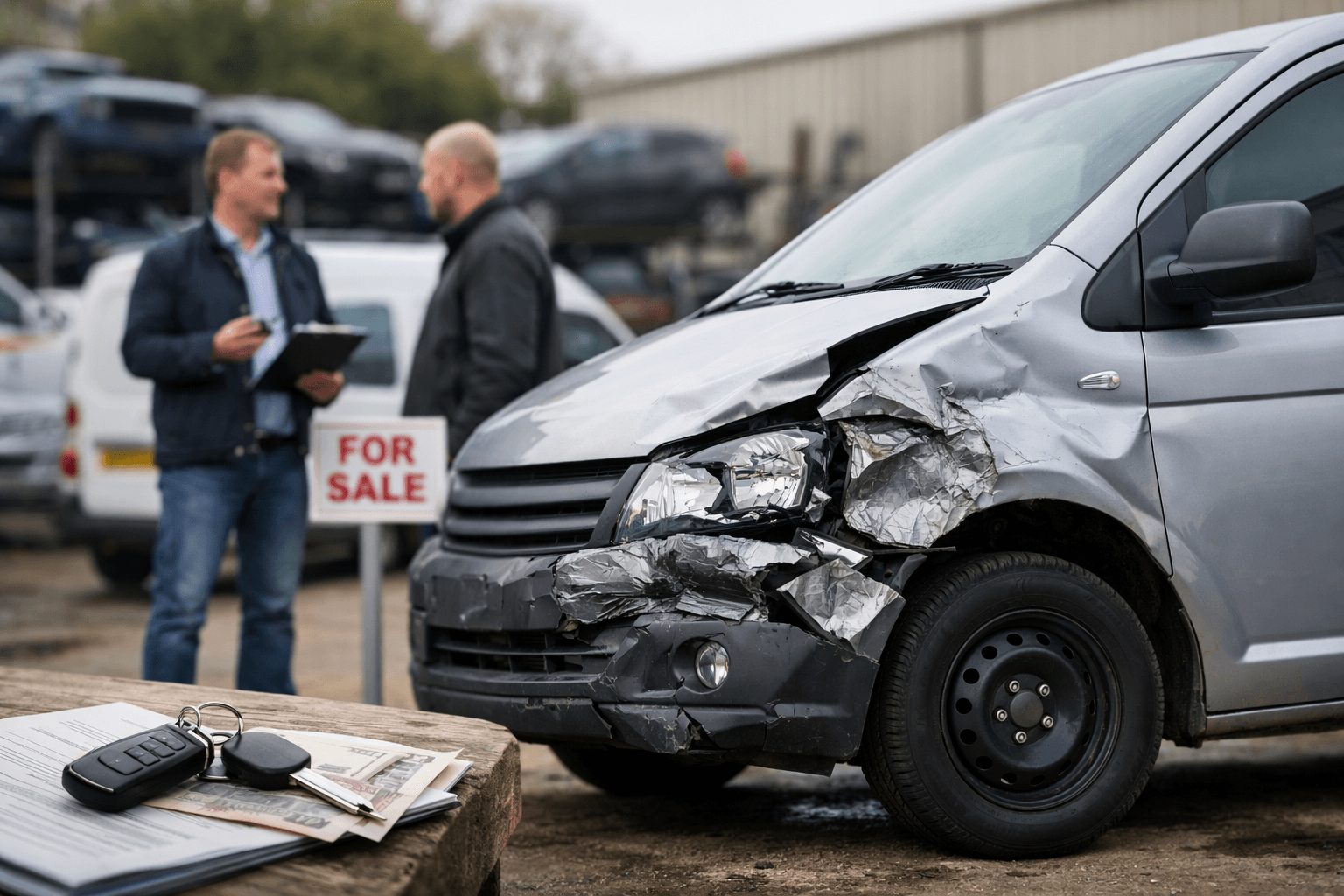
It sounds obvious, but “accident-damaged van” covers a surprisingly wide spectrum. At one end, you’ve got a scuffed bumper from a car park nudge. At the other, a van that’s been written off by an insurer and categorised under the UK’s official salvage system. Most sellers fall somewhere in the middle — and that middle ground is exactly where the confusion (and the missed opportunities) tend to live.
Understanding where your van sits on that spectrum determines everything: your legal obligations, your realistic asking price, and who will actually buy from you.
Technical Definition: Accident Categories and What They Mean
The UK uses a four-tier salvage category system, managed by insurers and recorded on the HPI database — a vehicle history check that any serious buyer will run before handing over money.
Here’s how the categories break down:
- Category A — Write to scrap. The van must be crushed. No parts can be reused. Full stop.
- Category B — Body shell must be destroyed, but salvageable parts can be stripped and resold.
- Category S (formerly Cat C) — Structurally damaged but repairable. The van can legally return to the road once repaired and re-inspected.
- Category N (formerly Cat D) — No structural damage, but non-structural parts (electrics, trim, bumpers) were damaged. Also repairable and road-legal.
Category S and N vans that have been properly repaired are roadworthy and insurable — but the category marker stays on their HPI record permanently. That’s the detail most sellers don’t realise until a buyer flags it.
How It Works: The Practical Process of Selling an Accident-Damaged Van
Find out your van’s category status
Before you do anything else, run an HPI check on your van’s registration. This tells you whether your insurer has logged a write-off category against it. You might be surprised — sometimes insurers record a category even when the van has been fully repaired and returned to you.
Get a realistic valuation
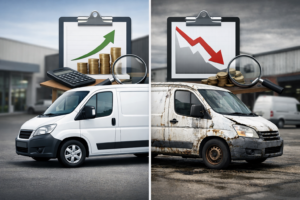
An accident marker — even a Category N — reduces a van’s market value. By how much depends on the van’s age, mileage, make, and the severity of the original damage. There’s no universal formula, but expect a meaningful reduction compared to a clean-history equivalent. Think of it like a house with a damp history: even after the damp is fixed, buyers want a discount for the uncertainty.
Decide on your selling route
You have three main options:
- Private sale — Potentially higher return, but you must declare the accident history fully and in writing. Failure to do so is misrepresentation.
- Auction — Faster, but damaged vehicles often sell well below their real value at general auctions.
- Specialist van buyers — Companies that buy vans in any condition, including category S van sales in the UK, often provide the most reliable and transparent offers for vehicles with accident history.
Declare the accident history — properly
This is not optional. When you sell a van with insurance write-off history, you are legally required to disclose it to any buyer. This applies whether you’re selling privately, through a dealer, or to a trade buyer. Hiding it isn’t just unethical — it can void the sale and expose you to legal liability.
If you sell a van and fail to declare accident history that appears on an HPI check, the buyer has grounds to unwind the sale and potentially pursue you for damages. Always declare in writing, and keep a copy.
Complete the sale and notify the DVLA
Once sold, complete the V5C logbook transfer and notify the DVLA. If your van was a Category A or B write-off, it cannot be re-registered — but for Category S and N vehicles that have been repaired, the standard transfer process applies.
Real-World Examples
Example 1: The repaired Category S van
A plumber’s Transit is rear-ended on the motorway. The insurer declares it Category S — structural damage to the rear chassis. The plumber pays for professional repairs, gets the van re-inspected, and continues using it for two years. When he comes to sell, the HPI check still shows the Category S marker. A private buyer pulls out. He contacts a specialist buyer who offers a fair price that accounts for the history — and the sale completes within a week.
Example 2: The Category N with cosmetic damage
A florist’s van takes a side-swipe in a supermarket car park. The insurer logs it as Category N — no structural damage, just a buckled door and broken wing mirror. Both are repaired. When selling, the florist discloses the history upfront, prices the van accordingly, and finds a private buyer who’s happy with the deal because the repair is verifiable and the price reflects it.
Example 3: The undisclosed accident — a cautionary tale
A seller doesn’t mention that his van was in a collision three years ago. The buyer runs an HPI check after purchase, discovers the accident marker, and contacts a solicitor. The seller ends up refunding the purchase price and covering legal costs. Transparency isn’t just the right thing — it’s the financially sensible thing.
Common Misconceptions About Selling an Accident-Damaged Van
Misconception 1: “If it’s been repaired, I don’t need to declare it.”
Wrong. The HPI record is permanent. Even a perfectly repaired van with a Category S or N marker will show its history to any buyer who checks — and most do. Failing to declare it when you know about it is misrepresentation.
Misconception 2: “A write-off means the van is worthless.”
Not true. Category N and Category S vans — especially well-repaired ones — still have real market value. Specialist buyers who regularly handle a category S van sale in the UK understand this and price accordingly. The van isn’t worthless; it’s just worth less than a clean-history equivalent.
Misconception 3: “I can only sell to a scrapyard.”
Absolutely not. Unless your van is Category A or B, it can be sold through normal channels. If you want to sell your van quickly and get a fair price for it, specialist buyers are often the most practical route — they deal with accident history regularly and won’t waste your time with lowball offers based on a misunderstanding of the category system.
Why This Matters: The Real Cost of Getting It Wrong
Getting this wrong costs you in one of two ways. Either you undersell — panicking at the accident marker and accepting far less than the van is actually worth. Or you oversell — failing to declare the history, completing a sale that later unravels, and ending up worse off than if you’d been transparent from the start.
The middle path is knowing your obligations, knowing your van’s real value, and choosing a buyer who understands what they’re looking at. That’s not complicated. It just requires a bit of homework upfront.
When you need to declare accident history when selling a van, the rule is simple: if you know about it, you must disclose it. In writing. Before money changes hands.
Frequently Asked Questions
Do I have to tell a buyer my van was in an accident?
Yes. If you’re aware of accident history — especially if it’s been recorded by an insurer — you must disclose it to any buyer before the sale. This applies to private sales, trade sales, and auction sales. Failure to disclose is misrepresentation and can result in the sale being reversed.
Can I sell a Category S van in the UK?
Yes, you can sell a Category S van in the UK provided it has been properly repaired and is roadworthy. The category marker will remain on the HPI record, and you must disclose it, but the van can legally be sold and re-registered.
Will I get a fair price for a van with accident history?
You’ll get less than a clean-history equivalent, but “less” doesn’t mean “almost nothing.” A well-repaired Category N van might sell for 10–20% less than a comparable clean van. A Category S with verified repairs will see a larger reduction, but specialist buyers will still make a realistic offer based on the van’s actual condition.
What's the difference between Category S and Category N?
Category S means the van suffered structural damage — the chassis, frame, or crumple zones were affected. Category N means no structural damage occurred; only non-structural components like panels, trim, or electrics were involved. Both can be repaired and resold legally.
How do I find out if my van has an accident marker?
Run an HPI check using your van’s registration number. This pulls data from insurer records and will show any category markers, outstanding finance, mileage discrepancies, and other history. It costs a small fee but is essential before selling — or buying.
Summary
- Accident-damaged vans fall into four UK categories (A, B, S, N) — only A and B are unsellable as vehicles
- Category S and N markers are permanent on HPI records, even after full repair — buyers will see them
- You are legally required to declare accident history when selling a van; not doing so is misrepresentation
- Specialist van buyers are often the best route for selling a van with insurance write-off history, offering fair prices without the uncertainty of private sales
- Knowing your van’s category and getting a realistic valuation upfront puts you in control — and protects you legally