Body kits have always been part of car culture, but vans took a little longer to join the party. For decades, vans were treated purely as tools: square boxes designed to haul gear, not turn heads. But as customisation culture grew, and as vans became lifestyle vehicles rather than just work machines, body kits transformed the way people saw them. Today, a well‑designed kit can completely change a van’s personality, turning a plain panel van into something sharp, aggressive, and unmistakably modern.
The early days of van body kits were rough. Most were adapted from car designs, and they didn’t always fit well. Builders had to cut, reshape, and improvise. But the demand was there. People wanted their vans to stand out. They wanted something that looked less like a delivery vehicle and more like a statement. As the scene grew, specialist companies emerged, designing kits specifically for vans like the Transit Custom, Transporter, Vivaro, and Ducato.
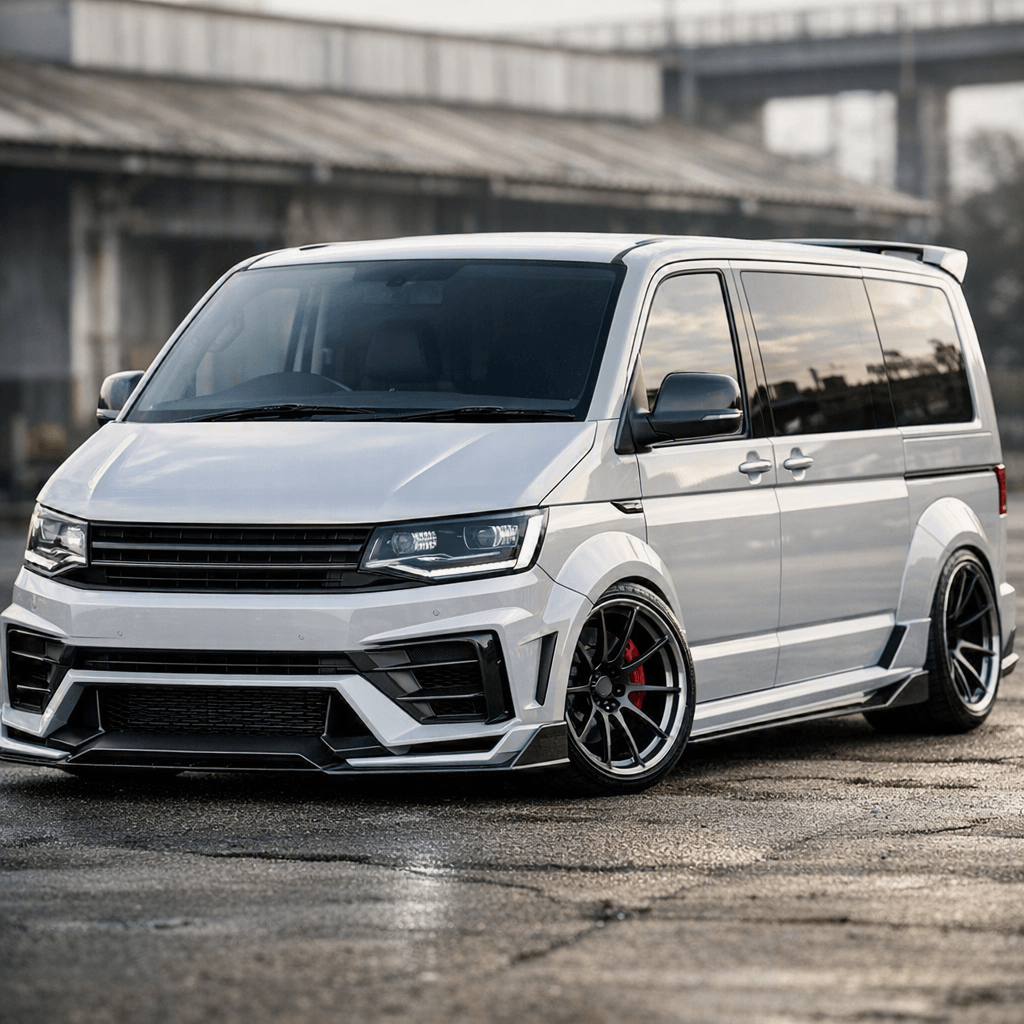
Modern body kits do more than add visual flair. They reshape the van’s entire stance. A front splitter can make a van look lower and wider. Side skirts smooth out the profile. Rear diffusers add a sporty finish. Even subtle additions—like a lip spoiler or arch extensions—can make a huge difference. The best kits don’t shout; they refine. They take the van’s natural lines and sharpen them.
One of the biggest shifts came when manufacturers realised what was happening. Ford, VW, and Mercedes started offering sport trims straight from the factory. These weren’t full custom kits, but they acknowledged the trend. Suddenly, vans weren’t just tools—they were lifestyle products. People wanted them to look good on the driveway, not just at the job site.
The aftermarket scene exploded. Companies like MS-RT, ABT, and Carlex began producing high‑end kits that blended motorsport styling with everyday usability. These kits weren’t cheap, but they were engineered properly. They fit perfectly, used quality materials, and came with aerodynamic testing behind them. A van fitted with one of these kits doesn’t just look better—it feels more planted on the road.
Of course, the DIY scene never went away. Plenty of builders still prefer to craft their own look. Fibreglass moulding, custom bumpers, handmade spoilers—some of the most creative designs come from garages, not factories. These builds often push boundaries, mixing influences from Japanese tuner culture, American muscle vans, and European motorsport. The results can be wild, but they’re always unique.
Body kits also changed the social side of van culture. Meets and shows became places to compare builds, swap ideas, and show off new designs. A van with a striking kit draws attention instantly. It becomes a conversation starter. Builders take pride in the details: the fitment, the paint match, the stance. It’s not just about looking good—it’s about craftsmanship.
There’s also a practical side. Some kits improve airflow, reduce drag, or help cooling. Others protect the van from scrapes or add mounting points for accessories. But let’s be honest: most people choose a body kit because it transforms the van’s identity. It makes it feel personal. It makes it feel like theirs.
Today, body kits are a core part of van mod culture. They’re no longer niche—they’re mainstream. Whether subtle or extreme, they show how far the scene has come. Vans are no longer just boxes on wheels. They’re canvases. And body kits are one of the tools that let builders turn those canvases into something bold, sharp, and unmistakably theirs.