You’ve spent good money fitting out your Transit Custom. Now you want to sell it — and you’re wondering whether that racking, ply lining or specialist conversion is an asset or a liability. The answer is: it depends on who you sell to and how you position it. This guide tells you exactly how to sell a Ford Transit Custom with a conversion fitted, what it does to your valuation, and how to avoid leaving money on the table.
- Aftermarket racking and ply lining rarely add pound-for-pound value on the open market, but they can accelerate a sale to the right buyer
- Specialist conversions — refrigerated, welfare, Luton-style — can significantly affect valuation in either direction depending on condition and buyer type
- Trade buyers and specialist van dealers are more likely to purchase the van with the fit-out in place than private buyers
- Removing racking before sale is not always the right move — it can expose damage underneath and reduce appeal to trade buyers
- Getting a converted Ford Transit Custom valuation from a specialist, not a general car buyer, is critical to an accurate price
Does a Conversion Add Value When You Sell?
Honest answer: sometimes, but rarely as much as you spent fitting it.
A standard aftermarket racking system — the kind a plumber or electrician installs — costs anywhere from £400 to over £2,000 fitted. When you come to sell, a private buyer may not want it. A trade buyer may value it at scrap metal prices. The conversion adds value only when the next owner needs exactly what you have.
That is the key insight most sellers miss. Value is not intrinsic to the fit-out. Value is created when your conversion matches the next buyer’s requirement precisely.
Before you strip anything out, ask yourself who is most likely to buy this van. A refrigerated Transit Custom sold to a food delivery company is worth considerably more with the refrigeration unit intact than without it.
How Racking Affects Your Ford Transit Custom’s Sale Value
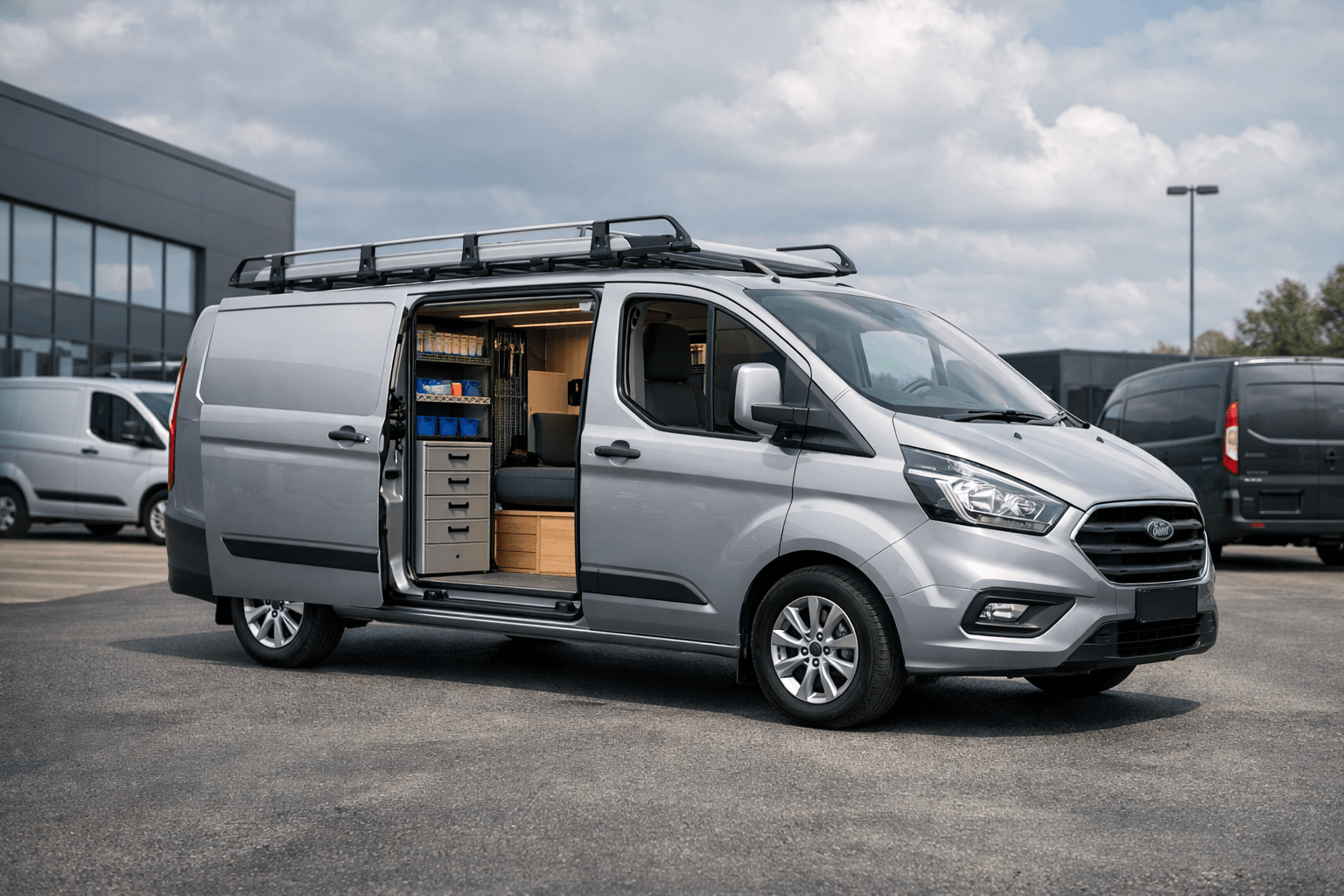
Racking — the shelving and storage systems bolted into the load area — is the most common conversion sellers ask about. Here is what actually happens to your valuation.
When racking helps your sale price
- The buyer is a tradesperson who needs exactly that configuration
- The racking is from a recognised brand (Sortimo, Bott, Van Vault systems) and is in good condition
- The van is being sold trade-to-trade, where speed and ready-to-work appeal matters
- You can demonstrate the racking is professionally fitted and structurally sound
When racking hurts your sale price
- The buyer is a private individual who wants a clean load bay
- The racking is bespoke, heavily worn, or poorly fitted
- Removal would reveal rust, bolt holes or floor damage underneath
- The configuration is too specific — a shelf system built for a window fitter is useless to a courier
The honest truth about ford transit custom racking and sale value: most racking systems return between 10% and 40% of their original cost when the van is sold. The exception is high-quality, universally useful systems in excellent condition sold directly to a trade buyer.
Do not remove racking without inspecting the floor and walls first. Bolted-through conversions frequently hide rust or stress damage. Revealing this mid-negotiation destroys your position. Know what is underneath before a buyer sees it.
Ply Lining — Does It Help or Hinder a Sale?
Ply lining — panels of plywood fixed to the interior walls and floor to protect against load damage — is one of the most common Transit Custom modifications. Unlike racking, it tends to be viewed neutrally to positively by most buyers.
A clean, well-fitted ply lining suggests the van has been looked after. It protects the original bodywork. It makes the load area look professional. Trade buyers, in particular, expect it.
Worn, damaged or badly fitted ply lining is a different matter. It signals neglect. It raises the question of what is behind it. If your ply lining is in poor condition, consider whether replacing it before sale would be cost-effective — a basic re-line can cost as little as £150 to £300 and can meaningfully improve buyer confidence.
Specialist Conversions — The High-Stakes Category
This is where converted Ford Transit Custom valuation gets genuinely complex.
Specialist conversions include refrigerated units, welfare/welfare-spec conversions, minibus adaptations, tail lifts, high-roof conversions and crew cab modifications. These are not commodity fit-outs. They are purpose-built for specific industries.
The upside: A buyer in the right sector will pay a premium. A refrigerated Transit Custom in good working order commands significantly more from a food or pharmaceutical logistics company than a bare panel van would from the same buyer.
The downside: Your pool of buyers shrinks dramatically. You are no longer selling a van. You are selling a specialist vehicle. That means longer time on market, more targeted marketing, and a price that is harder to benchmark.
For sellers who want a fast, certain sale on a converted Ford Transit Custom, a specialist van buyer who purchases modified vehicles is almost always a better route than a general car buying platform or a private sale.
Should You Remove the Conversion Before Selling?
This question gets asked constantly. The answer is not automatic.
Remove the conversion if:
- The fit-out is so specific that it will deter the majority of buyers
- The racking or conversion is in poor condition and will reduce perceived value
- You know the floor and walls beneath are in excellent condition
- You have a buyer lined up who specifically wants a bare van
Keep the conversion in place if:
- It is in good condition and broadly useful
- You are selling to a trade buyer or specialist dealer
- Removal would expose damage or void any remaining warranty on panels
- The conversion significantly increases the van’s appeal to a defined buyer group
If you are selling to a specialist van buying service, tell them about the conversion upfront and in detail. Brand, condition, configuration, fitting date. A vague description leads to a conservative offer. Specifics lead to an accurate one.
How to Get an Accurate Valuation for a Modified Transit Custom
Standard valuation tools — trade guides, general online car buying platforms — are built for standard vehicles. They do not account for specialist conversions. They will either ignore the fit-out entirely or apply a blanket discount for “modified.”
When selling modified Ford Transit Custom vehicles, the right approach is:
- Use a specialist van buyer, not a general car buying platform. Van specialists understand what conversions are worth to the trade.
- Document the conversion fully. Invoice for the fit-out, fitting date, brand, specification. This is evidence, not just background.
- Get multiple valuations. One offer is not a market. Two or three gives you a real picture.
- Be honest about condition. A buyer who discovers undisclosed damage during inspection will reduce their offer on the spot. Transparency protects your negotiating position.
- Factor in mileage and service history separately. A well-documented service history adds value regardless of the conversion. Do not let the conversion conversation crowd out the fundamentals.
What Buyers Actually Look for in a Converted Transit Custom
Understanding the buyer’s perspective is the fastest way to improve your sale outcome.
Trade buyers — the most likely purchasers of a converted Transit Custom — are looking at three things: does it work, is it reliable, and can I put it to work immediately? A conversion that answers all three positively is an asset. One that raises doubts on any of those points is a liability.
Private buyers are rarer for converted vans. When they do appear, they are often looking to use the van for a specific purpose — a camper conversion buyer, for instance, or a market trader. Know your buyer type before you price.
Frequently Asked Questions
Does racking fitted to a Ford Transit Custom increase its resale value?
Not reliably. Racking returns a fraction of its installation cost at resale in most cases. The exception is high-quality, well-maintained racking sold directly to a trade buyer who needs that exact configuration. To a private buyer, racking is often a neutral or negative factor.
Will a van buying service purchase my Transit Custom with the conversion still fitted?
Most specialist van buying services will, yes. They are set up to assess and purchase modified vehicles. General car buying platforms are less likely to handle conversions confidently, which often results in lowball offers or outright refusals. Use a specialist.
How does a refrigerated conversion affect my Transit Custom's value?
A working refrigerated unit in good condition can significantly increase the van’s value to buyers in food, pharmaceutical or logistics sectors. However, it reduces your buyer pool. If the refrigeration unit is faulty or end-of-life, it can actually reduce the van’s value compared to a bare panel van.
Should I declare the conversion when getting a valuation?
Always. Withholding information about a conversion — especially a structural or mechanical one — can invalidate a sale or lead to a revised offer after inspection. Declare everything upfront. It protects you legally and commercially.
Does ply lining a Transit Custom affect its value?
In most cases, ply lining has a neutral to slightly positive effect on value when it is clean and well-fitted. It demonstrates the van has been protected. Damaged or poorly fitted ply lining can have the opposite effect, signalling neglect rather than care.
How do I find a buyer for a highly specialised Transit Custom conversion?
Start with specialist van dealers and trade buyers in your sector. Industry-specific classified platforms (refrigerated vehicle dealers, welfare van specialists) will reach a more targeted audience than general van listing sites. A specialist van buying service can also provide a fast, certain offer without the need to find an end buyer yourself.
If you have a converted Transit Custom and want a straight answer on what it is worth — conversion and all — the fastest route is a specialist valuation from a buyer who actually understands modified vans. No guesswork. No generic trade guide. A real number, based on what your specific van, in its current configuration, is actually worth in the current market.