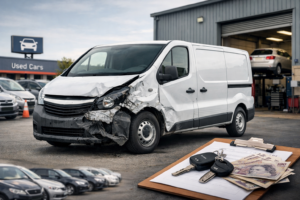
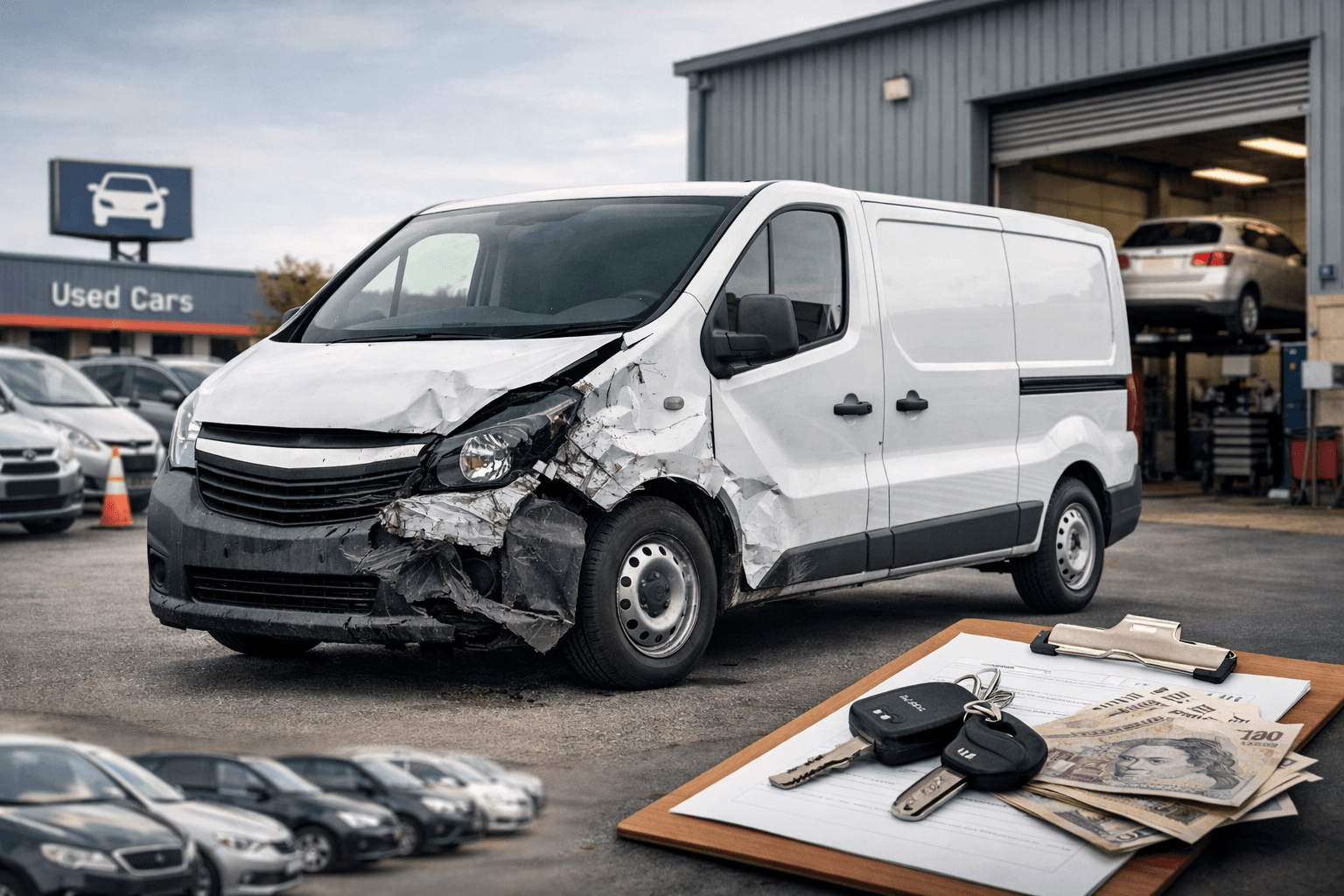
You have a damaged Vauxhall Vivaro sitting on your drive. It’s costing you insurance, space, and sleep. The good news: you can sell a damaged Vauxhall Vivaro in the UK today — often for more than you expect — if you know which route to take and what your van is actually worth in its current condition.
- The right buyer and the right price depend on the type of damage — Cat S, Cat N, cosmetic, or non-runner each attract different markets
- Private buyers rarely want damaged vans; specialist buyers do, and they move fast
- Realistic offers range from a few hundred pounds for a non-runner to several thousand for a lightly damaged, running Vivaro
- Declaring the damage correctly protects you legally and avoids a sale falling through later
- You do not need to repair anything before selling — the right buyer prices the van as-is
What “damaged” actually means — and why the category changes everything
Not all damage is equal. Buyers know this. So should you.
The UK uses a four-category system for written-off vehicles. Category S (structurally damaged but repairable) means the chassis or body frame has been bent or crushed. The van can be repaired and returned to the road, but it requires specialist work. Category N (non-structural damage) covers everything from airbag deployment to electrical failure — no frame damage, but the insurer still wrote it off as uneconomical to fix.
Below write-off level, you have cosmetic damage: dents, scrapes, cracked panels, faded paintwork. The van runs fine; it just looks rough. And then there are non-runners: vans that have seized engines, blown head gaskets, or fire damage so severe they will never move under their own power again.
Each category attracts a different buyer. Each commands a different price. Treating them all the same is where sellers leave money on the table.
How much is a damaged Vauxhall Vivaro actually worth?
The honest answer depends on four things: the damage category, the age and mileage of the van, whether it still runs, and what the undamaged trade value would have been.
Here is a realistic guide for each scenario:
Cat S Vivaro: Expect 30–50% of the undamaged trade value. A 2019 Vivaro with a clean trade value of £12,000 might fetch £4,000–£6,000 with Cat S damage, depending on severity and repairability.
Cat N Vivaro: Slightly better than Cat S — typically 40–60% of trade value — because there is no structural concern. Buyers are often traders who can fix the electrical or mechanical fault cheaply.
Cosmetic damage only: You are in strong territory. Light cosmetic damage may knock just 10–20% off the trade value. A clean, running Vivaro with a few dents is still a working van.
Non-runner Vivaro: This is where expectations need resetting. A non-running van is worth its parts and scrap metal value. Depending on age and completeness, that could be £300 to £1,500. A newer model with salvageable parts commands more.
Get the undamaged trade value from a reputable guide before you approach any buyer. It gives you a reference point and stops lowball offers landing without context.
Where to sell — and which route suits your situation
Selling to a specialist damaged van buyer
This is the fastest route and, for most damaged Vivaro owners, the most practical. Specialist buyers — including companies that operate across the UK — buy Cat S, Cat N, cosmetic damage, and non-runners every week. They know the Vivaro platform well. They price quickly and collect from your location.
The trade-off: you will not get retail money. You will get a fair trade price, in cash or bank transfer, without the hassle of viewings, tyre-kickers, or a sale falling through at the last minute.
If you want to understand what a specialist buyer would offer for your specific van before committing, the Vauxhall Vivaro sale page is a direct starting point — fill in the details and get a real number.
Selling at auction
Damaged vehicle auctions exist specifically for trade buyers. BCA and Manheim both run salvage and damaged vehicle sales regularly. You will reach a wide pool of buyers, but auction fees eat into your return — typically 5–10% of the hammer price — and there is no guaranteed sale.
Auctions suit sellers who have time, can transport the van to the auction site, and are comfortable with a variable outcome.
Selling privately
Possible, but difficult. Private buyers are nervous about damaged vehicles. They worry about hidden problems, insurance complications, and resale value. You will spend time answering questions, arranging viewings, and dealing with people who make offers then disappear.
For a Cat S or Cat N van, you are also legally required to disclose the write-off category. Fail to do so and the buyer can pursue you for misrepresentation. The private route rewards patience and transparency — but it rarely rewards speed.
Never sell a Cat S or Cat N Vivaro without disclosing the write-off marker. It follows the vehicle on the DVLA and HPI records. Any buyer who checks — and serious buyers always do — will find it. Hiding it is not just bad practice; it is legally actionable.
Scrapping the van
If the Vivaro is a complete non-runner with serious structural or fire damage, scrapping through an Authorised Treatment Facility (ATF) is the legally correct route. You receive a Certificate of Destruction, and the DVLA is notified — your liability ends there.
Scrap prices fluctuate with metal markets, but for a typical Vivaro you are looking at weight-based pricing: somewhere in the range of £150–£400 for scrap metal alone. Parts value, if the van is stripped before scrapping, can be significantly higher.
Accident damaged Vivaro: what to do before you sell
You do not need to repair the van. But you do need to be organised. Here is what to have ready:
- V5C logbook — buyers need this to transfer ownership
- MOT history — shows the van’s condition before the incident
- Service records — add credibility and support your asking price
- Insurance write-off letter — confirms the category if the van has been written off
- Any repair estimates — useful for Cat S and Cat N sales, as buyers factor repair costs into their offer
If you have already claimed on insurance and the insurer has retained the van, you may need to buy it back before selling privately or to a specialist. Check your policy — some insurers sell salvage directly through their own auctions.
Selling a non-runner Vivaro: realistic expectations
A non-running Vivaro is not worthless. It is worth less — and the gap matters.
Traders and mechanics buy non-runners specifically to repair and resell, or to strip for parts. The Vivaro shares its platform with the Renault Trafic and Nissan NV300, which means its parts have wide demand. A 2.0 BiTurbo engine from a 2019 Vivaro, even seized, has salvage value to the right buyer.
Be honest about what the van does and does not do. Does it turn over but not start? Does it not turn over at all? Is there visible fire or flood damage? The more specific you are, the more seriously a buyer will take your enquiry — and the faster you will get an offer.
Selling a non-runner Vivaro as an accident damaged Vivaro for sale to a specialist is often faster than scrapping it. Get both quotes before you decide.
Frequently Asked Questions
Can I sell a Cat S or Cat N Vivaro without repairing it first?
Yes. Specialist buyers and salvage auctions buy Cat S and Cat N vehicles in their current condition every day. You are not required to repair the van before selling it. The buyer prices in the cost of repair — that is their business model. What you must do is disclose the category clearly.
Does a write-off marker permanently reduce the Vivaro's value?
Yes, permanently. Once a vehicle is registered as Cat S or Cat N on the HPI database, that marker stays with the vehicle registration number for life. Even after professional repair, the van will always be worth less than an identical, unmarked example. Buyers factor this in, which is why specialist buyers can still offer a fair price — they know the market for repaired salvage.
How quickly can I sell a damaged Vivaro in the UK?
A specialist damaged van buyer can typically make an offer within 24 hours and collect within 48–72 hours. Auction takes longer — you need to book a sale slot, transport the van, and wait for the auction date. Private sale timescales are unpredictable, often weeks or months for a damaged vehicle.
Do I need to tell the DVLA I am selling a written-off van?
The standard V5C transfer process applies. You complete the relevant section of the V5C when the van changes hands, and the buyer registers the change of keeper. If the van is being scrapped, you need a Certificate of Destruction from an Authorised Treatment Facility — that triggers the DVLA notification automatically.
What is the difference between scrapping and selling as salvage?
Scrapping means the van is crushed and recycled as raw metal — you get scrap weight price and a Certificate of Destruction. Selling as salvage means the van goes to a buyer who intends to repair it, strip it for parts, or resell it. Salvage almost always returns more money than scrap, unless the van is genuinely beyond any useful purpose.
Will a buyer collect a non-runner Vivaro from my location?
Most specialist buyers and salvage dealers offer collection, including for non-runners. Confirm this before agreeing a price — some buyers charge a recovery fee for non-running vehicles, which should be factored into your net return.
If your Vivaro has been in an accident, written off, or simply stopped running, the worst move is to let it sit depreciating further. Get a clear picture of its damage category, gather your paperwork, and approach the right type of buyer for your situation. A damaged van buyer in the UK can give you a firm offer today — no obligation, no pressure. Start there.