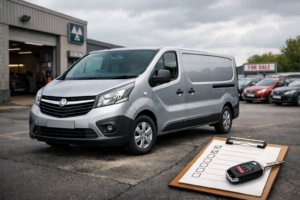
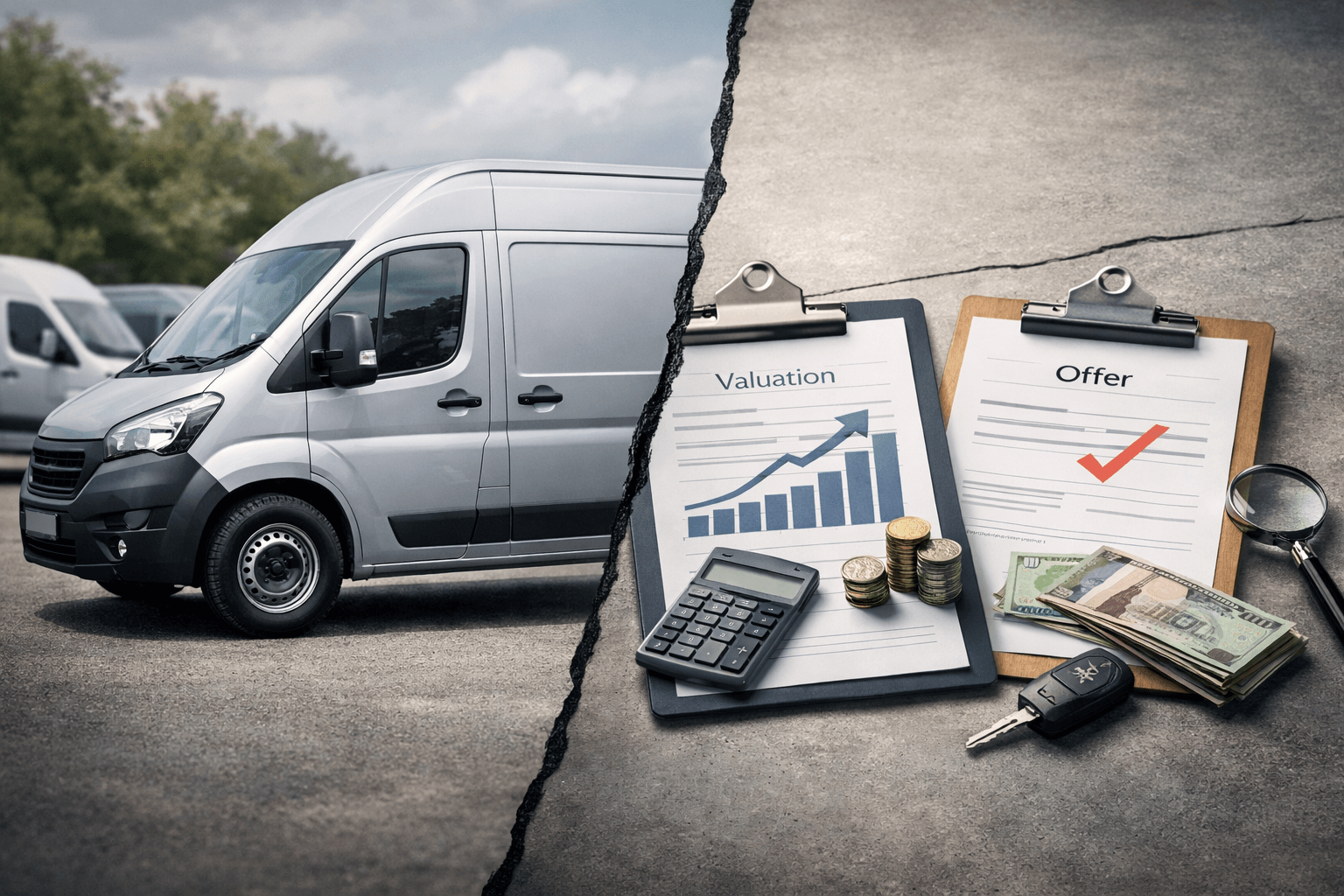
A van valuation gives you an estimated price based on publicly available information. A final offer is what a buyer actually pays after physically inspecting your van. The two numbers can differ — sometimes significantly — and understanding why is the difference between feeling cheated and feeling informed.
That gap is what this guide is here to explain.
What Is Van Valuation vs Final Offer: Why They Sometimes Differ?
A van valuation is an educated estimate. Think of it like a weather forecast: it’s built on solid data and genuine expertise, but it’s made before anyone has seen the actual conditions on the ground. The final offer is the real temperature outside your door.
When you request an online valuation, the tool uses factors like your van’s make, model, age, mileage, and current market demand to generate a price range. It’s working from what you’ve told it. The final offer comes after a physical inspection — when a buyer can see what the valuation tool couldn’t.
Most of the time, these two figures are close. But when they diverge, sellers understandably feel confused or frustrated. The good news: there’s almost always a logical, legitimate reason for the difference.
Technical Definition
Van valuation refers to an algorithmically or expert-generated estimate of a vehicle’s market value, calculated using declared data points — registration number, mileage, service history, and self-reported condition.
Final offer (also called the actual payment or confirmed price) is the binding figure a buyer presents after a physical or video inspection of the vehicle. This is the number that appears on your paperwork.
A van valuation discrepancy — the gap between these two figures — arises when the physical reality of the vehicle differs from the data used to generate the initial estimate. It is not a bait-and-switch. It is a recalibration based on new information.
How It Works
You submit your van’s details
You enter your registration, mileage, and a self-assessed condition rating into an online valuation tool. The tool cross-references live market data, recent auction results, and demand signals for that specific van type. It returns a valuation range or a headline figure.
This figure is genuine — it reflects what a van in the condition you’ve described would realistically fetch. The key phrase there is in the condition you’ve described.
A buyer reviews or inspects the van
Once you accept a provisional offer and book an inspection, a trained assessor looks at the van in person (or via a detailed video call). They check things no online form can capture: the depth of bodywork scratches, whether warning lights are active, the true condition of the tyres, signs of previous accident damage, or undisclosed mechanical issues.
The offer is confirmed or revised
If the van matches its description, the offer is confirmed as-is. If the inspection reveals condition issues that weren’t declared — or that you genuinely didn’t know about — the buyer adjusts the offer to reflect the van’s actual market value.
A revised offer isn’t a penalty. It’s the buyer recalculating what they can realistically resell or auction the van for, given its true condition.
Real-World Examples
Example 1: The honest mileage mistake
David owns a 2019 Ford Transit and enters 60,000 miles into a valuation tool. He receives a strong offer. At inspection, the odometer reads 74,000 miles — David had simply misremembered. The buyer revises the offer downward, because higher mileage affects resale value. No deception, just a data correction.
Example 2: The undisclosed dent
Sarah’s Vauxhall Movano has a dent on the rear panel she’s lived with so long she barely notices it. She rates her van’s condition as “good.” The inspector spots the dent immediately. Panel repairs cost money, and that cost gets factored into the revised offer. Sarah’s van quote vs actual payment differs by a few hundred pounds — not because anyone misled her, but because the valuation was based on a “good” condition van, and this one needs bodywork.
Example 3: The market timing shift
James accepts a provisional valuation in January and books his inspection for March. In the intervening weeks, a surge in used van supply pushes prices down across the board. The buyer’s final offer reflects current market conditions, not January’s. This is less common, but it does happen — especially in volatile markets.
Common Misconceptions
“A lower final offer means the company is trying to rip me off”
This is the most widespread misunderstanding, and it’s worth addressing head-on. Reputable buyers aren’t in the business of luring you in with a high number and then grinding you down at the last minute. That approach destroys trust and reputation. When a van offer changed after inspection, it’s almost always because the inspection revealed something the valuation couldn’t account for.
The analogy here is a house survey. You agree an asking price, then the surveyor finds a damp problem. The buyer revises their offer. That’s not a scam — that’s due diligence.
“My valuation was guaranteed”
Online valuations are estimates, not contracts. The language matters: a valuation is what your van could be worth; a confirmed offer is what a buyer will pay. If a company uses the word “guaranteed” in its marketing, read the small print carefully — that guarantee almost always applies to vans that match their described condition.
“Condition ratings are obvious — everyone would rate their van the same way”
They really wouldn’t. “Good condition” means different things to different people. To one seller, good means “it drives fine.” To a buyer, good means “no significant bodywork damage, no mechanical issues, full service history.” These definitions don’t always overlap, which is exactly why inspections exist.
Before submitting a valuation, walk around your van with fresh eyes — or ask a friend to do it. Note every scratch, dent, warning light, and missing service stamp. The more accurate your self-assessment, the closer your valuation will be to your final offer.
Why It Matters
Understanding the difference between a valuation and a final offer puts you in control of the process. When you get an accurate online van valuation with realistic condition details, you dramatically reduce the chance of a surprise at inspection. The gap between estimate and payment shrinks when the data going in is honest and precise.
It also helps you ask the right questions. If a buyer revises their offer, you’re entitled to a clear explanation of why. A reliable, premium buyer will walk you through every adjustment — what they found, what it costs to fix, and how that affects resale. If a buyer can’t explain the revision clearly, that’s a red flag worth acting on.
Finally, knowing this process exists helps you prepare. Fix the small things before inspection if the repair cost is less than the likely price reduction. Gather your service history. Be honest about mileage. These aren’t just good habits — they’re the fastest route to getting the offer you expected.
Summary
- A van valuation is an estimate based on declared data; a final offer is confirmed after physical inspection of the actual vehicle.
- A van valuation discrepancy is almost always caused by condition differences, undisclosed issues, or mileage inaccuracies — not bad faith.
- The more accurately you describe your van upfront, the closer your valuation will be to your final payment.
- If a van offer changed after inspection, ask for a clear, itemised explanation — a trustworthy buyer will provide one without hesitation.
- Small pre-inspection repairs can close the gap between your van quote and actual payment, as long as the repair cost is less than the likely price adjustment.
Frequently Asked Questions
Can a buyer legally change the offer after inspection?
Yes. A valuation is not a legally binding contract — it’s a conditional estimate. The final offer becomes binding only when both parties sign an agreement. Until that point, either party can walk away.
What should I do if I think the revised offer is unfair?
Ask for a written breakdown of every adjustment and the reasoning behind it. If you’re not satisfied, you’re under no obligation to accept. Get a second opinion from another buyer and compare.
How long is a van valuation valid for?
Most online valuations are valid for a defined window — commonly seven to fourteen days. After that, market conditions may have shifted and the figure is recalculated. Always check the terms when you receive your valuation.
Does a full service history really affect the final offer?
Yes, meaningfully. A complete service history gives buyers confidence in the van’s maintenance record, which reduces their perceived risk. Vans with full history consistently achieve stronger final offers than identical vans without it.
Is there anything I can do to prevent the offer from changing?
Be as accurate as possible when submitting your details. Photograph any damage before the inspection so there are no surprises. Fix minor issues where it makes financial sense. And choose a buyer with a transparent, explained inspection process — that way, even if an adjustment happens, you’ll understand exactly why.