Van Paint Jobs have always been one of the most expressive parts of van customisation. It’s the first thing people see, the first thing that sets a build apart, and often the detail that defines a van’s personality. Over the last 30 years, Britain has seen some unforgettable paint jobs—murals, fades, candy coats, matte finishes, and designs so bold they turned ordinary vans into cultural landmarks. These paint jobs didn’t just decorate vans; they shaped the identity of the mod scene itself.
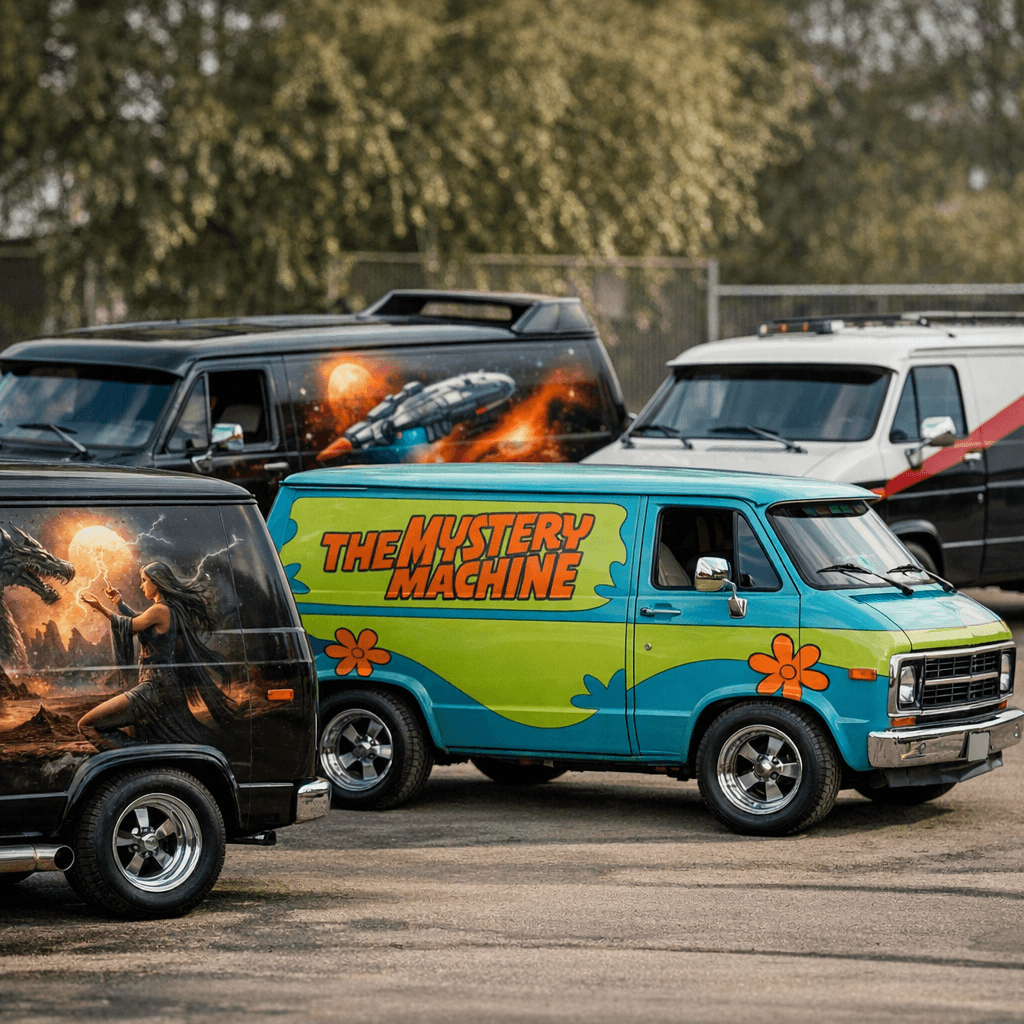
In the early 90s, custom van paint was loud. Builders embraced bright colours, heavy metallics, and airbrushed artwork inspired by rock albums, sci‑fi films, and fantasy art. Vans became rolling posters. Dragons, wolves, cosmic scenes, and surreal landscapes covered entire panels. It was unapologetic creativity, and it set the tone for a decade where vans were meant to stand out, not blend in.
As the 2000s arrived, the style shifted. Paint became cleaner, sharper, and more technical. Candy coats and multi‑stage pearls became popular, giving vans deep, liquid finishes that changed colour in the sun. Builders experimented with fades—blue into silver, red into black, purple into bronze. These weren’t simple resprays; they were layered works of craftsmanship. A good candy coat could take days of prep and polishing, but the result was worth it. Vans looked alive.
Airbrushing didn’t disappear, it evolved. Artists began blending realism with abstract shapes, creating designs that felt modern rather than retro. Flames, tribal patterns, biomechanical textures, and ghost graphics became the new language. Ghost graphics were especially popular: subtle designs hidden under clear coat that only appeared under certain light. They gave vans a sense of mystery, a detail you had to discover rather than be hit over the head with.
By the 2010s, matte finishes arrived and changed everything. Matte black vans became a trend almost overnight. They looked stealthy, aggressive, and clean. Builders paired matte paint with gloss accents, creating contrast that made body lines pop. Satin finishes followed—less flat, more silky—and quickly became favorites for people who wanted something modern without going full matte. These finishes made vans look purposeful, almost military.
Then came the rise of wrap culture. Vinyl wraps opened the door to designs that paint alone couldn’t achieve. Chrome, brushed metal, carbon fiber, geometric patterns, and full printed artwork became accessible. Wraps allowed builders to experiment without committing to permanent paint. They also made it possible to refresh a van’s look every few years. Some of the most iconic designs of the last decade were wraps, not paint.
But traditional paintwork never lost its crown. The most iconic van paint jobs are still the ones done by hand—airbrushed murals, multi‑stage pearls, and custom blends mixed specifically for one build. These vans become legends at shows. People recognise them instantly. They become part of the culture’s visual memory.
One standout trend in recent years is colour‑themed builds. Instead of random colours, builders choose a palette and commit fully. A van might be entirely copper‑themed—paint, wheels, interior stitching, lighting. Another might go full ice‑blue, with matching accents inside and out. These builds feel cohesive, intentional, and artistic.
What makes iconic paint jobs truly special is the dedication behind them. A great paint job isn’t quick. It’s hours of sanding, priming, masking, spraying, and polishing. It’s craftsmanship. It’s patience. And it’s the willingness to take risks with colour and design.
Over the last 30 years, van paint culture has evolved from loud murals to fine artistry, from hand‑painted fantasy scenes to modern satin finishes. But the spirit hasn’t changed. Paint is still the soul of a custom van. It’s the first impression, the signature, the identity. And the most iconic paint jobs continue to inspire new builders to push the boundaries of what a van can look like. If you have a uniquely painted van , thats great will buy it, just enter your Registration number on this page