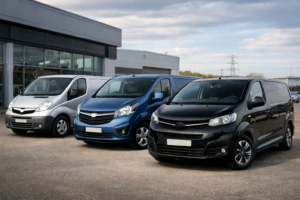
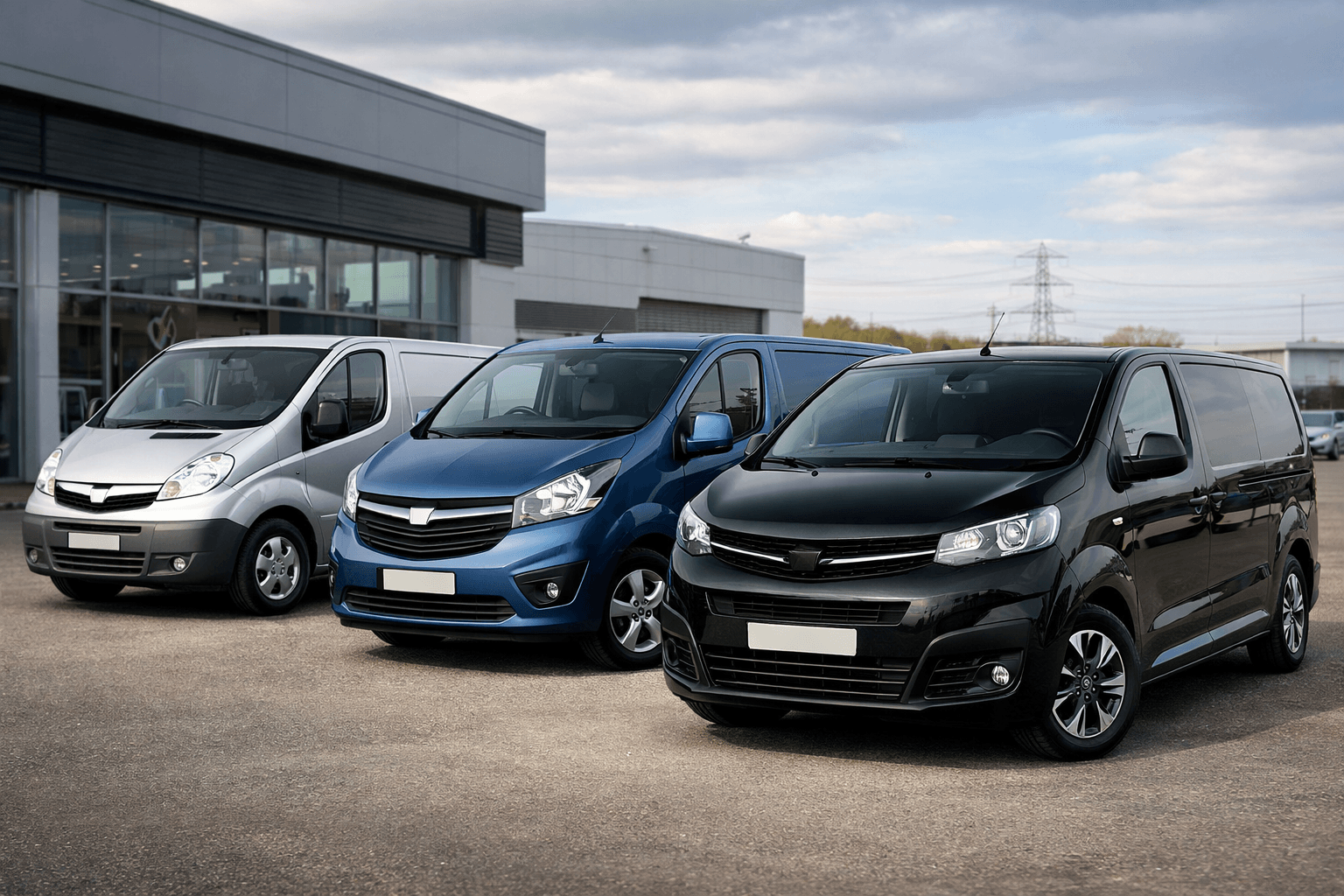
The Vauxhall Vivaro has run through three distinct generations since 2001. Each one is a different van — different platform, different engine family, different reliability profile. Buy the right generation and year, and you get a dependable workhorse at a fair price. Buy the wrong one, and you’re funding your mechanic’s holiday.
This guide tells you exactly which years to target and which to avoid.
A Brief History of the Vauxhall Vivaro
The Vivaro arrived in 2001 as a joint venture between Vauxhall/Opel and Renault. The two manufacturers shared development costs and a common platform — a sensible arrangement that produced a competitive mid-size panel van at a time when the Ford Transit Custom didn’t yet exist and the VW Transporter commanded a significant price premium.
That partnership shaped the van’s first fourteen years. Then ownership changed everything. PSA Group acquired Vauxhall in 2017, and by 2019 the Vivaro had switched to an entirely different platform — shared with the Peugeot Expert and Citroën Dispatch rather than the Renault Trafic.
Three generations. Three different engineering philosophies. Understanding the Vauxhall Vivaro generations by year is the single most useful thing you can do before you buy or sell one.
The Vivaro became one of the UK’s most popular mid-size vans, consistently appearing in fleet top-ten lists. Its combination of competitive pricing, reasonable payload and wide dealer network made it a natural choice for sole traders and large fleets alike.
What Does “Vauxhall Vivaro Generations by Year” Actually Mean?
In plain English: the van sold under the Vivaro name in 2005 and the one sold in 2022 share little more than a badge. The mechanical components, the platform underneath, the engine family and the electronics are fundamentally different across the three generations.
Think of it like buying a house on a street where every property looks similar from the outside but some have Victorian foundations, some have 1980s concrete and some are modern steel frame. The postcode is the same. The building is not.
Knowing which generation you’re dealing with — and which specific production year within that generation — determines your running costs, your likely repair bills and your resale value.
The Three Generations at a Glance
Mk1 (2001–2014): The Renault Alliance Era
The first-generation Vivaro shared its platform with the Renault Trafic and Nissan Primastar. Mechanically, the three vans were nearly identical beneath the skin.
Engine choices centred on Renault’s 1.9 dCi (producing 80hp or 100hp) and the later 2.0 dCi (90hp, 115hp or 140hp). Real-world fuel economy ranged from 34 to 42 mpg depending on load and driving style. These were tough, proven units — but not without their weaknesses.
Body styles covered panel van, combi (with side windows and rear seats), platform cab and window van. The range was comprehensive enough to serve most trades from day one.
A significant mid-life facelift arrived in 2006. The front end was restyled, the interior received a meaningful upgrade, and the 2.0 dCi engine began replacing the 1.9 unit across the range. If you’re buying a Mk1, the post-2006 models are the ones to target.
The Mk1’s known weak points are specific. Injector failures on high-mileage 1.9 dCi units are the most common and most expensive fault — replacement injectors are not cheap. EGR valve fouling is routine on any diesel of this era; budget for a clean or replacement at high mileage. Gearboxes on examples above 150,000 miles can become notchy and reluctant, particularly on the six-speed units.
Always ask for documented injector history on any Mk1 with more than 100,000 miles. A van with evidence of injector work already done is preferable to one where the history is unknown.
Payload on the Mk1 panel van ran to around 1,000–1,200 kg depending on specification — competitive for the era, though the Transit Custom later raised the bar.
Mk2 (2014–2019): Refined but Still Renault-Based
The second generation looked like a new van and felt like one inside. But underneath, it remained on an updated Renault Trafic platform. The relationship with Renault continued; the engineering was evolutionary rather than revolutionary.
The most significant change was the engine. The old dCi units gave way to a new 1.6-litre BiTurbo CDTi diesel available in 90hp, 120hp and 140hp states of tune. The twin-turbo setup delivered stronger mid-range performance and better fuel economy on paper — up to 47 mpg on the official cycle.
Interior quality improved noticeably. Infotainment options, improved seat comfort and better noise suppression made the Mk2 a more pleasant place to spend a working day. The longer L2 body option arrived, increasing load volume and making the Vivaro more competitive against the Transit Custom’s larger variants. Payload capacity crept up to around 1,200 kg on certain specifications.
Here is where buyers must pay close attention. Early Mk2 models — specifically those built before the 2016 facelift — suffered from timing chain issues on certain 1.6 BiTurbo units. A timing chain failure is a serious, expensive repair. The 2016 facelift brought revised front styling, updated infotainment and, crucially, addressed the timing chain specification on affected engines.
Avoid early Mk2 units from 2014–2015 unless you can verify the timing chain has been inspected or replaced. The cost of getting this wrong runs to thousands of pounds.
DPF (diesel particulate filter) problems are also reported on the Mk2, particularly on vans used predominantly for short urban journeys that don’t allow the filter to regenerate properly. Ask about DPF history and check for warning lights on the test drive.
The 2016 facelift models hold their residual values well. The Mk2 represents the sweet spot for many used buyers: modern enough to feel current, old enough to have depreciated, and the post-facelift examples have the worst reliability niggles behind them.
Trim levels to target: Sportive adds alloy wheels, body-coloured bumpers and improved specification without the premium of the top-spec Elite. The Edition is the sensible fleet workhorse. The Elite adds comfort features that matter if the van doubles as a passenger carrier.
Mk3 (2019–Present): The PSA Group Overhaul
This is a genuinely different van. When PSA Group completed its acquisition of Vauxhall, the Vivaro moved to the EMP2 platform shared with the Peugeot Expert and Citroën Dispatch. The Renault relationship ended.
Three body lengths replaced the previous two: S (L1 at 4,600mm), M (L2 at 4,959mm) and L (L3 at 5,309mm). Load volumes range from 5.1 cubic metres in the S to 6.6 cubic metres in the L. Payload ratings reach up to 1,400 kg on certain configurations — a meaningful step forward.
The engine range comprises a 1.5-litre BlueHDi (100hp or 130hp) and a 2.0-litre BlueHDi (180hp) diesel. The 2.0-litre suits heavier payloads and motorway-heavy routes; the 1.5 is the better choice for lighter urban work. Both are Euro 6 compliant, which matters for clean air zone access in cities including London, Birmingham and Leeds.
The Vivaro-e deserves serious consideration for the right buyer. The full-electric variant uses a 50 kWh or 75 kWh battery, delivering an official range of up to 205 miles on the larger pack. Charging at 100 kW DC brings the 75 kWh battery from 0–80% in around 45 minutes. For tradespeople with predictable routes, overnight charging facilities and access to workplace charging grants, the running cost case is compelling. For those covering unpredictable long distances, the diesel remains the more practical choice.
Cab configurations expanded to include crew van — seating for up to six — which the Mk3 handles better than either predecessor.
The interior is the biggest leap forward. An eight-inch touchscreen, smartphone connectivity, lane-keep assist, automatic emergency braking and a reversing camera come as standard or near-standard on most trim levels. Compared to the Mk1, it feels like a different category of vehicle.
Early Mk3 ownership reports flagged software niggles and minor build quality inconsistencies — not unusual for a first model year. Models from 2021 onwards show a cleaner reliability picture as production settled. In direct comparison with the Ford Transit Custom and Mercedes Vito in 2024, the Mk3 Vivaro competes strongly on load space and value; the Transit Custom edges it on residual values, and the Vito commands a premium for perceived quality.
If you’re considering selling your current van before upgrading, the team at We Buy Vans can value your Vauxhall Vivaro quickly online — useful for understanding exactly where your asset sits before you commit to a purchase.
Generation vs Generation: Head-to-Head Comparison
Numbers make the decision easier. Here is how the three generations stack up on the metrics that matter to buyers and fleet managers.
| Spec | Mk1 (2001–2014) | Mk2 (2014–2019) | Mk3 (2019–present) |
|---|---|---|---|
| Max load volume | ~5.2 m³ | ~5.2 m³ (L2) | 6.6 m³ (L3) |
| Max payload | ~1,200 kg | ~1,200 kg | ~1,400 kg |
| Engine options | 1.9/2.0 dCi | 1.6 BiTurbo CDTi | 1.5/2.0 BlueHDi |
| Official fuel economy | 34–42 mpg | 40–47 mpg | 40–50 mpg |
| Typical used price range | £3,000–£9,000 | £8,000–£18,000 | £16,000–£30,000+ |
| Euro standard | Euro 3/4/5 | Euro 5/6 | Euro 6 |
Which generation offers the best value for money right now? The post-2016 Mk2 hits the sweet spot for most buyers. It has depreciated significantly from new, it carries Euro 6 credentials on later examples, the worst reliability issues are documented and avoidable, and parts are widely available at competitive prices.
The Mk1 suits budget buyers who need a van for light use and can tolerate older technology. The Mk3 suits buyers who want a near-new van with full warranty coverage or who need the Vivaro-e’s electric capability.
Reliability ranking across generations: The Mk3 (post-2021) leads on reliability data. The post-2016 Mk2 comes second. The Mk1 post-facelift is third — not because it’s unreliable, but because age and mileage compound any mechanical weaknesses.
Running costs tell a similar story. Servicing intervals on the Mk1 are typically every 12 months or 12,500 miles. The Mk2 and Mk3 stretch to 25,000 miles between services on the variable service schedule — a meaningful saving for high-mileage operators. Parts for the Mk1 are cheap and widely available; the Mk2’s 1.6 BiTurbo components cost more; the Mk3’s PSA-platform parts are shared with Peugeot and Citroën, keeping prices competitive.
Which Year Vauxhall Vivaro Should You Buy?
Best Mk1 years: 2007–2013. Post-facelift models with the 2.0 dCi engine. Avoid the earliest 1.9 dCi units above 120,000 miles unless injector history is documented.
Best Mk2 years: 2016–2019. Post-facelift only. The timing chain vulnerability on pre-2016 units makes those years a risk that the price discount rarely justifies.
Best Mk3 years: 2021 onwards. The first model year (2019–2020) had software and build quality niggles that later production resolved.
For the budget buyer with under £7,000 to spend: a clean post-2007 Mk1 with documented service history and under 130,000 miles is a rational choice for light-duty work.
For the best-value sweet spot: a 2017–2019 Mk2 Sportive or Edition with full service history. Expect to pay £11,000–£16,000 for a good example. You get modern driving experience, Euro 6 compliance on later units, and the reliability niggles are known quantities.
For the premium nearly-new pick: a 2021–2023 Mk3 with remaining manufacturer warranty. The 2.0 BlueHDi suits heavier work; the 1.5 suits urban routes.
Electric vs diesel: The Vivaro-e makes financial sense when annual mileage is below 15,000 miles, overnight charging is available, routes are predictable and the business can access the Plug-in Van Grant. Above those thresholds, or with unpredictable long-distance requirements, the 2.0 BlueHDi diesel remains the more versatile tool.
Mileage thresholds to respect: On the Mk1, treat anything above 150,000 miles as requiring a pre-purchase inspection. On the Mk2, the 1.6 BiTurbo becomes a higher-risk unit above 120,000 miles without documented timing chain attention. The Mk3’s PSA engines are generally robust to high mileage when serviced correctly.
Key Things to Check Before Buying Any Vauxhall Vivaro
A full Vauxhall service history adds measurable value at resale — typically £500–£1,000 on a mid-range example — and gives you confidence in what’s been maintained. Insist on it where possible. Independent service stamps are acceptable; gaps in history are not.
Generation-specific checks are non-negotiable:
- Mk1: Have the injectors tested. Ask specifically about injector replacement history. Check the EGR valve for excessive carbon fouling.
- Mk2: Establish the timing chain service history on any pre-2016 unit. Listen for rattling on cold start — that sound is expensive. Check DPF regeneration history.
- Mk3: Check the AdBlue system is functioning correctly. AdBlue (diesel exhaust fluid) is required on Euro 6 diesels; a faulty dosing system triggers warning lights and, eventually, a van that won’t start.
DPF condition matters on all diesel Vivaros from 2009 onwards. On a test drive, take the van onto a dual carriageway and hold 2,500 rpm for five minutes. A healthy DPF will complete a passive regeneration without drama. Excessive smoke or a warning light during this test is a red flag.
Check the load area carefully. Roof rack stress points, rear door hinge wear and load bay floor condition all indicate how hard the van has worked. Accident damage to the rear corners is common on panel vans used in tight urban environments — check panel gaps and paint consistency.
Run an HPI check on every purchase. Commercial vehicles are frequently subject to outstanding finance — the legal consequences of buying a van with undisclosed finance are serious.
Test drive checklist: Gearchange quality (the Mk1 six-speed should be smooth, not crunchy), turbo response (the Mk2 BiTurbo should spool quickly without hesitation), air conditioning function (refrigerant leaks are common on older examples), and electrical systems including all warning lights, windows and central locking.
Vauxhall Vivaro Ownership Costs by Generation
Annual servicing at a franchised Vauxhall dealer runs to approximately £180–£280 for a standard service and £350–£500 for a major service including filters and brake fluid. Independent specialists typically charge 20–35% less for equivalent work on the Mk1 and Mk2; the Mk3 benefits from PSA network pricing which is competitive.
Insurance groups vary by body type and engine. The Mk3 2.0 BlueHDi sits in a higher group than the 1.5 unit — worth factoring in for sole traders where van insurance is a significant overhead.
Road tax (VED) for commercial vans is currently a flat annual rate regardless of engine size — check current DVLA rates as these are subject to change. However, clean air zone charges apply to pre-Euro 6 vehicles in an increasing number of UK cities. A Mk1 or early Mk2 van operated regularly in London’s ULEZ or Birmingham’s CAZ will cost significantly more to run than the purchase price suggests.
Depreciation curves: the Mk1 has largely bottomed out — a good example holds its value reasonably well at current used prices. The Mk2 is mid-depreciation; a 2017 example has lost the majority of its new value but still has meaningful residual. The Mk3 depreciates at roughly 15–20% per year in the first three years — significant, which is why a 2021 example represents better value than a 2023 at similar mileage.
Extended warranty options from specialist commercial vehicle providers are worth considering on any out-of-warranty purchase above £10,000. Warranty cover for the timing chain on a Mk2 purchase is particularly valuable.
- Three distinct generations: Mk1 (2001–2014), Mk2 (2014–2019) and Mk3 (2019–present), each on a different platform with different engine families and reliability profiles.
- The post-2016 Mk2 is the sweet spot for most used buyers — modern enough to be practical, depreciated enough to be affordable, and the worst faults are avoidable.
- Avoid pre-2016 Mk2 units unless timing chain history is documented; this single issue is the most expensive trap in the used Vivaro market.
- The Mk3 Vivaro-e makes financial sense for predictable short-route operators with charging access; for everyone else, the 2.0 BlueHDi diesel is the more versatile choice.
- Always run an HPI check, verify generation-specific service items and test the DPF on a dual carriageway before committing to any purchase.
Common Misconceptions About Vauxhall Vivaro Generations
Misconception 1: All Vivaros are basically the same van.
They are not. The Mk1 and Mk2 share a Renault DNA that the Mk3 does not. The Mk3’s PSA platform means different parts, different service requirements and different fault patterns. Treating them as interchangeable leads to buying the wrong van for your needs.
Misconception 2: Higher mileage always means higher risk.
Mileage matters, but service history matters more. A 140,000-mile Mk2 with complete documented history and evidence of timing chain attention is a better buy than an 80,000-mile example with no paperwork. The engine doesn’t know how many miles it’s done — it knows whether it’s been maintained.
Misconception 3: The Vivaro-e is only for eco-conscious buyers.
The electric Vivaro is a financial decision, not an environmental statement. For the right operator — urban routes, predictable mileage, available charging — the running cost savings are substantial. Fuel and servicing costs on a diesel Vivaro run to £4,000–£6,000 per year at typical fleet mileage. The Vivaro-e’s electricity cost for equivalent mileage can be less than half that figure.
Frequently Asked Questions
How many generations of the Vauxhall Vivaro are there?
There are three generations: Mk1 (2001–2014), Mk2 (2014–2019) and Mk3 (2019–present). Each represents a significant engineering change, not merely a facelift.
What year did the Vauxhall Vivaro change to the PSA platform?
The switch happened with the third-generation Vivaro, launched in 2019. This followed PSA Group’s acquisition of Vauxhall in 2017 and ended the long-standing platform-sharing arrangement with Renault.
Is the Vauxhall Vivaro the same as the Renault Trafic?
For the Mk1 and Mk2, yes — mechanically they are near-identical, sharing platform, engines and many components. The Mk3 Vivaro is no longer related to the Trafic; it shares its platform with the Peugeot Expert and Citroën Dispatch instead.
Which Vauxhall Vivaro generation is the most reliable?
Based on owner reports and fault frequency data, the Mk3 (post-2021 production) leads on reliability. The post-2016 Mk2 is a close second when timing chain history is verified. The Mk1 post-facelift is mechanically proven but age and mileage are the primary variables.
What is the most common problem with the Vauxhall Vivaro Mk2?
Timing chain wear on the 1.6 BiTurbo CDTi engine — particularly on pre-2016 units. A rattling noise on cold start is the warning sign. Left unaddressed, a timing chain failure causes catastrophic engine damage. DPF blockage is the second most common reported issue.
Is the Vauxhall Vivaro-e worth buying over the diesel?
It depends on two things: your daily mileage and your charging access. If you cover under 150 miles per day on predictable routes and can charge overnight, the Vivaro-e’s lower running costs make a strong financial case. If your routes are long or unpredictable, the diesel’s range and refuelling convenience wins.
What payload can a Vauxhall Vivaro carry?
Payload varies by generation and specification. The Mk1 carries up to approximately 1,200 kg. The Mk2 matches this on most configurations. The Mk3 reaches up to 1,400 kg on certain body length and specification combinations. Always check the plate inside the driver’s door for the specific vehicle’s gross vehicle weight and kerb weight — the difference is your legal payload.
How do I tell which generation my Vauxhall Vivaro is?
Registration year is the simplest guide: 2001–2014 is Mk1, 2014–2019 is Mk2, 2019–present is Mk3. For exact confirmation, the VIN (vehicle identification number) on the windscreen base or door frame encodes the model year. The front styling also differs significantly — the Mk3 has a more angular, modern face compared to the rounder Mk2 and the older Mk1.
What engine should I look for in a used Vauxhall Vivaro?
On a Mk1, target the 2.0 dCi in 115hp form — the sweet spot between performance and reliability. On a Mk2, the 1.6 BiTurbo in 120hp is the most balanced option; avoid the 90hp unit on heavier work. On a Mk3, the 1.5 BlueHDi suits lighter use and urban work; the 2.0 BlueHDi is the choice for heavier payloads and motorway mileage.
Does the third-generation Vivaro have AdBlue?
Yes. All Mk3 diesel Vivaros are Euro 6 compliant and use AdBlue (diesel exhaust fluid) as part of the SCR (selective catalytic reduction) emissions system. The AdBlue tank requires topping up approximately every 5,000–8,000 miles depending on driving style. Ignoring the warning light will eventually prevent the engine from starting — this is by design, not a fault.