Yes, you can sell a damaged van in the UK and you don’t need to repair it first. Whether your van has been in a collision, suffered mechanical failure, or is simply no longer roadworthy, there are several realistic routes to sell it as is. This guide maps out every option so you can choose the one that works best for your situation.
Key takeaways
- You can sell a damaged van in the UK without repairing it first — multiple buyers actively want them
- Your best route depends on the type and extent of the damage, your timeline, and how much admin you’re willing to handle
- Direct sale to a specialist buyer is usually the fastest and most straightforward option
- Salvage auctions, part-exchange, and selling for parts are all legitimate alternatives
- Declaring damage honestly protects you legally and builds trust with buyers
Why repairing first isn’t always the right move
Most guides will tell you to fix the van before you sell it. That advice sounds sensible on the surface, but the numbers rarely stack up. Repair costs on a commercial van — especially after accident damage to the chassis, cab, or drivetrain — can easily exceed the vehicle’s post-repair market value.
Consider a van worth £6,000 in good condition. If structural repairs cost £4,500, you’ve spent heavily to recover a fraction of that investment in added sale price. The repair-first approach makes sense only when the damage is genuinely minor, the van has strong residual value, and you have time to wait.
For most owners of a significantly damaged van, selling it in its current condition is the more financially sound decision. The good news is that there’s a healthy market for damaged vehicles in the UK — you just need to know where to look.
Pro tip
Get at least one repair quote before deciding. You might be surprised — sometimes the damage looks worse than it is, and a modest repair genuinely does unlock a better sale price.
What counts as a “damaged” van?
A damaged van is any vehicle that has a fault — structural, mechanical, or cosmetic — that affects its value or roadworthiness. Understanding the category of damage your van falls into helps you target the right buyers.
Common damage types include:
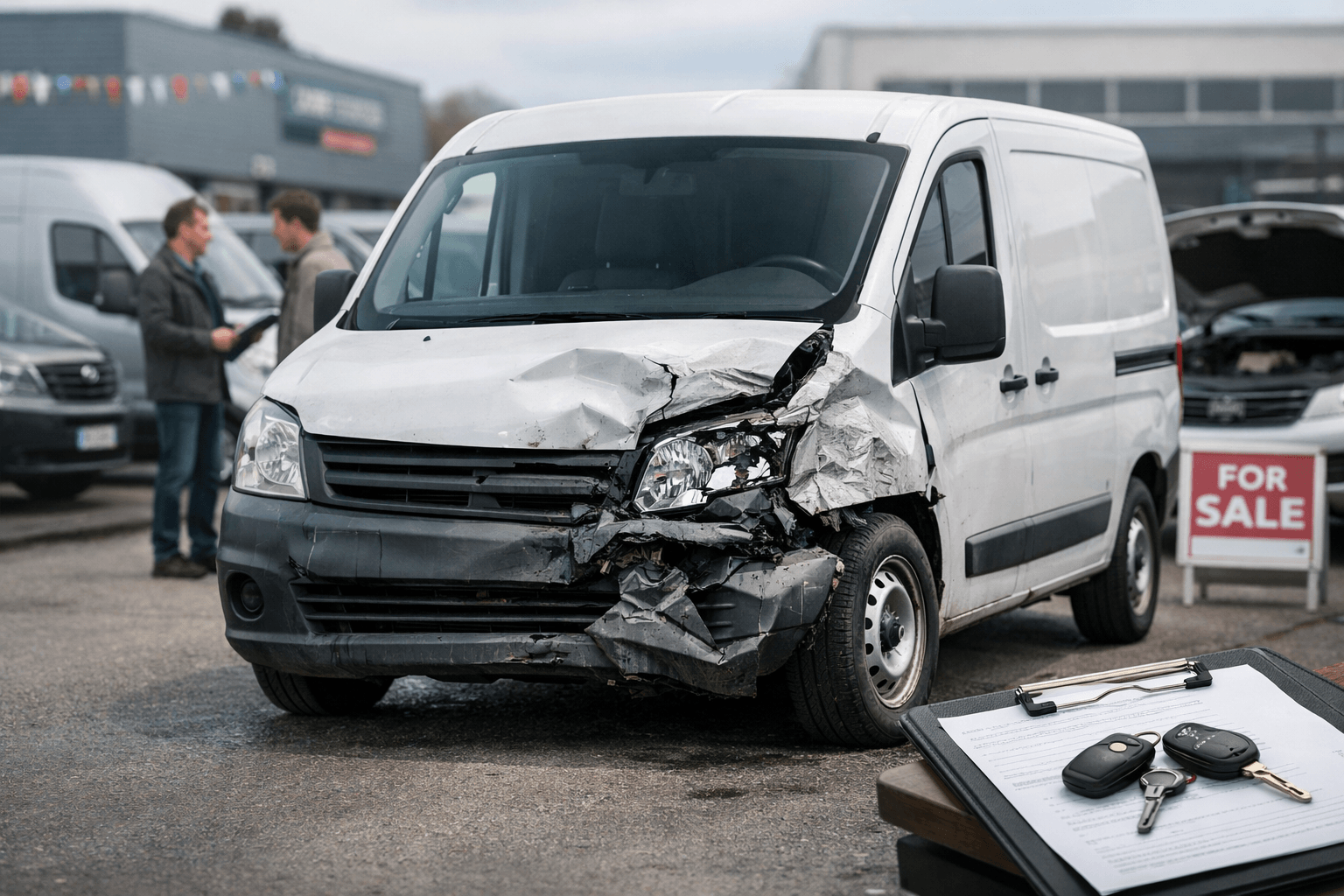
- Accident damage — collision damage to bodywork, chassis, or suspension
- Fire or flood damage — often written off by insurers due to hidden electrical and structural issues
- Mechanical failure — blown engine, failed gearbox, seized brakes
- Cosmetic damage — dents, scratches, cracked glass, damaged trim
- Category write-offs — vans formally assessed by insurers as Cat S, Cat N, Cat B, or Cat A
Note
If your van has been formally written off by an insurer, it will have a salvage category recorded on its history. Cat S and Cat N vehicles can be legally resold; Cat B and Cat A cannot be driven on public roads and must be crushed or broken for parts.
Your realistic options for selling a damaged van
Option 1: Sell directly to a specialist damaged vehicle buyer
This is the fastest route for most people. Specialist buyers — companies that exist specifically to purchase damaged, non-running, or written-off vehicles — will assess your van remotely, make an offer, and collect it from your location. There’s no advertising, no tyre-kickers, no negotiating with private buyers who get cold feet when they see the damage.
If you want a no-fuss, same-week resolution, selling to a professional van buying service is typically the most reliable path. These buyers price damaged vans based on salvage value, parts value, and repair potential — so the offer reflects reality rather than wishful thinking.
The trade-off is that you won’t get the maximum theoretical value. But when you factor in the time, stress, and potential repair costs of other routes, the net outcome is often better.
Option 2: Sell at a salvage auction
Salvage auctions — both physical and online — attract trade buyers: repairers, dismantlers, and exporters. Platforms such as Copart and BCA Salvage run regular sales of accident damaged and written-off vehicles across the UK.
The upside is competitive bidding can push the price up if multiple buyers want your specific van. The downside is auction fees, collection logistics, no guaranteed sale price, and the time it takes to list and wait for a sale date.
Salvage auctions work best if you have a van with strong parts demand — a popular model in a common configuration — and you’re not in a hurry.
Option 3: Sell for parts privately
If your van has a failed engine or irreparable bodywork but sound mechanical components elsewhere, breaking it for parts can return more than selling it whole. Gearboxes, axles, seats, doors, mirrors, and electrical modules all have a secondary market.
To sell a van for parts in the UK, you’ll need to notify the DVLA that the vehicle has been broken up, using a V5C declaration. You’ll also need somewhere to store the van while you dismantle and sell components — a process that can take weeks or months.
This route demands time and mechanical knowledge. It suits someone with workshop access and the patience to deal with multiple individual buyers. For everyone else, it’s rarely worth the effort compared to a direct sale.
Option 4: Part-exchange at a dealer
Some commercial vehicle dealers will accept a damaged van as part-exchange against a replacement. They’ll factor the damage into the trade-in value — usually quite conservatively — but it removes the hassle of selling separately.
Part-exchange values on damaged vehicles tend to be lower than what a specialist buyer would offer, because the dealer needs to build in their own margin for repair or disposal. That said, if you’re already buying a replacement van from a dealer, it’s worth asking the question.
Option 5: Sell to a private buyer
Private sales of accident damaged vans are possible, but they come with complications. Most private buyers want a reliable workhorse, not a project. Those who do want damaged vehicles — mechanics, hobbyists — will negotiate hard.
You’ll also need to be completely transparent about the damage. Misrepresenting the condition of a vehicle in a private sale can constitute fraud under the Fraud Act 2006. Full disclosure isn’t just ethical — it’s a legal requirement.
Warning
Never describe a damaged van as “good condition” or omit known faults in a private listing. If a buyer later discovers undisclosed damage, you could face a legal claim for misrepresentation.
How much is a damaged van worth?
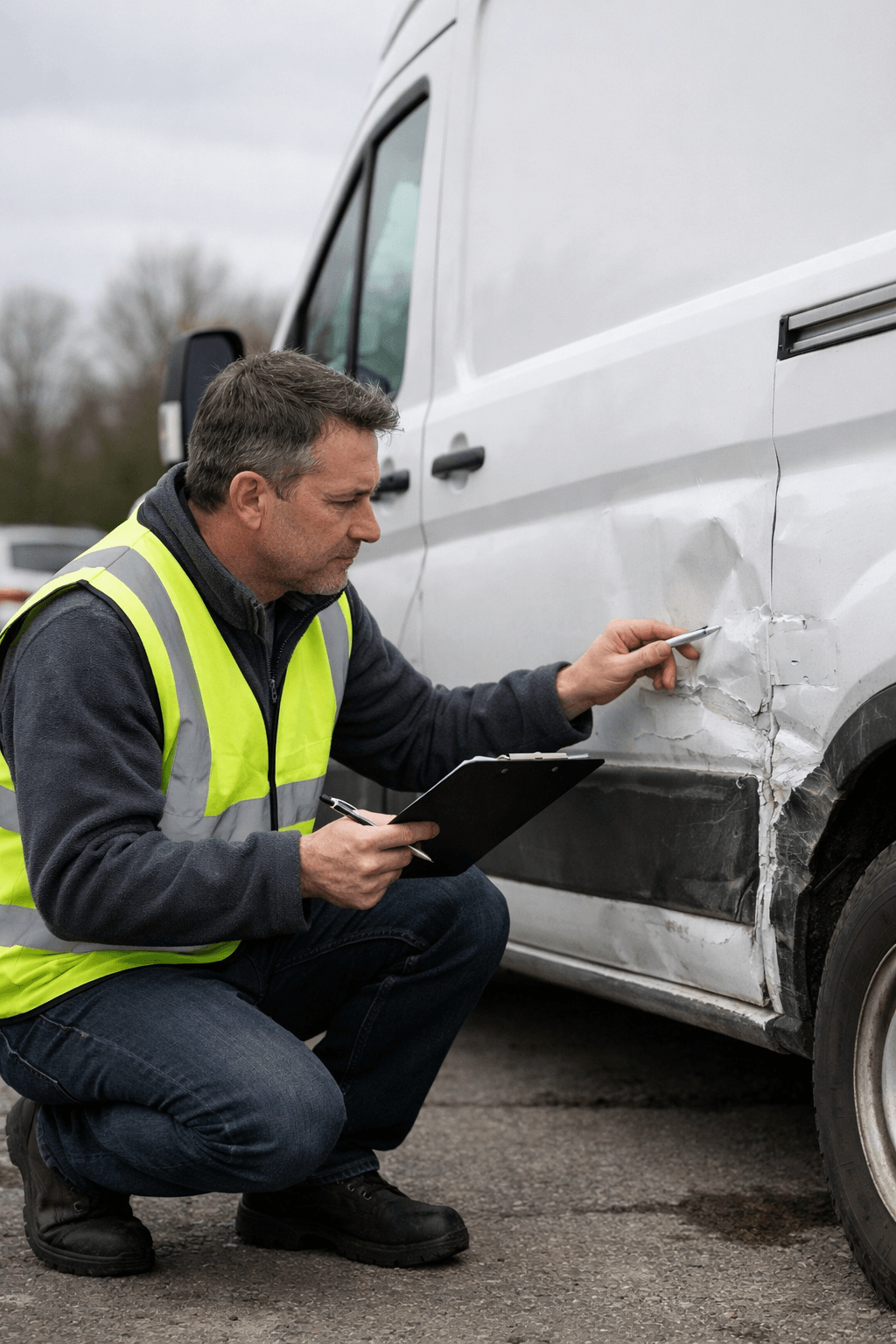
There’s no single formula, but several factors shape the offer you’ll receive:
- Make and model — popular vans (Ford Transit, Vauxhall Vivaro, Mercedes Sprinter) have stronger parts demand and attract more buyers
- Age and mileage — a newer van with low mileage retains more value even with damage
- Type and severity of damage — cosmetic damage affects value far less than structural or category write-off damage
- Insurance category — Cat S and Cat N vans are worth more than Cat B
- Current scrap metal prices — relevant if the van is beyond economic repair
As a rough guide, a Cat N van in a popular model might sell for 40–60% of its undamaged market value. A Cat B van heading for the crusher will be valued primarily on its weight in scrap, plus any recoverable parts.
What paperwork do you need to sell a damaged van?
The documentation required depends on the sale route, but in general you’ll need:
- V5C (logbook) — essential for any legal transfer of ownership
- MOT certificate — if the van has a current MOT, keep it; it adds credibility
- Service history — even partial history helps buyers assess the vehicle
- Insurance write-off documentation — if applicable, the Category certificate from the insurer
- DVLA notification — required when breaking a vehicle for parts
If you’ve lost the V5C, apply for a replacement using form V62 from the DVLA before you sell. Selling without one isn’t impossible, but it significantly reduces buyer confidence and your achievable price.
Frequently Asked Questions
Can I sell a van that isn’t roadworthy?
Yes. Non-roadworthy vans are bought and sold legally in the UK every day. You simply cannot drive the van on public roads without a valid MOT and insurance. Specialist buyers and salvage companies will collect non-runners from your location, so roadworthiness isn’t a barrier to sale.
Do I need to declare the damage when selling a damaged van?
Yes, always. Failing to disclose known damage — whether to a private buyer or a dealer — can be treated as misrepresentation or fraud. Specialist buyers already expect damage and price accordingly, so there’s no benefit to concealment and a real legal risk if you try.
What is a Cat N van and can I sell it?
A Cat N (Category N) van is one that has been written off by an insurer due to non-structural damage — the bodywork or components are damaged, but the chassis and structural frame are intact. Cat N vans can be legally sold and driven on UK roads. They must be declared as Cat N on any listing, and their history will show the write-off marker on vehicle checks.
Can I sell a van for parts without an MOT?
Yes. You don’t need a current MOT to break a van for parts. However, you must inform the DVLA that the vehicle is being broken up by completing the relevant section of the V5C logbook. Once you’ve notified the DVLA, the vehicle is formally off the road and you can sell components individually.
How quickly can I sell a damaged van?
With a specialist buyer, you can typically receive an offer within a few hours and complete the sale within 24–72 hours. Salvage auctions take longer — usually one to two weeks from listing to sale. Private sales of damaged vans can take weeks or months, depending on the model and how much work you’re willing to put into marketing.
Will I get a fair price for an accident damaged van?
“Fair” means different things depending on your reference point. Specialist buyers offer less than the undamaged market value — that’s the nature of the transaction. But compared to the cost and hassle of repairing the van first, or waiting months for a private buyer, the net return is often very competitive. Get two or three quotes before accepting any offer.
Ready to find out what your damaged van is worth?
If you’ve got a damaged van sitting on your drive or in your yard, the worst outcome is doing nothing. Every week that passes, a non-running van depreciates further and costs you space and stress.
Get a no-obligation quote from a specialist buyer, see what the realistic options are for your specific van, and make a decision based on real numbers — not assumptions about what it might be worth once repaired.