The Ford Transit Custom is one of Britain’s best-selling vans. It is also one of the most fault-prone. Knowing the difference between a minor niggle and a deal-breaking defect can save you thousands — whether you’re buying, selling, or simply trying to keep one on the road. Here are the ford transit custom common faults every owner and trader needs to understand before money changes hands.
- The 2.0 TDCi EcoBlue engine (post-2017) has well-documented injector and AdBlue system failures that can cost over £1,000 to fix
- Turbocharger failure, EGR valve problems, and timing chain wear are the three mechanical faults most likely to kill a deal with a van buying service
- Body and electrical gremlins — sliding door rollers, door seal leaks, and dashboard warning lights — are common but usually negotiable on price rather than deal-breaking
- Every fault on this list has a direct impact on what a van is worth; some reduce offers significantly, others are priced in as standard
- A pre-sale inspection and honest disclosure will always get you a better outcome than hiding problems that a buyer will find anyway
The Faults That Matter Most — and Why
Not all faults are equal. Some will shave a few hundred pounds off a van’s value. Others will stop a professional buyer from making an offer at all. The Transit Custom has a loyal following precisely because, when it works, it’s an outstanding tool. But it has a shorter list of recurring weaknesses that show up again and again — in owner forums, in independent garage records, and in the assessments of van buying services across the UK.
This article covers both categories. Read it before you buy. Read it before you sell.
Engine Problems: The EcoBlue 2.0 TDCi Is the One to Watch
Ford’s 2.0-litre EcoBlue diesel engine, introduced in 2017, replaced the older 2.2 TDCi unit. The newer engine is cleaner and more efficient. It is also more complex — and complexity creates failure points.
Injector failure is the most reported mechanical fault on the EcoBlue engine. Symptoms include rough idling, white or black smoke from the exhaust, and a noticeable loss of power. Injector replacement on a Transit Custom typically costs between £600 and £1,200 depending on how many injectors need replacing and whether the fuel system has been contaminated.
AdBlue system faults are a close second. The AdBlue system (a diesel exhaust fluid system required on Euro 6 engines to reduce nitrogen oxide emissions) fails in several ways on the Transit Custom — faulty sensors, a blocked injector nozzle, or a failed pump. When the system throws a fault code, the van will enter a countdown to a forced no-start condition. Ford dealers have issued multiple technical service bulletins on this issue.
If you are buying a used Transit Custom with a warning light related to AdBlue or the selective catalytic reduction system, get a full diagnostic before you commit. The repair bill can exceed £1,500.
The older 2.2 TDCi engine is more mechanically straightforward, but it has its own issue: timing chain wear. On high-mileage examples — typically above 100,000 miles — the timing chain can stretch, causing a rattling noise on cold start. Left unaddressed, a worn timing chain can lead to catastrophic engine failure. Replacement costs run from £700 to over £1,500 at an independent garage.
Turbocharger Failure: A Common and Costly Ford Transit Custom Problem
Turbocharger failure is one of the most frequently reported ford transit custom problems across both engine generations. The symptoms are hard to miss: a significant loss of power, a high-pitched whine or whistle under acceleration, or excessive oil consumption.
The root cause is usually one of two things. Either the turbo has been damaged by oil starvation — often because the van has been run with low oil or contaminated oil — or the variable vane mechanism inside the turbocharger has seized due to carbon build-up.
A reconditioned turbocharger fitted by an independent specialist typically costs £500 to £900. A new OEM unit from a Ford dealer will cost considerably more. Van buying services treat turbo failure as a significant deduction — expect a meaningful reduction in any offer if a turbo fault is present and undisclosed.
Before selling, have a turbo inspection carried out. If the turbo is borderline but functional, disclose it honestly. Buyers who find it themselves during inspection will assume the worst and price accordingly.
EGR Valve Problems: Small Part, Big Headache
The EGR valve — exhaust gas recirculation valve, a component that recirculates a portion of exhaust gases back into the engine to reduce emissions — is a known weak point on diesel Transit Customs. When it sticks open, the engine runs rough and loses power. When it sticks closed, it triggers a warning light and can cause the van to enter limp mode.
Carbon build-up is the primary culprit. Vans used predominantly for short urban journeys — common in the trades — are most susceptible because the engine never gets hot enough to burn off deposits naturally.
Cleaning the EGR valve costs £150 to £300. Replacement runs £300 to £600. This is one of the ford transit custom issues to check during any pre-purchase inspection — a diagnostic scan will reveal EGR-related fault codes even if the warning light has been cleared.
Sliding Door and Body Faults: Annoying but Usually Negotiable
The Transit Custom’s sliding side door is a frequent source of complaints. The roller mechanism wears over time, causing the door to drop, drag, or fail to close properly. On high-mileage vans, the lower roller bracket can crack entirely.
Door seal leaks are also common, particularly around the rear doors. Water ingress leads to damp load areas, which leads to rust — especially on the floor pan near the rear door sills. Check the rear floor carefully on any used example.
Body faults like worn door rollers and minor rust are priced into most used van valuations. They rarely stop a van buying service from making an offer, but they will reduce it. Fixing a sliding door roller mechanism before selling (typically £100 to £250 at a bodyshop) can recover more than it costs in a higher offer.
Electrical Gremlins: Dashboard Warning Lights and More
The Transit Custom’s electrical system generates more than its fair share of complaints. The most common issues include:
- Instrument cluster faults — warning lights illuminating without a corresponding mechanical fault, or the cluster going blank intermittently
- Parking sensor failures — sensors that beep constantly or stop working, often caused by damage or corrosion behind the bumper
- Central locking problems — particularly on higher-mileage vans, the locking mechanism can become unreliable, sometimes leaving doors unlocked or refusing to respond to the key fob
- Battery drain — a known issue on some Transit Custom variants, often traced to a module that fails to enter sleep mode correctly
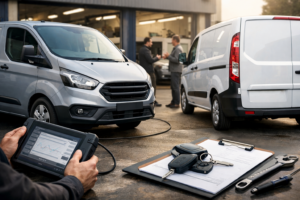
Most of these faults are diagnosable with an OBD reader and fixable without enormous expense. But a van with multiple warning lights showing will raise red flags for any professional buyer.
What These Faults Mean for Your Van’s Resale Value
Here is where most guides stop short. They list the faults. They do not tell you what those faults actually cost you when it is time to sell.
If you’re considering selling your Transit Custom and want to understand how these faults affect what a professional buyer will pay, the Ford Transit Custom van selling page at We Buy Vans explains how the valuation process works and what condition factors are taken into account.
The practical reality is this. A Transit Custom with a documented turbocharger fault, an active AdBlue warning, and an EGR code will receive a significantly reduced offer — or none at all from buyers who cannot absorb the repair risk. A van with minor body faults and a worn sliding door roller will still attract competitive offers, because those faults are predictable and priced into the market.
Ford Transit Custom reliability over the long term depends heavily on service history. A full, stamped service record — showing oil changes at the correct intervals, timing chain inspection at high mileage, and any recall work completed — can add meaningfully to a van’s value. The absence of service history does the opposite.
Ford Transit Custom Issues to Check Before You Buy
If you are buying a used Transit Custom, run through this checklist before you hand over any money:
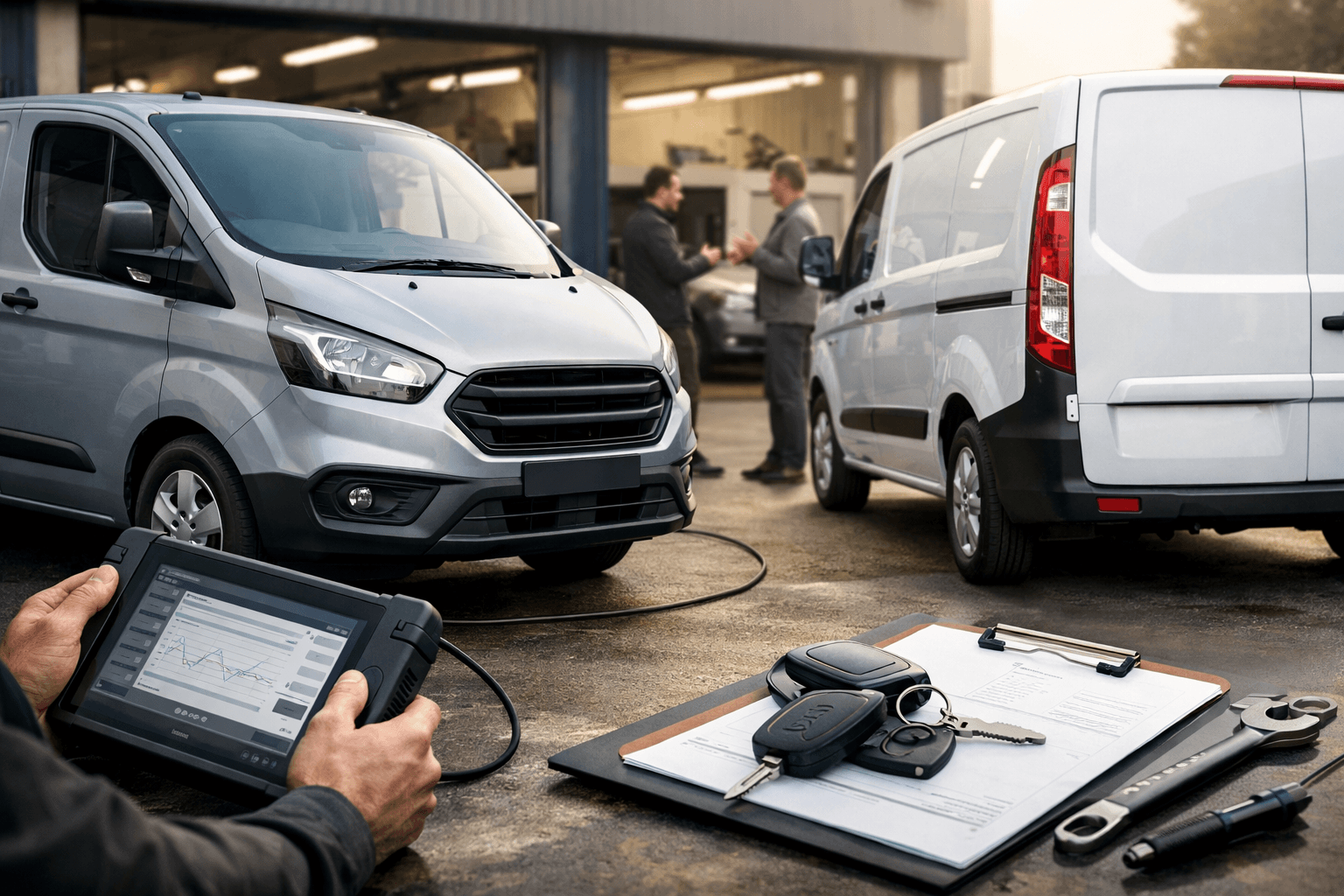
- Request a full diagnostic scan — not just a visual inspection. Fault codes can be present without a warning light showing if a previous owner has cleared them.
- Check the AdBlue level and system status — on Euro 6 models, confirm the AdBlue warning system is functioning correctly.
- Start the engine from cold — listen for timing chain rattle in the first 30 seconds.
- Test the turbo under load — drive the van at motorway speed and check for hesitation, power loss, or unusual noise.
- Inspect the EGR system — ask for any history of EGR cleaning or replacement.
- Check all doors — open and close the sliding door repeatedly; test the rear doors for alignment and seal condition.
- Look under the rear load area floor — check for rust, damp, or water staining.
- Verify service history — confirm oil change intervals match Ford’s recommendations for the engine variant.
Frequently Asked Questions
How reliable is the Ford Transit Custom overall?
The Ford Transit Custom has above-average reliability for a working van when properly maintained. The older 2.2 TDCi engine is generally more robust than the newer 2.0 EcoBlue. The EcoBlue unit delivers better fuel economy and lower emissions but requires stricter maintenance discipline — particularly around oil quality and AdBlue system upkeep. Vans with full service histories consistently outperform those without.
What are the most expensive Ford Transit Custom faults to fix?
Injector failure on the EcoBlue engine, turbocharger replacement, and timing chain replacement on the 2.2 TDCi are the three most expensive repairs. Each can cost between £700 and £1,500 or more at a franchised dealer. EGR valve replacement and AdBlue system repairs sit in the £300 to £1,000 range depending on the extent of the fault.
Will a van buying service still buy a Transit Custom with known faults?
Yes, in most cases — but the offer will reflect the cost of repair plus the buyer’s risk margin. Faults that are disclosed upfront and supported by diagnostic evidence typically result in fairer deductions than faults discovered during the buyer’s own inspection. Transparency pays.
Does the Ford Transit Custom have any known recalls?
Ford has issued several technical service bulletins and recalls affecting the Transit Custom over the years, covering issues including the AdBlue system, fuel system components, and electrical faults. Check the DVLA’s free recall checker using the van’s registration number to confirm whether any outstanding recall work applies to a specific vehicle.
What year Transit Custom should I avoid?
Early examples of the 2017-onwards EcoBlue engine (particularly 2017 and 2018 model years) attracted the highest volume of injector and AdBlue complaints as Ford worked through teething problems with the new engine. By 2019 and 2020, many of these issues had been addressed through software updates and revised components. Pre-2017 vans with the 2.2 TDCi are generally considered more straightforward mechanically, though timing chain condition becomes critical above 100,000 miles.
How do Ford Transit Custom faults affect part-exchange value at a dealer?
Dealers factor repair costs into part-exchange offers, typically more aggressively than specialist van buying services because dealers carry higher overhead costs. A van with a known fault will almost always achieve a better return through a specialist van buyer who can assess it accurately than through a dealer who prices in maximum risk.
If your Transit Custom has faults — known or suspected — the worst move is to ignore them. The second worst is to hide them. Get a diagnostic scan. Know what you are dealing with. Then decide whether to repair before selling or sell as-is with full disclosure. Either route can work. Walking in blind cannot.